

Muzaffarabad
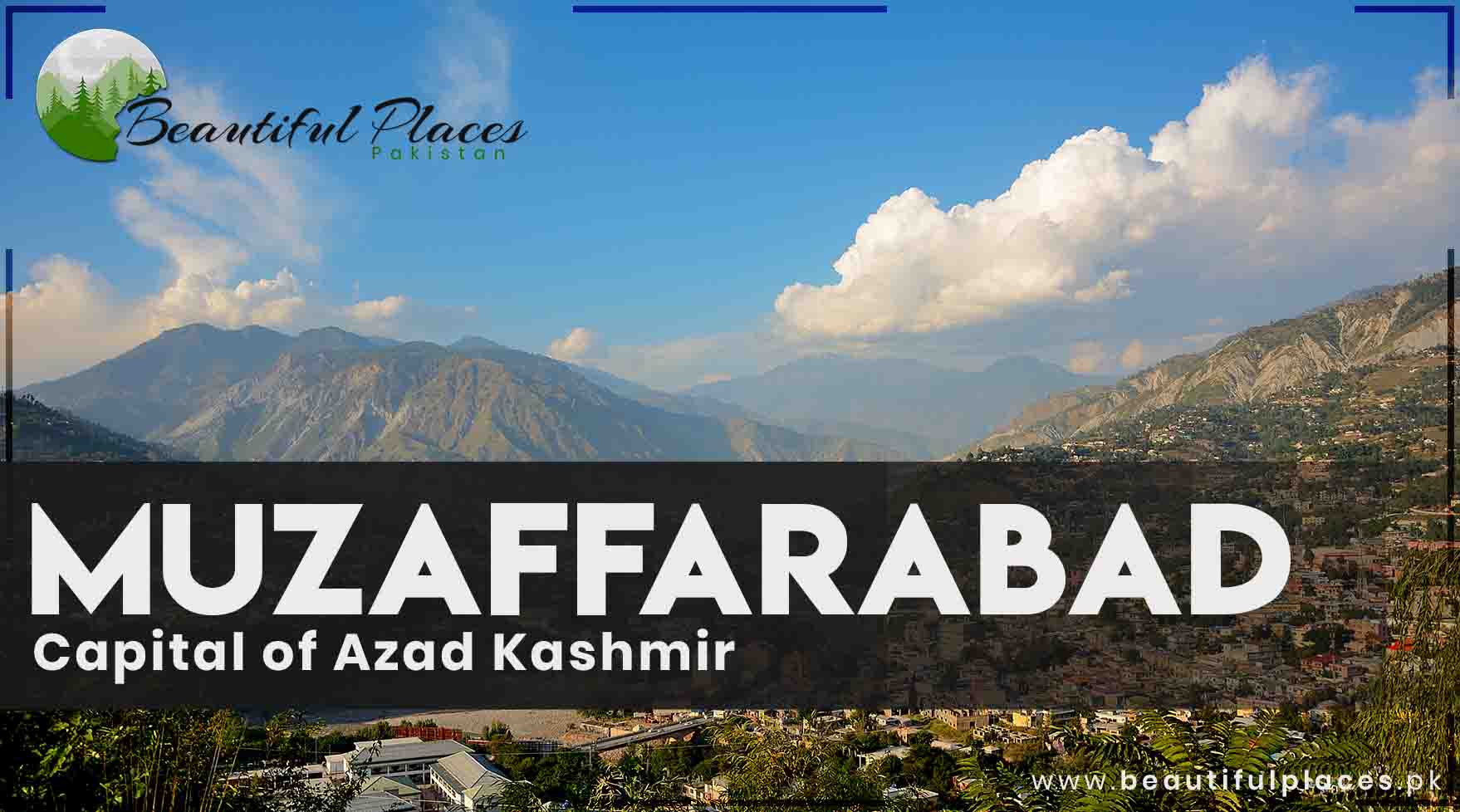
Muzaffarabad is the capital of Azad Kashmir. It is located at the confluence of river Jhelum and River Neelum and at the foothills of Pir Chinasi, also written Pir Chinasi.
It was settled by the chief of the Rajput tribe Sultan Muhammad Muzaffar Khan in 1652. This city is 138 km away from Rawalpindi, 70km from Abbottabad, and 182 km from Srinagar.
It is at a height of 2470 feet from sea level.
In 1921, Allama Iqbal used this path to reach Kashmir. In 1948, Quid-e-Azam used the Srinagar Muzaffarabad route while he was returning from Kashmir.
This district is surrounded by mountain ranges. And the weather is too hot in the summer season and cold in the winter season. However, many areas of this district are above sea level and the weather is dry and pleasant there in summer.
Key information about Muzaffarabad
| Attribute | Information |
|---|---|
| Name | Muzaffarabad |
| Location | Azad Kashmir, Pakistan |
| Geographical Features | Situated along the confluence of the Neelum and Jhelum rivers |
| Area | Approximately 1,642 square kilometers |
| Population | Varied population reflecting the region’s diversity |
| Languages Spoken | Urdu, Pahari, and English (for official purposes) |
| Historical Significance | Muzaffarabad has a rich history, with cultural and historical landmarks. It was the site of the 2005 earthquake’s epicenter. |
| Administrative Importance | It serves as the capital and administrative center of Azad Kashmir. |
| Economy | The city’s economy is driven by trade, agriculture, and government services. |
| Cultural Heritage | Muzaffarabad features a mix of Kashmiri and Pahari cultural influences, with traditional music, festivals, and crafts. |
| Tourist Attractions | The city offers attractions such as the Red Fort (Chak Fort), the confluence of the Neelum and Jhelum rivers, and nearby natural beauty spots like Leepa Valley and Toli Pir. |
| Education and Healthcare | Muzaffarabad hosts educational institutions, including the University of Azad Jammu and Kashmir, and provides healthcare services through hospitals and clinics. |
| Accessibility | The city is accessible by road and serves as a gateway to the scenic regions of Azad Kashmir. |
Historical Significance
The city has a rich history, dating back centuries. It has been influenced by various cultures and civilizations, including the Mughals and the British. Muzaffarabad also holds a unique place in modern history as it was the epicenter of the devastating earthquake that struck the region in 2005.
Shopping and Handicrafts
The crowded bazaars of Muzaffarabad city are awaiting tourists. You can find everything of daily need.
You will find pieces of fine arts. They include engravings on walnut wood, woodworking, Guba embroidery, Numda embroidery, and Shawls.
Special shawls of Kashmiri embroidery can be purchased from the Bazaars of Muzaffarabad. Kashmir Shawl house is an important center in Madinah Market.
Travel Guide
Transport is available from the General Bus Stand of Lahore and different areas of Rawalpindi for Muzaffarabad. It is connected to the whole of Pakistan by road since it is the capital of Azad Kashmir.
Karen route goes to occupied Jammu Kashmir above Chakhoti. Mughals emperors and tourists used to adopt this way to reach Kashmir.
How to reach Muzaffarabad
Muzaffarabad sits roughly 130 km north of Islamabad, and the drive is the part of the trip most people underestimate. The usual route runs along the Islamabad-Murree Expressway and then down the Kohala-Muzaffarabad Road, crossing into Azad Kashmir at Kohala bridge. Allow around four hours in good conditions, less if the road is clear and considerably more in rain.
The alternative approach through the Hazara Expressway and Abbottabad is longer at roughly 213 km, but it is a better road for much of the way and is often the faster choice when the Murree route is busy at weekends or in snow.
There is no commercial airport serving the city, so road transport is the only practical option. Coaches and vans run from Rawalpindi daily, and a hired car with a driver is the usual arrangement for anyone continuing further into the valleys. Landslides after heavy rain can close sections of the road at short notice, so build a spare day into any itinerary that depends on arriving on a fixed date.
Best time to visit Muzaffarabad
Spring, March to May, and autumn, September to November, are the two best windows. The weather is mild, the hillsides are green after the winter, and the roads up to Pir Chinasi and onward into the Neelum valley are reliably open.
June is the hottest month and January the coldest, with snow on the higher ground around the city through the winter. The monsoon between July and September brings heavy rain and is the period when landslides are most likely. Muzaffarabad itself stays accessible year round because it sits comparatively low, at around 2,470 feet, but the places people come here to reach do not.
Our month by month guide to the best time to visit Pakistan sets this in the wider seasonal picture.
How long to stay
Two to three days covers Muzaffarabad properly: one for the forts, the bazaars and the river confluence inside the city, and one for Pir Chinasi, which deserves most of a day by the time you have driven up and spent time at the top.
Most visitors treat the city as a base rather than a destination in itself, staying a night either side of a longer trip into the Neelum valley. That is a sensible way to use it, but the city rewards more than the single afternoon it usually gets.
Famous Tourist Spots in Muzaffarabad
The worth watching sites of this city are the Sultani Mosque built by Sultan Muzaffar Khan on Ketcheri road, Lal fort on the bank of river Jhelum, a monument to Jalal-ud-din Akbar, a garden, and Pir Chinasi.
Muzaffarabad Fort
This fort is also called Lal fort and it was built by Chak rulers. It is a splendid and rare piece of architecture.
There were clashes between King Akbar Azam and Chak chiefs. Therefore, they started the constriction to this fort in 1529 for defense purposes.

It was completed in the regime of Sultan Muzaffar in 1665. The nearby flowing river enhances its beauty.
Black Fort
The Red Fort has a counterpart that most visitors miss. The Black Fort stands on the opposite side of the river, and the two were built to watch each other and the crossing between them. Far less of it survives, and there is no restoration work to speak of, so what you get is a short climb, a ruin, and the best single view of how the two rivers meet below the city.
Take it together with the Red Fort rather than as a separate trip. Seen as a pair, the two forts explain the site of Muzaffarabad better than anything else in the city: this was a river crossing worth defending from both banks.
Food Street
A beautiful confluence of river Jhelum and river Neelum takes place at the point of Domel in Muzaffarabad. A food street is established on the right side of the river Jhelum. Traditional Kashmiri foods are served with regional culture.
Syed Sain Sakhi Saheli Sarkar
This tomb has the same importance in Muzaffarabad as the shrine of Hazrat Ali Hijvari in Lahore and Bari Shah Latif in Islamabad. It is crowded all day long.
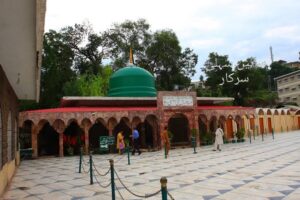
The devotees come to visit his shrine in bitter cold during Urs Shareef held from 13th January to 20th January.
Surbhi
This lake is 8km away from Muzaffarabad and came into being due to heavy rainfall in 1975. Fishermen are awaiting tourists with their Shikaray (special boats of Kashmir).
Lohar Gali
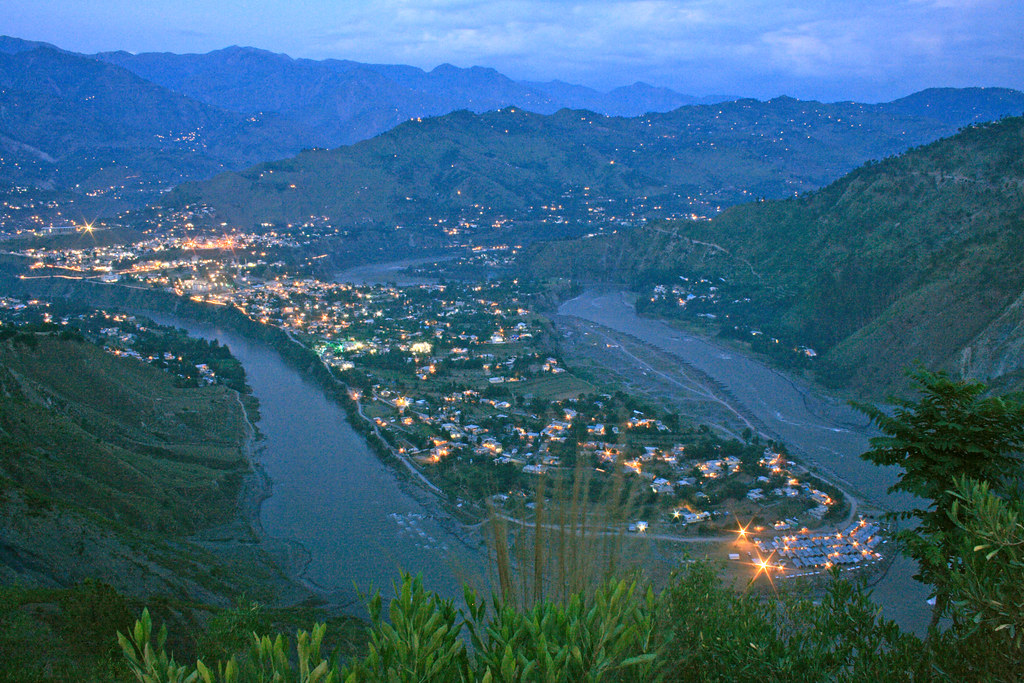
This place is 9km away from Muzaffarabad on Abbottabad Road. It is located at a height. You can enjoy an aerial view of Muzaffarabad and the suburbs at this point.
The whole scenery looks stunning at night in the floods of light.
Shaheed Gali
It is located at a height of 4500 feet from sea level on the northwest side about 16km away from Muzaffarabad. People can take a birds-eye of Muzaffarabad valley from this site.
There is a rest house of the tourism department.
Patikka
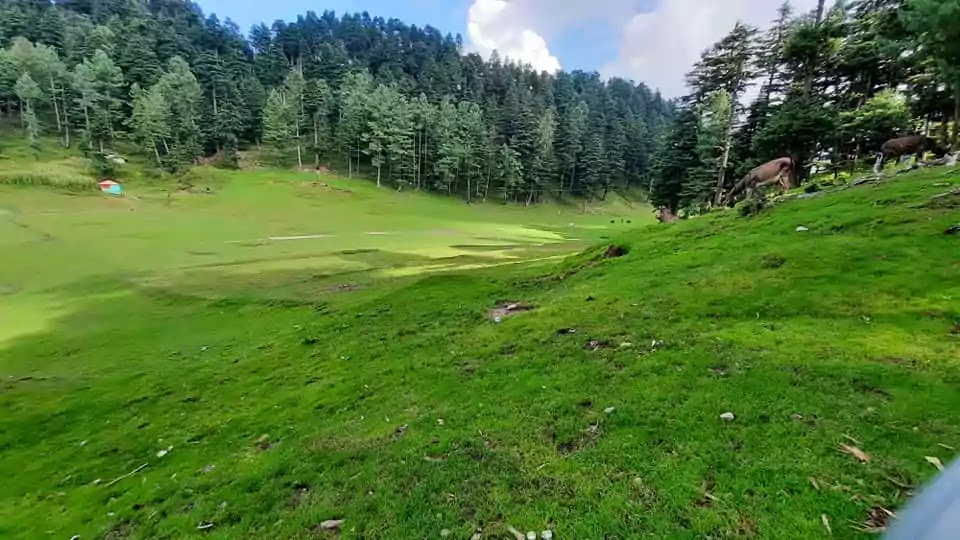
This place attracts tourists for its beautiful geography and is located 17 km away from Muzaffarabad on the North side. This area is full of pine cheer tree forests.
Trout fish farms and Wildlife parks are also sources for vacationers. A rest house is there in the clumps of trees.
Machiara National Park
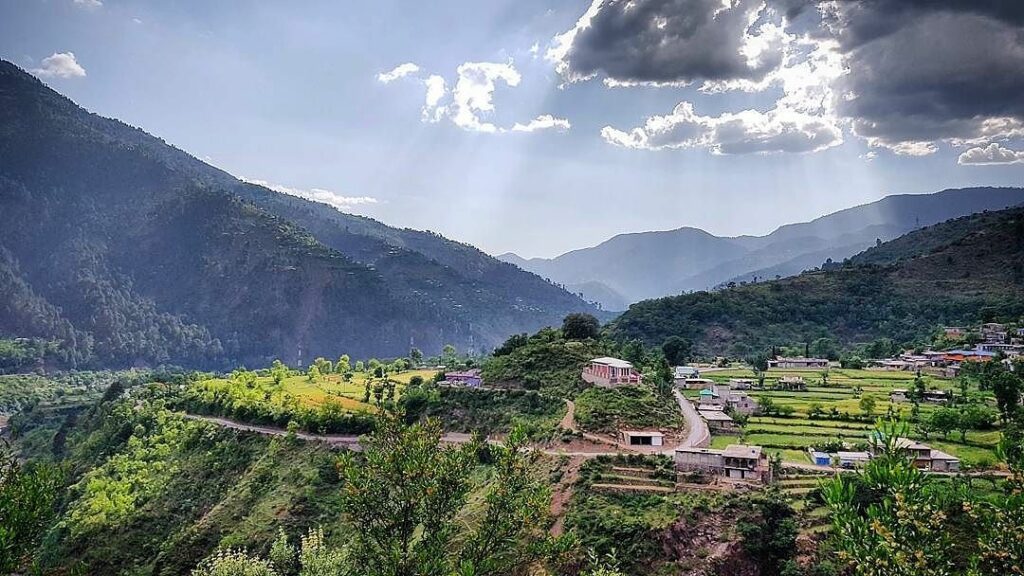
North of the city, Machiara National Park covers a stretch of steep forest and alpine meadow rising well above the valley floor. It protects some of the last good conifer forest in this part of Azad Kashmir, along with musk deer, Himalayan black bear and leopard, though seeing any of them takes luck and an early start.
For most visitors it is a half day of walking in pine forest with the valley opening up below, reached by jeep track from the city. It is the most straightforward piece of genuine wilderness within reach of Muzaffarabad, and it is almost always empty.
Pir Chinasi
This tourist destination Pir Chinasi is 34 km away from Muzaffarabad on the northeast side. It is located at a height of 2429 meters on a mountain. The weather is quite pleasant even in summer since it is located at a peak point.
There are numerous opportunities for hiking, trekking, and paragliding due to the high mountains and lush green slopes. The route from Pir Chinasi to Muzaffarabad is very attractive.
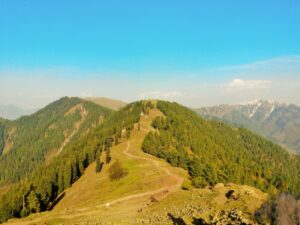
Never forget to take a jacket and sweater to this site. You can enjoy Kashmiri tea on your way to this site. You can also stay at night to fully enjoy Pir Chinasi. The sun rising sight in the morning is mesmerizing.
At roughly 9,500 feet, Pir Chinasi, also spelled Peer Chanasi, is the highest point most visitors reach from the city and the one thing locals will tell you not to skip. The shrine at the summit belongs to a Sufi saint of the same name and draws pilgrims as well as sightseers, particularly on Thursdays. From the top the view runs down over the Jhelum and Neelum valleys and across to the ranges beyond, and in clear spring weather it is one of the best viewpoints in Azad Kashmir.
The road up is about 30 km from the city and climbs steeply throughout, so allow most of a day and expect it to take longer than the distance suggests. It is normally open from late spring to autumn; snow closes the upper section in winter. Food at the top is limited to a few stalls, so carry water.
Beyond the city: the Neelum valley
Muzaffarabad is the gateway to the Neelum valley, and for a large share of visitors that is the real reason they are here. The road follows the Neelum river northeast out of the city and keeps climbing for well over a hundred kilometres.
The names worth knowing, in the order you reach them, are Kutton with its waterfall and side valley, Sharda with the ruins of its ancient university above the river, and Kel, from which a chairlift and a steep walk bring you up to Arang Kel, a meadow village that is for many people the single most beautiful place in Azad Kashmir.
The upper valley is seasonal. Snow closes the road beyond Kel through the winter and the full run is normally open from around May to October. Access can also be restricted at short notice in places close to the Line of Control, so take local advice on the day rather than relying on any schedule, including ours. Our guide to permits and restricted areas in Pakistan covers how that works in practice.
Famous Schools
- Al-Noor Public School and College: This institution is known for its commitment to quality education and holistic development of students.
- City School Muzaffarabad: Part of a respected educational network, City School provides a well-rounded academic experience.
- Beaconhouse School System Muzaffarabad: Beaconhouse offers a quality education and is recognized for its academic excellence.
Colleges
- Azad Jammu and Kashmir University: This esteemed university in Muzaffarabad provides a wide range of undergraduate and postgraduate programs, contributing significantly to higher education in the region.
- Azad Jammu and Kashmir Medical College: Offering programs in various medical disciplines, this medical college plays a crucial role in healthcare education.
Hospitals
- Abbas Institute of Medical Sciences (AIMS): AIMS is a renowned healthcare facility, providing a wide range of medical services and specialized care.
- Shaikh Khalifa Bin Zayed Al Nahyan Hospital: Named after the former President of the UAE, this hospital is known for its modern facilities and quality healthcare services.
Restaurants
- Mir Continental Hotel and Restaurant: This restaurant within the Mir Continental Hotel offers a diverse menu and a pleasant dining atmosphere.
- Pine Park Restaurant: Located in a beautiful setting, Pine Park Restaurant serves a variety of local and international cuisines.
- Lalazar Restaurant: Known for its regional dishes and picturesque view of the Neelum River, Lalazar Restaurant is a favorite among locals and visitors alike.
Frequently asked questions (FAQs)
What is the significance of Muzaffarabad in Azad Kashmir?
Muzaffarabad is the administrative and cultural heart of Azad Kashmir, serving as the capital city and housing the autonomous government’s key institutions.
What are the major attractions in Muzaffarabad?
The city offers attractions such as the Red Fort (Chak Fort), the confluence of the Neelum and Jhelum rivers, and nearby natural beauty spots like Leepa Valley and Toli Pir.
Is Muzaffarabad easily accessible for travelers?
Yes, the city is well-connected by road, making it a convenient starting point for exploring Azad Kashmir’s breathtaking landscapes.
What is the cultural heritage of Muzaffarabad like?
Muzaffarabad is a melting pot of Kashmiri and Pahari cultures, with traditional music, festivals, and crafts playing a significant role in the city’s cultural life.
Are there educational and healthcare facilities in Muzaffarabad?
Yes, the city hosts educational institutions, including the University of Azad Jammu and Kashmir, and provides healthcare services through hospitals and clinics, ensuring the well-being of residents.
What is the historical significance of Muzaffarabad?
Muzaffarabad has a rich historical background, with influences from various civilizations, including the Mughals and the British. It was also the epicenter of the 2005 earthquake.
What are the economic activities in Muzaffarabad?
The city’s economy is diverse, with trade, agriculture, and government services contributing significantly to its economic growth.
What are the natural wonders near Muzaffarabad?
Muzaffarabad serves as a gateway to breathtaking natural destinations, including Leepa Valley and Toli Pir, offering panoramic views of the surrounding hills.
Is Muzaffarabad a cultural hub in Azad Kashmir?
Yes, the city is known for its cultural vibrancy, with traditional music, festivals, and crafts reflecting the region’s cultural identity.
What is the current status of Muzaffarabad within Azad Kashmir?
Muzaffarabad continues to serve as the capital and the administrative center of Azad Kashmir, maintaining its role as a hub for governance and culture.
Is Muzaffarabad a safe destination for travelers?
Muzaffarabad is generally a safe city for tourists. However, like any travel destination, it’s advisable to stay updated on travel advisories and follow local guidelines.
Last Thoughts on Muzaffarabad
Muzaffarabad is usually passed through rather than visited, and that is the mistake. It is a city built at the meeting of two rivers, with a fort on each bank, a Sufi shrine on a 9,500 foot ridge above it, and a national park an hour away, and almost everyone who comes gives it a single night before driving north.
Two days is enough to see why it has been worth holding since 1652, and it leaves you far better oriented for the Neelum valley afterwards. If you are still putting the trip together, start with our guide to planning a trip to Pakistan.
In short
Kashmir is bestowed with divine beauty. Its capital Muzaffarabad is a beautiful city with many tourist and historical sites. Lal fort, the tomb of the Sain saint, Shaheed Gali, and Pir Chinasi are the source of attraction for holidaymakers.
The city is equipped with all kinds of facilities of life. A visit to this city will refresh your physique and soul.

