

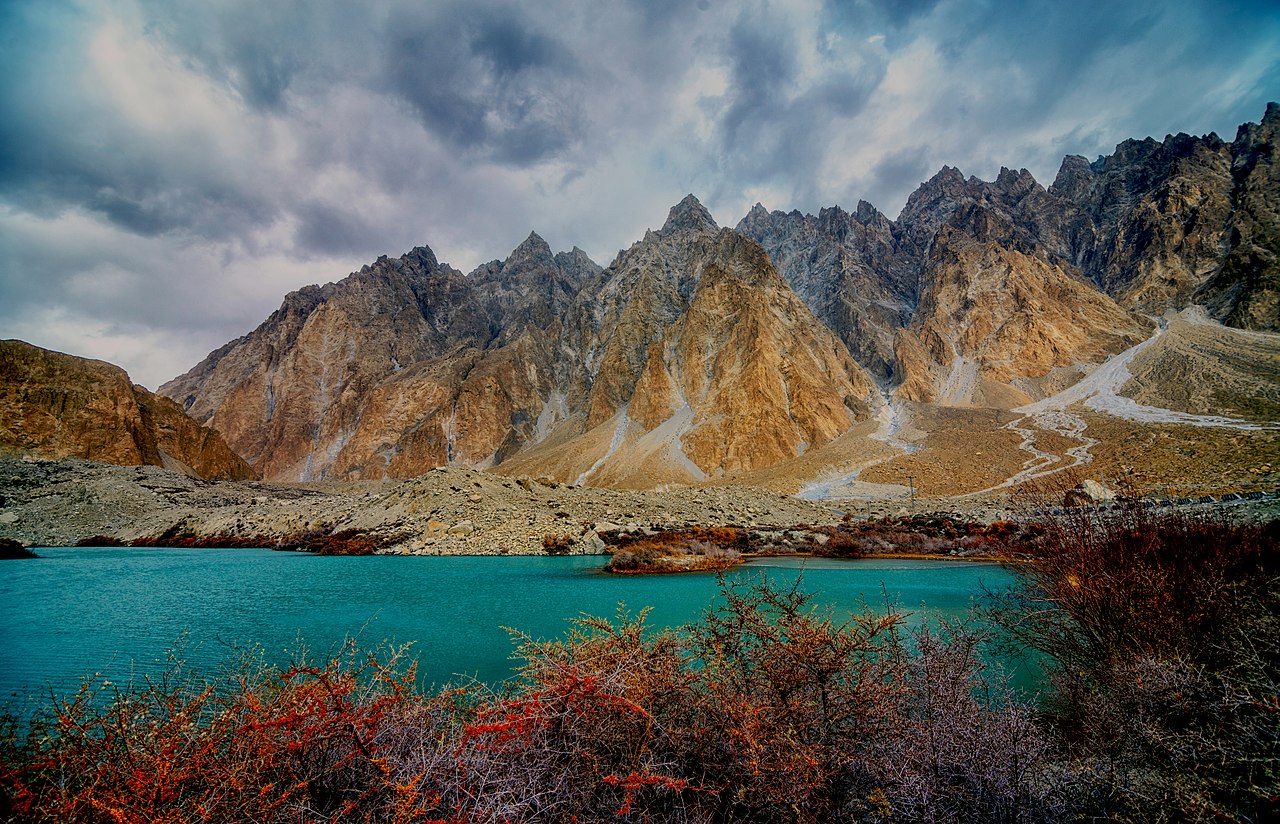
There is no single best month to visit Pakistan, because the country does not have a
single climate. The Karakoram and the Makran coast are roughly 2,000 kilometres and about
5,000 metres apart, and what suits one closes the other. The useful question is not when to
visit Pakistan, but when to visit the part of Pakistan you actually want to see.
If you want the short answer: October and November are the safest choice
for a first trip, because they are the only months when the northern valleys and the
southern plains are both comfortable. Everything below explains when that answer changes.
The quick answer by region
- Northern mountains (Hunza,
Skardu, Gilgit,
Kaghan,
Swat): April to October. - Plains and cities (Lahore,
Islamabad, Multan, Taxila):
October to March. - South and coast (Karachi,
Thatta, the Makran beaches): November to February. - Both at once: October and November, with late September and early
March as the shoulders.
Month by month
January and February
The coldest weeks. Snow closes the roads into the high valleys, and Hunza, Skardu and
Naran are either unreachable or reachable only with difficulty and the right vehicle. The
compensation is that the south is at its best: this is the right window for
Karachi,
Thatta,
Mohenjo-daro and the desert districts,
where daytime temperatures are mild and the humidity has gone. Lahore and Islamabad are cool
and often foggy, and winter smog across the Punjab plain is a genuine consideration for
anyone with a respiratory condition.
March and April
The best photographic weeks in the mountain valleys. Blossom moves up through Hunza and
the Kaghan valley from mid-March, the light is clean, and the crowds have not arrived. The
plains are still pleasant into April. The catch is altitude: the highest passes and the
roads into the upper valleys are still shut, so a March itinerary should stay lower than a
June one. April is the first month when most of the north opens properly.
May and June
The plains become severe, regularly passing 40 degrees, and sightseeing in Lahore or
Multan in June is genuinely unpleasant. The mountains, by contrast, are excellent. This is
when the Karakoram Highway is fully
open, the high lakes have thawed, and trekking routes become viable. Domestic tourism peaks
here, so expect the popular valleys to be busy and accommodation in Hunza and Naran to be
booked well ahead.
July, August and September
The southwest monsoon arrives, and this is the month range that most needs respect. The
rain is concentrated rather than constant, but in the north it brings landslides,
rockfall and washed-out road sections, and mountain roads can close for a day or several.
The consequence is not usually danger so much as delay, and an itinerary with tight
connections will break.
If you travel in these months, keep spare days either side of any flight, prefer the
drier Gilgit-Baltistan side over the wetter southern slopes, and treat road estimates as
optimistic. September improves steadily, and the second half of the month is often superb.
October and November
The best overall window, and the one we recommend to most first-time visitors. The
monsoon has cleared, the air is transparent, the valleys turn gold and red, and
temperatures across most of the country sit roughly between 10 and 30 degrees. Northern
roads are still open, the plains have cooled, and both halves of the country can be
combined in one trip. It is also the most comfortable period for long road days.
December
A transitional month. The high north is closing, the plains are cool and clear, and the
south is coming into its best season. Good for a city and heritage trip, poor for the
mountains.
What the seasons mean in practice
Trekking and high altitude
The trekking season runs roughly June to September, and the highest routes have a shorter
window still. This overlaps the monsoon, which is why serious trekking is planned around
weather windows rather than fixed dates. Our
guide to trekking areas covers
the routes themselves.
Roads and passes
Snow decides the calendar in the north far more than temperature does. Passes and upper
valley roads open in stages through spring and close through late autumn, and the dates move
by several weeks from year to year. Always check the current state of a specific road rather
than relying on a seasonal average, including this one.
Ramadan
Ramadan moves roughly eleven days earlier each year, so it drifts through the seasons.
Daytime eating in public is restricted, many restaurants close until sunset, and working
hours shorten. Travel remains entirely possible and the evenings are memorable, but plan
meals differently and expect a slower pace.
So when should you go
Choose by trip type rather than by month. A mountain trip means late April to early
October, accepting the monsoon risk in the middle. A cities, history and coast trip means
October to March. A trip that wants both means October or November, and if those are
impossible, late September or early March will usually work.
Once you have the season, the rest of the planning follows: transport, permits, budget
and safety are covered in our
guide to planning a trip to Pakistan.
At a glance, by region and month
| Region | Best | Workable | Avoid |
|---|---|---|---|
| Gilgit-Baltistan (Hunza, Skardu, Gilgit) | May to October | April, late October | December to March, snow closures |
| Khyber Pakhtunkhwa valleys (Swat, Kaghan, Chitral) | April to October | Late March | December to February |
| Azad Kashmir (Neelum, Leepa) | April to October | November | Deep winter, road closures |
| Punjab (Lahore, Taxila, Multan) | October to March | Late September | May to July, extreme heat |
| Islamabad and Margalla Hills | September to April | Most of the year | Peak June heat |
| Sindh (Karachi, Thatta, Mohenjo-daro) | November to February | October, March | April to September, heat and humidity |
| Balochistan (Quetta, Makran coast) | October to March | April | Midsummer inland |
Crowds, holidays and festivals
Weather is only half of the timing question. Domestic tourism is heavily concentrated,
and the northern valleys in July and August are genuinely busy: rooms in Hunza, Naran and
Swat fill weeks ahead, prices rise, and the roads carry far more traffic than usual. If you
want the mountains without the crowds, late May or the second half of September give
similar conditions with a fraction of the demand.
The two Eid holidays move roughly eleven days earlier each year and are the single
biggest travel peaks in the country. Transport is fully booked, intercity roads are heavy
and many businesses close for several days. It is not a reason to avoid Pakistan, and the
atmosphere is memorable, but it is a reason to book ahead rather than improvise.
Ramadan, in the month before Eid al-Fitr, changes the rhythm of the day rather than
closing the country. Restaurants may not serve until sunset, working hours shorten and
daytime eating in public is avoided. Evenings become social and food-centred in a way that
is worth experiencing.
Spring also brings regional festivals worth timing a trip around, including the Kalash
spring festival in the Chitral valleys and Basant-season kite flying in parts of Punjab,
though the latter’s legal status has varied.
What the weather actually does
Three patterns explain almost all of it.
Altitude beats latitude. Pakistan spans 1,500 kilometres north to south,
but the bigger variable is height. Skardu sits above 2,200 metres and the Khunjerab pass
above 4,600, which is why the north can be pleasant while the plains are at 45 degrees.
The monsoon is regional. It arrives from the southeast and weakens as it
moves north and west, so Punjab and Khyber Pakhtunkhwa’s southern slopes get far more of it
than Gilgit-Baltistan, which sits in a rain shadow. This is why the Hunza side often stays
workable in August while the Kaghan road is closed.
Snow decides the calendar, not temperature. High passes and upper valley
roads open and close on snow, and the dates shift by weeks between years. A road that opened
in mid-April one year may not open until May the next.
Common questions
What is the best month to visit Pakistan?
October, for most trips. The monsoon has cleared, the air is clean, northern roads are
still open and the plains have cooled, so it is the one month where the whole country is
comfortable at once. November is a close second.
What is the best time to visit Hunza and Skardu?
May to October. Spring blossom peaks in Hunza from late March into April at lower
elevations, autumn colour arrives in October, and the high summer months offer the most
reliable road and flight access. Winter is spectacular but access is limited and some
services close.
Can you visit Pakistan in winter?
Yes, but plan it as a southern and city trip. December to February is the best window for
Karachi, Thatta, Mohenjo-daro, the Makran coast and the Punjab heritage sites. The northern
valleys are largely inaccessible, and Punjab winter smog is worth factoring in if you have
any respiratory sensitivity.
Is the monsoon a reason to cancel a trip?
No, but it is a reason to change how you plan one. Between July and September, keep spare
days around flights, favour the drier Gilgit-Baltistan side over the southern slopes, and
avoid itineraries that depend on crossing a single mountain road on a fixed date.
When is trekking season in Pakistan?
Roughly June to September, with a shorter window on the highest routes. That overlaps the
monsoon, which is why serious trekking is planned around weather windows rather than fixed
dates and is best arranged with an experienced operator.
How many days do you need in Pakistan?
Ten days covers one region properly, such as Islamabad plus a northern loop. Two weeks
lets you combine the north with Lahore and the heritage sites. Under a week, pick a single
region and stay there, because the internal distances will otherwise consume the trip.
Last thoughts on the best time to visit Pakistan
Most disappointing trips to Pakistan are not caused by bad weather. They are caused by an
itinerary built for one season being run in another: a July plan through mountain roads with
no spare days, or a June week in Lahore. Decide which half of the country the trip is really
about, pick the season that half rewards, and the weather stops being the problem.

