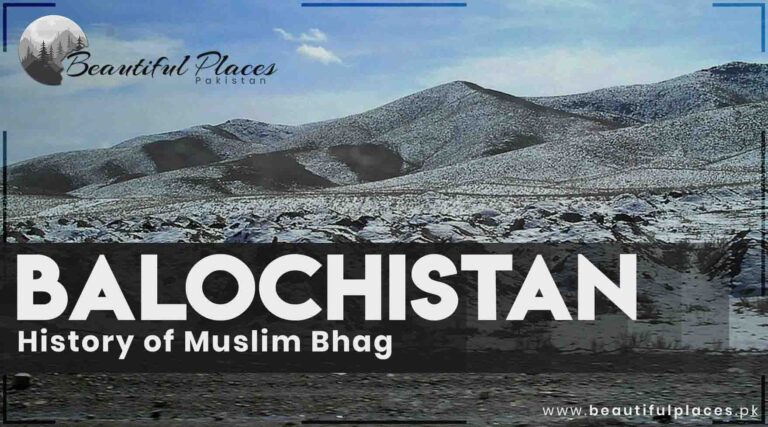
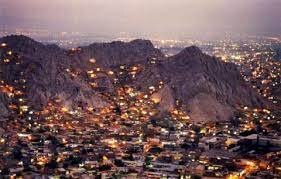
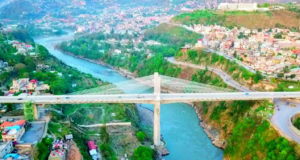
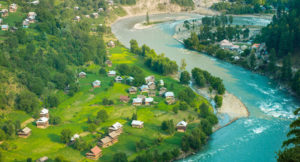
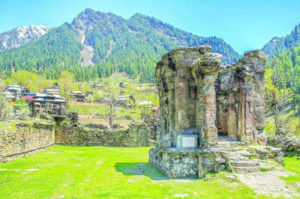
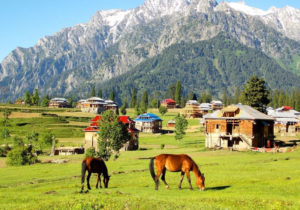
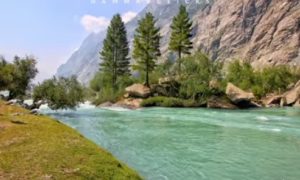
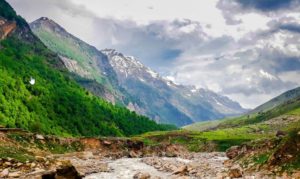
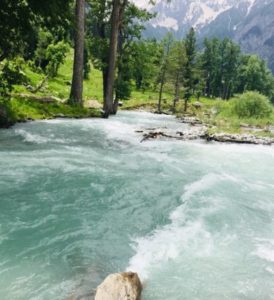
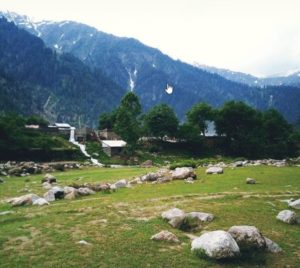
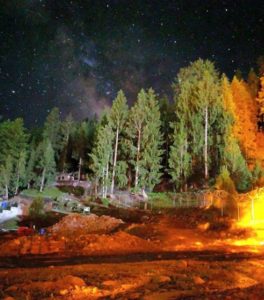
Muslim bagh is 121 km away from Quetta. A bus for the Muslim Garden is available from the Pasheen Bus stand in Quetta. The scenery changes from Quetta to Kachlak.
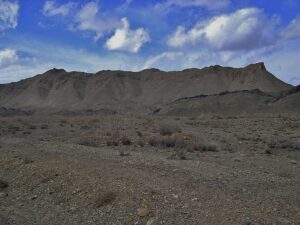
The-Hills-of-Muslim-Bhag-Balochistan.
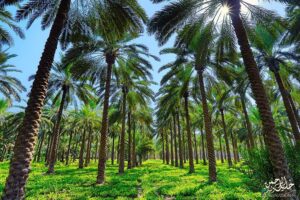
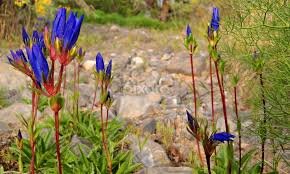
Muslim Bagh is located 6000 feet from sea level. On the way, there are apples, grapes, and oranges trees instead of drylands and plain grounds.
During the Akbar regime, the Muslim Garden was a part of eastern Qandahar.
Underground water channels are built for irrigation purposes. They are named “Karez”. They are used to supply water to large distances. Shakar Num is the best picnic spot which is a few miles away from this area.
Key information about Muslim Bagh
Attribute
Details
Name
Muslim Bagh
Location
Balochistan, Pakistan
Coordinates
Approximately 29.8500° N latitude and 69.5707° E longitude
Population
Estimated population of around 50,000 (figures may vary)
Climate
Arid climate with hot summers and mild winters
Elevation
Around 1,252 meters (4,108 feet) above sea level
Language
Balochi, Urdu
Major Industries
Chromite mining, Agriculture
Historical Significance
Presence of ancient archaeological sites
Education
Limited educational institutions
Healthcare
Basic healthcare facilities available
Transportation
Connected by road; limited air connectivity
Local Cuisine
Traditional Balochi dishes, local specialties
Notable Features
Chromite mines, scenic landscapes
Challenges
Limited access to education and healthcare facilities, economic diversification
Explore Muslim Bagh
Geography and Landscape
Muslim Bagh is situated in the northwest of Balochistan, surrounded by the Khudai Range and Spin Ghar mountains. The town is strategically located, serving as a gateway to Afghanistan. The area’s topography is characterized by arid landscapes, rocky mountains, and vast stretches of wilderness, contributing to the unique charm of the region.
Mining Heritage
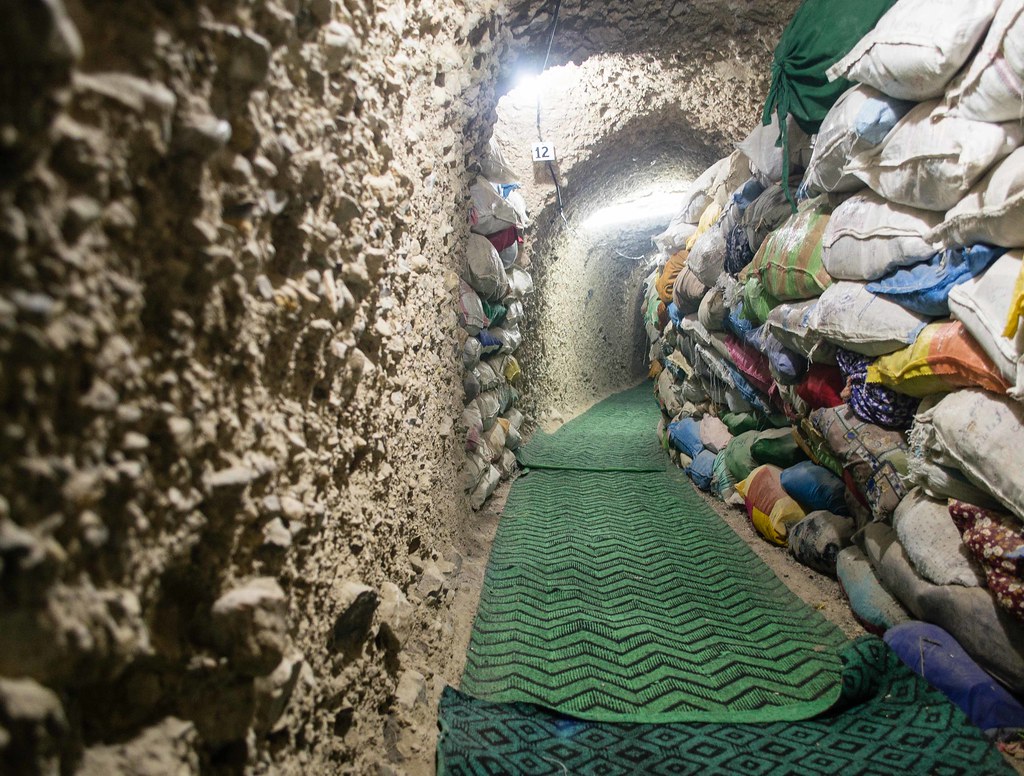
One of the defining features of Muslim Bagh is its association with mining activities. The town is renowned for its chromite deposits, a mineral with significant industrial applications. The mining industry in Muslim Bagh has been a cornerstone of the local economy, attracting attention not only for its economic impact but also for the challenges and opportunities it presents.
Historical Significance
Muslim Bagh has witnessed a tapestry of historical events that have shaped its identity. The town’s history is closely linked to the broader history of Balochistan, a region that has been a crossroads for various civilizations and cultures throughout the ages.
The region’s historical narrative is influenced by the migration patterns of different ethnic groups, including Baloch tribes, Pashtuns, and others. Muslim Bagh, situated at the crossroads of trade routes, became a melting pot of diverse influences, contributing to its unique cultural tapestry.
Colonial Era
During the British colonial period, Muslim Bagh gained prominence due to its strategic location and valuable mineral resources. The colonial administration recognized the economic potential of the region and invested in the development of infrastructure, including roads and railways, to facilitate the extraction and transportation of minerals.
Independence and Post-Partition Era
With the creation of Pakistan in 1947, Muslim Bagh became an integral part of the newly formed country. The mining industry continued to play a crucial role in the region’s development, contributing to the national economy. However, like many other regions in Pakistan, Muslim Bagh faced challenges related to governance, infrastructure development, and socioeconomic disparities.
Challenges and Opportunities
While Muslim Bagh has been blessed with abundant natural resources, it has also faced challenges related to sustainable development, environmental conservation, and the well-being of its residents. Balancing the extraction of minerals with the preservation of the region’s ecological integrity remains a pressing concern.
Historical Places and Picnic Spots in Muslim Bagh, Balochistan:
Chotok Waterfall
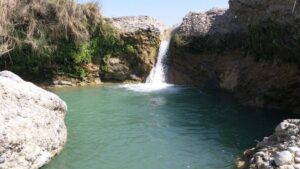
Nestled amidst the rugged terrain, Chotok Waterfall is a picturesque natural wonder near Muslim Bagh. The site offers not only scenic beauty but also serves as a refreshing retreat for locals and visitors alike.
Old Fort Ruins
The remnants of an old fort in the vicinity stand as a testament to the historical past of Muslim Bagh. Exploring these ruins provides a glimpse into the town’s ancient architecture and the stories it holds.
Ancient Graveyard
The ancient graveyard in Muslim Bagh is a place of historical significance, reflecting the burial traditions of the region. The tombstones and structures in the graveyard carry the echoes of the past.
Gulshan Park
Gulshan Park is a popular picnic spot, offering lush greenery and a serene atmosphere. Families and friends often gather here to enjoy a day outdoors, surrounded by nature.
Spin Ghar Mountains
The majestic Spin Ghar Mountains provide a stunning backdrop for picnics and outdoor activities. The panoramic views and cool mountain air make it an ideal destination for nature enthusiasts.
Chapli Hills
Chapli Hills, with their rolling landscapes and open spaces, are perfect for picnics and outdoor recreation. The hills provide a vantage point to appreciate the natural beauty of the surroundings.
Local Bazaars
Exploring the local bazaars in Muslim Bagh is a cultural experience. These bustling markets showcase the vibrant life of the town, with shops offering traditional crafts, spices, and local produce.
Mosques and Shrines
Muslim Bagh is home to various mosques and shrines that hold cultural and religious significance. These sites not only serve as places of worship but also provide insights into the town’s spiritual heritage.
Koh-e-Sulaiman Caves
The Koh-e-Sulaiman Caves, situated in the nearby mountains, are a fascinating destination for adventure seekers. Exploring these caves allows for an immersive experience in the region’s geological wonders.
Tips for Visitors
Check weather conditions before planning outdoor activities.
Respect local customs and traditions, especially when visiting religious sites.
Dispose of waste responsibly to preserve the natural beauty of picnic spots.
Schools and Colleges
Government High School, Muslim Bagh
Muslim Bagh Degree College
Balochistan College of Education, Muslim Bagh
Hospitals
Muslim Bagh Hospital
District Headquarters Hospital, Muslim Bagh
Rural Health Center, Muslim Bagh
Restaurants
Khan Restaurant
Balochistan Grill House
Gulshan Cafe & Restaurant
Frequently Asked Questions (FAQs)
What is the historical significance of Muslim Bagh?
Muslim Bagh has a rich history shaped by its strategic location and abundant mineral resources. Its history is intertwined with the broader historical narrative of Balochistan, reflecting the migrations of diverse ethnic groups and the influences of various civilizations.
What is Muslim Bagh known for?
Muslim Bagh is renowned for its chromite deposits, making it a significant player in the mining industry. The town’s economy has historically thrived on the extraction of minerals, particularly chromite, contributing to its identity and economic importance.
Are there notable educational institutions in Muslim Bagh?
Yes, Muslim Bagh is home to schools and colleges that cater to the educational needs of the local population. Some examples include Government High School, Muslim Bagh, Muslim Bagh Degree College, and Balochistan College of Education.
What healthcare facilities are available in Muslim Bagh?
Healthcare in Muslim Bagh is facilitated by institutions such as Muslim Bagh Hospital, District Headquarters Hospital, and Rural Health Center. These facilities play a crucial role in providing medical services to the local community.
Are there any popular restaurants in Muslim Bagh?
Certainly, Muslim Bagh boasts a variety of restaurants that cater to local tastes. Examples include Khan Restaurant, Balochistan Grill House, and Gulshan Cafe & Restaurant, offering a range of dining options to residents and visitors.
How has Muslim Bagh evolved since independence?
Since Pakistan’s independence in 1947, Muslim Bagh has been an integral part of the country. It has witnessed changes in governance, infrastructure development, and socioeconomic dynamics, with the mining industry continuing to be a key driver of its development.
What challenges does Muslim Bagh face today?
Like many regions, Muslim Bagh faces challenges related to sustainable development, environmental conservation, and socioeconomic disparities. Balancing mineral extraction with ecological preservation is an ongoing concern for the town.
Is there potential for growth and development in Muslim Bagh?
Yes, Muslim Bagh holds significant potential for growth and development. Addressing challenges such as sustainable resource management and infrastructure development can unlock opportunities for the town’s progress.
Where can I find the most up-to-date information about Muslim Bagh?
For the latest information about Muslim Bagh, consider checking local directories, community websites, or contacting relevant authorities in the town. Online sources and community forums may also provide updated details about the town and its amenities.
Wind Up Lines
Muslim Bagh, with its rich history and abundant natural resources, stands as a testament to the resilience and adaptability of the people who have called this region home. As the town continues to navigate the complexities of the modern era, it remains a symbol of the interplay between tradition and progress, history and the future, all against the backdrop of Balochistan’s enchanting landscapes.
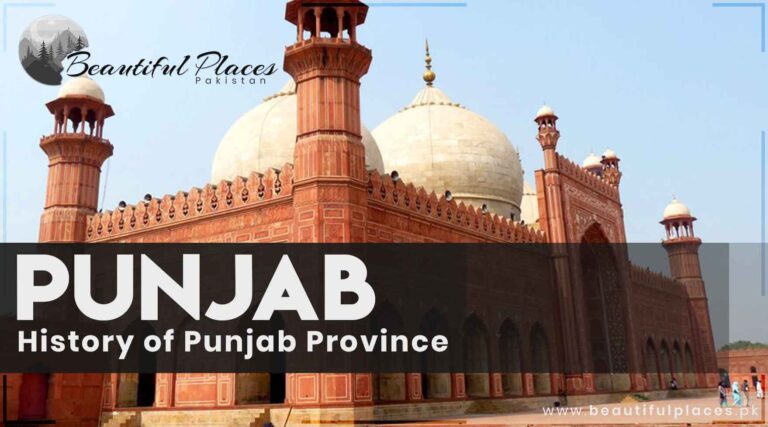
Province Punjab has been distinguished in every era because of its prolific, fruitful, and fertile lands. Punjab civilization is one of the ancient civilizations. It is due to the amalgamation of local and global cultures. The Capital city of Punjab is Lahore.
Key info About Punjab – Pakistan
Aspect
Details
Name
Punjab
Location
Eastern Pakistan, bordered by Sindh, Balochistan, Khyber Pakhtunkhwa, and the Indian states of Jammu and Kashmir to the east.
Area
Approximately 205,344 square kilometers (second-largest province in Pakistan).
Population
Exceeding 110 million people (most populous province in Pakistan).
Capital
Lahore (cultural and economic hub of Pakistan).
Official Language
Urdu (official), Punjabi (widely spoken with cultural significance).
Administrative Divisions
Multiple divisions and districts, including Lahore, Faisalabad, Multan, Rawalpindi, and more.
Economy
Economic heartland of Pakistan, contributing significantly to the country’s GDP. Known for agriculture, industry, and trade.
Major Industries
Textiles, manufacturing, pharmaceuticals, and IT. Lahore is a key center for industrial and technological activities.
Education
Home to numerous educational institutions, including the University of the Punjab, Lahore, and various other universities, colleges, and schools.
Cultural Heritage
Rich cultural heritage with historical landmarks such as the Badshahi Mosque, Lahore Fort, and Shalimar Gardens. Traditional Punjabi music, dance, and cuisine are integral to the culture.
Transportation
Extensive road and rail network connecting major cities. Lahore’s Allama Iqbal International Airport is a key international gateway.
Tourist Attractions
Besides historical sites in Lahore, Punjab offers attractions like the Katas Raj Temples, Rohtas Fort, and the scenic hills of Murree.
Festivals
Punjabis celebrate various festivals, including Basant (spring festival) and Eid-ul-Fitr, with enthusiasm and traditional fervor.
Explore Punjab
History of Punjab Province
In primeval times, Punjab is termed “Sapat Sindhu” in the holy book of Arya’s “Rigveda”. Rigveda (sacred text) has some phrases from 2400 B.C. However, it is difficult to tell when Sapat Sindhu became a part of Rigveda. According to the Britannica encyclopedia, the famous tourist Ibn Battuta first used the term “Punjab” in his travelogue.
In the past, Punjab was called by different names. Some famous names were Punjab, Punj Do Aab, Punj Jinya Krishti, Punjnad, Whake, Gosh, Sapat Sindhu, and Hept Sindhu.
According to researchers, Punjab is Man’s first birthplace. They thought that it is the only place in Asia where about 60 million years old fossils were discovered. Punjab is the name of land irrigated by five rivers. It is a word in the Persian language that is a combination of “Punj” and “Aab”.
In the ancient ages, Punjab was the first battlefield for the invaders coming from the northwest passes. At those times, the defense system of Punjab was strong. The whole sub-continent was saved from foreign dominion. Arya faced a lot of opposition in Punjab. The war between Arya and the ten kings was fought near River Ravi in the Harappa surrounding.
The high-level civilization of Harappa is a manifestation of the existence of an excellent political system there.
In the koro Kheshter ground, a war was fought between Kors and Pandos. The states of king Poras and Maloha were prominent when the Great Alexander attacked this area. He fought with such courage, audacity, and fearlessness that it is engraved in the pages of history with indelible impressions.
Due to this militant quality of Punjabis, the sequence of Greek conquest was broken. The Great Alexander had to come back with a regret in his heart.
The historians have a conflict about the beginning of a historic era in Punjab.
It is assumed that it started after the arrival of Arya in this area (1600 B.C) and Rigveda. After that, Hakhamaneshi came into power. They invented coins. Their reign ended after the attack of the Greeks. Greeks promoted Buddhism. The Greeks’ government ended in just two years. After Alexander, Chander Gapat Moria ruled this area. Then, Bhakti overtook the subcontinent and established Taxila (Surkap).
Sakaya Shik (governed this area for 100 years), Parthi or Pehalwa (Gandhara Art initiated during this regime), Kishan (their era is the golden age of Buddhism), Sasani (their government lasted for forty years) Kedar Kishan (they came from Balkh) and Hun ( they ruled Punjab for two hundred years) are some important pages of Punjab’s deep-rooted history. Sanskrit was the official language. Hun was used to preaching to people. They built the largest temple in Multan. Kashmiri and then Hindu Shahi came into power. This sequence continued until the Arab influx.
Muhammad Bin Qasim occupied Sindh and after one year, Arabs conquered Multan. Thenceforth, Mehmood Ghaznavi subjugated Punjab and led the foundations of the First Islamic Government. Lahore was the province of Ghaznavi Sultanate. Sultans were also blessed with the Punjab reign.
The emperors changed over time. The Mughals era was a golden period for the sub-continent. They started a series of construction of grand buildings in the sub-continent, especially in Punjab.
Lal fort Delhi, Fateh Pur Sikri, Taj Mahal Agra, Taj Mahal, Shahjahan Mosque, renovation of Lahore fort, Sheesh Mahal, Moti Mosque, Shahi Mosque Lahore, Noor Jahan’s tomb, Shalimar Garden, Kamran Bara Dari, Jahangir’s tomb, Rohtas fort, GT road Peshawar to Kolkata, are the symbols of their keen interest in architect.
Sikhs took the advantage of Mughals’ weakness and conquered the various areas of Punjab. Shahi fort, Badshahi Mosque, Hazoori garden, and golden temple in Amar tassar are built by King Ranjeet Singh. At last, the Sikh era ended.
The British had a stronghold in India before the Sikh regime. However, it took one century to conquer Punjab. In 1849, Britishers subjugated Punjab with their planning. Their monarchy ended in 1857, after the freedom movement “Tehreek-e-Azadi”.
There was a time when the boundaries of Punjab (situated in the northwest of the sub-continent) were spreading from Sir Hind Shahreef to Khyber Pass and Kashmir to Karachi on the other side. Sometimes, the administration of Lahore was called Punjab province. The areas of D.G Khan, D.I. Khan, Peshawar, Banu, Kohat, Bahawalpur, Kangra, Kashmir, Hazara, Tibet, Ladakh, Jammu were included in the Punjab territory during the Sikh reign. British included Delhi, Hassar, and Ambala Division in Punjab.
In 1901, The Britishers separated the province KPK (North-West Frontier Province) from Punjab. In 1912, Delhi was declared a separate province.
Today’s Punjab
Located at 40-27- and 34-1-degrees longitude and 10-69 to 20-75 degrees latitude, Punjab’s demarcated and undisputed boundaries after 14th August 1947 are as follows. In the north, the Himalayas range separates it from Tibet and Kashmir. KPK is situated in the northwest. The river Indus lies between KPK and Punjab. It has Balochistan in the west, Sindh in the south, and India (Hindustan) in the East.
Punjab’s total area is 205344 square kilometers. Its area is about 25.8 % of Pakistan’s total area. At the creation of Pakistan, it was the largest province of Pakistan in terms of population, and still, it is the largest province. Lahore is its capital.
In 1951, according to the first census, the total population of Punjab was 20541000. Nowadays, its population Is about 10 crores.
The mainland of Punjab is located at a greater distance from the poles and at a relatively short distance from the equator. Therefore, the duration of the winter season is less than the summer season. The southern areas are too hot. On the contrary to this, northern areas are cold. The weather is pleasant in February, March, and April. It is very hot from May to July. In some areas (Multan, Bahawalpur, Mianwali, and Bahawalnagar) the temperature goes beyond 48.
Punjab, Pakistan
The rainy season starts at the end of July and goes till the mid of September. The winter season prevails from November to January. It is too cold in the northern areas of Punjab and the temperature drops below freezing.
Overall, it is agricultural land. A network of Canals is designed for irrigation and cultivation purposes. It is considered to be the best canal system in the World. The fertility and production of agricultural land depend on this Canal system.
Ancient Roots
The history of Punjab dates back to ancient times when the Indus Valley Civilization flourished along the banks of the mighty Indus River. The region has been a melting pot of diverse cultures, influenced by the Aryans, Persians, Greeks, and Mauryans. The city of Taxila, an ancient center of learning, stood as a beacon of wisdom, attracting scholars from far and wide.
Mauryan and Gupta Empires
Punjab played a pivotal role during the reign of the Mauryan and Gupta Empires. The great Mauryan emperor, Ashoka, embraced Buddhism, and remnants of his rock edicts can still be found in various parts of the province. The Gupta period marked an era of cultural and artistic flourishing, leaving an indelible imprint on Punjab’s heritage.
Islamic Influences
With the advent of Islam in the 7th century, Punjab became a crossroads for trade and cultural exchange. The region saw the establishment of prominent Islamic centers, and Sufi saints played a crucial role in spreading the message of Islam. The city of Multan, with its ancient shrines, became a significant center of Sufi mysticism.
Mughal Splendor
The Mughal era stands as a golden chapter in Punjab’s history. Under the rule of Akbar, Lahore became the capital of the Mughal Empire, witnessing the construction of architectural marvels such as the Badshahi Mosque and Lahore Fort. The prosperity of this period is reflected in the rich gardens and exquisite artwork that dot the landscape.
British Colonial Period
The 19th century saw the arrival of the British in Punjab. The annexation of the region by the East India Company marked the beginning of a new chapter. The British developed infrastructure, introduced modern education, and established military cantonments. However, this period also witnessed significant sociopolitical changes that culminated in the struggle for independence.
Partition and Independence
The partition of British India in 1947 left an indelible mark on Punjab. The province was divided into West Punjab (now in Pakistan) and East Punjab (now in India). The partition resulted in massive migrations, communal violence, and the reconfiguration of cultural landscapes.
Post-Independence Era
Since gaining independence, Punjab in Pakistan has emerged as a powerhouse, contributing significantly to the nation’s agricultural and industrial sectors. Cities like Lahore have become vibrant centers of culture, education, and commerce. Despite challenges, the people of Punjab have demonstrated resilience and an unwavering commitment to progress.
Cultural Diversity and Heritage
Punjab’s cultural richness is reflected in its folk music, dance, and traditional festivals. Bhangra, a lively dance form, and the soulful tunes of Punjabi folk music have transcended regional boundaries, becoming global cultural phenomena.
Historical sites in Punjab
Badshahi Mosque (Lahore)
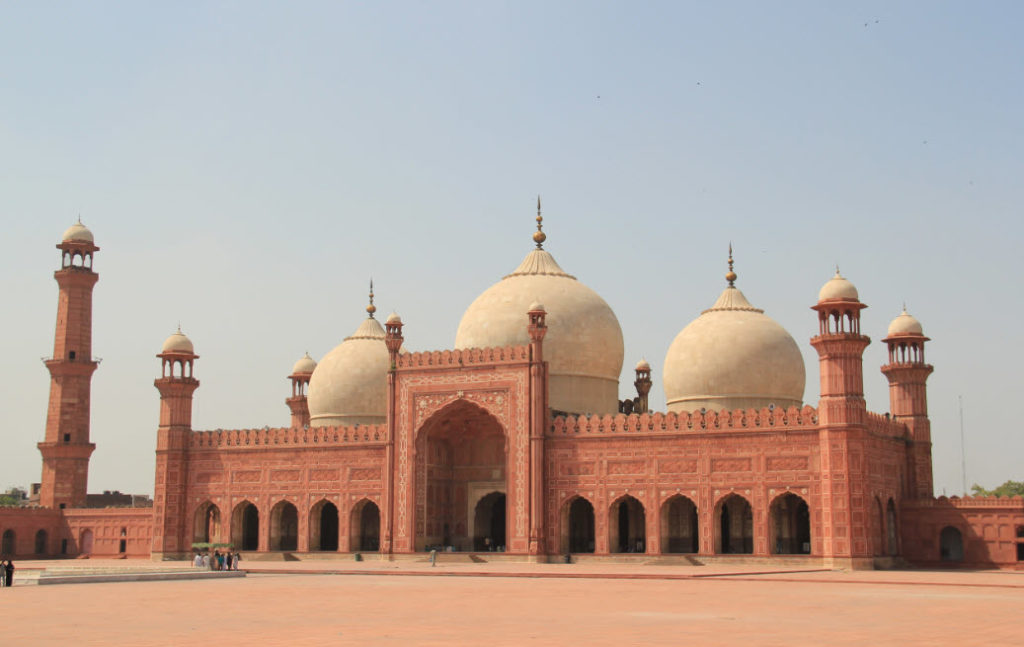
One of the largest mosques in the world, the Badshahi Mosque in Lahore is an architectural masterpiece from the Mughal era. Built during the reign of Aurangzeb in the 17th century, it boasts intricate marble inlay, elegant calligraphy, and a grand courtyard.
Lahore Fort
Adjacent to the Badshahi Mosque, the Lahore Fort is another marvel from the Mughal period. With its stunning Sheesh Mahal (Palace of Mirrors), Shalimar Gardens, and historic structures, the fort is a UNESCO World Heritage Site.
Shalimar Gardens (Lahore)
Built by Shah Jahan, the Shalimar Gardens are a series of terraced levels adorned with flowing water channels, fountains, and pavilions. The gardens represent Mughal garden design at its zenith.
Sheikhupura Fort (Hiran Minar)
Located in Sheikhupura, the Hiran Minar is a unique structure built by Emperor Jahangir in memory of his beloved pet deer. The complex includes a large water tank and a pavilion.
Rohtas Fort (Jhelum)
Commissioned by Sher Shah Suri in the 16th century, Rohtas Fort is a military stronghold built to prevent the return of the Mughal emperor Humayun. The fort stands as an excellent example of medieval military architecture.
Taxila (UNESCO World Heritage Site)
An ancient archaeological site, Taxila was an important center for Buddhist learning and a significant trade and cultural hub. The ruins include stupas, monasteries, and archaeological remains dating back to the Gandhara period.
Derawar Fort (Bahawalpur)
Located in the Cholistan Desert, Derawar Fort is a massive and well-preserved structure. Built by the Rajputs, it has a distinct medieval feel and provides panoramic views of the surrounding desert.
Katas Raj Temples (Chakwal)
A complex of several ancient temples, the Katas Raj Temples are revered by Hindus. The main temple, dedicated to Lord Shiva, is surrounded by a pool fed by freshwater springs, creating a serene and sacred atmosphere.
Ranikot Fort (The Great Wall of Sindh)
Often referred to as the Great Wall of Sindh, Ranikot Fort is the world’s largest fort, extending over 26 kilometers. Its origins are unclear, and it serves as an intriguing archaeological mystery.
Allama Iqbal’s Tomb (Lahore)
The final resting place of Allama Iqbal, a renowned poet, philosopher, and one of the founding fathers of Pakistan. The tomb is a symbol of national pride and an architectural tribute to his contributions.
Schools
Aitchison College (Lahore): A prestigious boys’ boarding school with a rich history and a reputation for academic excellence.
Convent of Jesus and Mary (Lahore): A well-known girls’ school with a tradition of providing quality education and a focus on holistic development.
Colleges
Government College University (Lahore): A renowned institution with a history dating back to 1864, known for its academic rigor and contributions to education.
Forman Christian College (FCC) University (Lahore): Established in 1864, FCC is one of the oldest colleges in South Asia, offering undergraduate and graduate programs.
Hospitals
Aga Khan University Hospital (Lahore): Part of the Aga Khan Health Services network, providing high-quality healthcare services and medical education.
Shaukat Khanum Memorial Cancer Hospital (Lahore): Founded by Imran Khan, this hospital is a leading center for cancer treatment and research.
Restaurants
Cuckoo’s Den (Lahore): Located in the historic Walled City of Lahore, Cuckoo’s Den is known for its rooftop dining and traditional Pakistani cuisine.
Salt Bae Restaurant (Lahore): A popular international chain known for its unique presentation of dishes and high-quality steaks.
Frequently Asked Questions (FAQs)
Q: What is the historical significance of Punjab in Pakistan?
A: Punjab, often referred to as the “Land of Five Rivers,” has a rich history dating back to ancient civilizations. It has been a cultural crossroads, witnessing the rise and fall of empires and the convergence of diverse cultures.
Q: Which cities in Punjab are known for their cultural and economic prominence?
A: Lahore, the provincial capital, is a major cultural and economic hub. Other cities like Faisalabad, Multan, and Rawalpindi also contribute significantly to the province’s economic activities.
Q: What is unique about Punjab’s architecture and historical sites?
A: Punjab boasts magnificent Mughal-era architecture, including the Badshahi Mosque and Lahore Fort. The province is home to ancient archaeological sites like Taxila and architectural wonders like the Rohtas Fort.
Q: How has Punjab evolved since the colonial period?
A: The colonial period brought significant changes, including the development of infrastructure and the establishment of educational institutions. Post-independence, Punjab has emerged as an economic powerhouse and a center for education and commerce.
Q: What festivals are celebrated in Punjab, and why are they significant?
A: Punjabis celebrate various festivals, including Basant (spring festival) and Eid-ul-Fitr, with enthusiasm and traditional fervor. These festivals are integral to the cultural identity of the region.
Q: Are there famous educational institutions in Punjab?
A: Punjab is home to renowned educational institutions such as Government College University (GCU) and Forman Christian College (FCC) University in Lahore, contributing to the academic landscape of the province.
Q: What are some notable hospitals in Punjab providing healthcare services?
A: Aga Khan University Hospital and Shaukat Khanum Memorial Cancer Hospital, both located in Lahore, are reputable healthcare institutions known for their quality medical services.
Q: How can I explore Punjab’s culinary scene?
A: Punjab offers a diverse culinary experience. Restaurants like Cuckoo’s Den in Lahore, with its rooftop dining, and international chains like Salt Bae Restaurant provide unique dining experiences.
Q: Is Punjab known for anything else besides historical sites and institutions?
A: Yes, Punjab is known for its vibrant cultural heritage, traditional music and dance forms like Bhangra, and its contribution to Pakistan’s agricultural output, earning it the title of the “Granary of Pakistan.”
Q: How can I stay informed about the latest happenings in Punjab?
A: Stay updated through local news sources, community websites, and online platforms for reviews and recommendations. Engaging with locals and participating in cultural events are excellent ways to stay connected with the pulse of Punjab.
Wind Up Lines
Province Punjab is a historic province. It plays a key role in the economy of the country. There are many historical cities in this province. Its capital Lahore is referred to as the cultural heart of Pakistan.
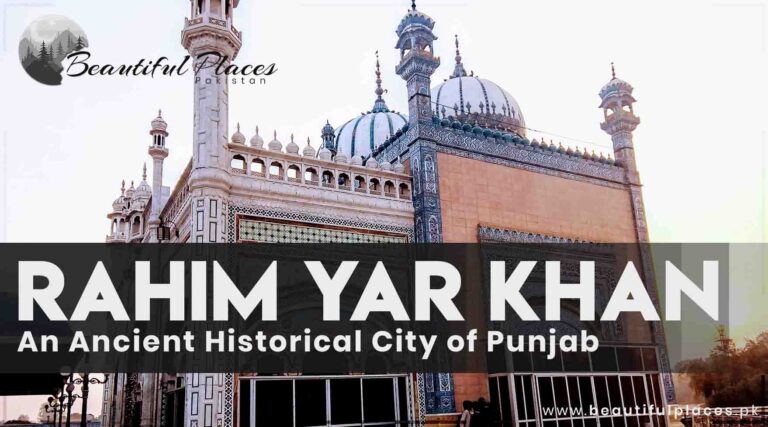
Rahim Yar Khan (RYK) is considered a city of ancient heritage. It is the 17th largest city in Pakistan by population. It plays a key role in the economy of Punjab and Pakistan through the production of cotton. The majority of people belonged to the occupation of agriculture.
Key info aboutRahim Yar Khan
Aspect
Details
Name
Rahim Yar Khan
Area
Southern Punjab, Pakistan
Location
Rahim Yar Khan is a city in the Punjab province of Pakistan, situated in the southern part of the province near the Sindh border.
Historical Significance
Rahim Yar Khan has historical importance dating back to ancient times, with cultural influences from various civilizations that have traversed the region.
Geographical Features
The city is characterized by its location in the fertile plains of the Indus River, contributing to the region’s agricultural significance.
Population
Rahim Yar Khan has a diverse population, reflecting the cultural and ethnic diversity of the Punjab province.
Economy
The city’s economy is primarily driven by agriculture, with the cultivation of crops such as cotton, wheat, sugarcane, and fruits.
Transportation
Rahim Yar Khan is well-connected by road and rail networks, facilitating transportation within the city and to other parts of the country.
Educational Institutions
The city hosts various educational institutions, including schools, colleges, and a campus of the Islamia University of Bahawalpur.
Landmarks
Notable landmarks include the Sheikh Zayed International Airport, Bahadur Suba Mausoleum, and historical sites that reflect the city’s ancient roots.
Industries
In addition to agriculture, Rahim Yar Khan has industries such as sugar and textile mills, contributing to the economic development of the region.
Healthcare Facilities
The city is equipped with hospitals and medical facilities, providing healthcare services to the local population.
Cultural Heritage
Rahim Yar Khan has a cultural heritage that encompasses traditional music, dance, and local festivals, reflecting the cultural vibrancy of the region.
Modern Developments
Recent years have seen infrastructure and development projects, enhancing the city’s facilities and improving the overall quality of life for its residents.
Exploring The Rahim Yar Khan
Historical Significance
Rahim Yar Khan, beyond its contemporary facade, carries echoes of antiquity. The city’s historical significance can be traced back to ancient times, bearing witness to the rise and fall of civilizations that traversed the fertile plains along the Indus River. This historical richness has left an indelible mark on the cultural ethos of the region.
Geographical Features
Situated in the southern part of the Punjab province, Rahim Yar Khan derives its geographical character from the fertile plains of the Indus River. The abundance of arable land has made agriculture a cornerstone of the local economy, with crops like cotton, wheat, sugarcane, and various fruits thriving in this region.
Economic Landscape
Agriculture takes center stage in Rahim Yar Khan’s economic theater. The cultivation of crops not only sustains the local populace but also contributes significantly to the national agricultural output. In addition to the agrarian sector, industries such as sugar and textiles play a vital role in the city’s economic development.
Transportation Hub
Rahim Yar Khan stands as a well-connected transportation hub, both by road and rail networks. This connectivity not only facilitates the movement of goods but also ensures efficient travel within the city and to other parts of the country.
Some Famous Historical Places
Bhong Mosque
District Raheem Yar Khan is a well-known city for the production of a variety of mangoes, fertilizers companies, flour mills, and Sugar mills. It is important to mention here the first sign of Muslim sanctity, the Mosque.
Mosques have played a major role in the progression of Islam. Mosques are the reflection of Islamic traditions and architectural inheritance in every epoch. In 1932, Renowned personality Sardar Raees Ghazi Muhammad (late) led the foundation of Bhong Mosque in the boundary of his palace in Bhong town Tehsil Sadiq Abad, district Rahim Yar Khan.
In the design of the mosque, gold is used in calligraphy and art. He took the pieces of art from Lahore, Iran, Spain, and turkey and blended them with western fine art to build a splendid masterpiece.
In the construction of the mosque, Teak, Ivory, Marble, valuable stones, Glazed tiles, Fresco, glasswork, Gilded Tracery, ceramic, complex calligraphy, the latest artificial marbleized tiles, colorful cement tiles, and other arts were assorted.
Bhong Mosque, Rahim Yar Khan
Islamic art is prominent in all parts of the mosque. This mosque was completed in fifty years. For this purpose, masons from Rajasthan India, craftsmen from Multan for glazed tile work, and calligraphers from Karachi were called. Workshops were established.
The skill was transferred from father to son and then to grandson. One thousand workers were trained during the groundwork of the mosque.
The entering door is a duplicate of Imam Raza (R.A)’s shrine door in Mashhad. A spacious garden with fountains like the Shalamar garden Lahore is there.
He was bestowed with the Sir Agha Khan award in Morocco in recognition of building such a high-profile mosque at the regional level. On 23rd March 2004, the President of Pakistan presented him “Sitara -e- Imtiaz” for his services.
Pakistan post issued the first stamp on 12th May 2004. It is 20 km from the Sadiq Abad. Tourists can visit this mosque by bus and wagon.
Rahim Yar Khan City
In 1751, Fazal Elahi Hilani established the city Nowshera on the remains of Phal Wada fort which is situated 25 km from Sadiqabad. Forth Nawab Sadiq Muhammad Khan, governor of Bahawalpur named this city “Rahim Yar Khan” after the name of his son from his second wife.
Rahim-Yar-Khan-Punjab-Pakistan
Next year, on 23rd February 1882 he died in a fireworks display. Its name was Nowshera in papers until 1932. Nowshera mines canal is still flowing in the city. Sheik Zaid Bin Sultan (United Arab Emirates) captivated the hearts of the people by playing a role in the prosperity and development of this city.
Patan Menara
Artifacts unearthed from the ruins of these desolate settlements on the east bank of the ancient Indus crossing reveal the fact that the area was no less important than the ancient cities of Harappa and Mohan Jodaro.
According to some historians, Mahatma Gautam Buddha established an educational institute there. Patan Menara was the Burj of this splendid building. There is a clue of many basements near the Burj.
The temple was built around 300 BC, according to Sanskrit inscriptions on the recovered bricks. Kernel Manchon excavated near Patan Menara. During this time a very strange thing came to light a very foul liquid substance came out of the earth on which huge ants were sitting. Whoever was bitten by this creature fell down and died in agony. Therefore, the excavation was immediately canceled. These ruins are spread over miles.
Patan Minar, Rahim Yar Khan
In the early 18th century, a big fair was organized there. There were two ponds in the Shiwateri fair. One was full of milk and one was full of water. In 1840, its administrator Sadho Baba Rata suicide by pressing himself in salt.
His devotees made a Mardi named Shiva temple. Here the worship of Shivling began. Childless Hindu women started coming here in droves to have children. Muslim women also started coming there. There arose a dispute and the temple was demolished. A mosque was constructed named Patan Menara. It is present to date.
This old memorable mosque of the Buddhism era is situated 10 km to the east of Rahim Yar Khan city. This mosque is located on a podium at a height of 26 feet and covers an area of 14 square feet.
From the present piece of the building, seeing the beautiful construction, one can be sure that it is a part of this magnificent building which is centuries old. Rahim Yar Khan is declared the twin city of Paris, Abu Dhabi, and Sydney.
Bhutta Wahan
It is situated 20 km away from Rahim Yar Khan city on the KLProad. It is said that this town was settled in Daher’s era. It is supposed to be the birthplace of the famous romantic folk tale character Sassi.
Besides this, it is the hometown of the Mughal emperor Akbar’s courtier and politician Abul Fazal and Scholar Faizi. According to Locals, if a female gives birth to a son in BhuttaWahan he will have the traits of Abul Fazal, Faizi, and Sassi.
Moreover, it is the homeland of Mughal king Akbar’s advisor Mulla Do Piaza. Located 3 miles from Zahir Pir to Khanpur Road near this Bhutta Wahan, the area of Jajja Abbasia is famous for its high production of dates.
Schools
Beaconhouse School System (Rahim Yar Khan Campus): A part of the renowned Beaconhouse School System, providing quality education from preschool to higher grades.
The City School (Rahim Yar Khan Campus): A prominent school offering a comprehensive curriculum and a focus on holistic development.
Colleges
Punjab College (Rahim Yar Khan Campus): A well-established college providing intermediate and undergraduate programs in various disciplines.
Government Sadiq College Women University (GSCWU): A women’s university offering higher education opportunities in Rahim Yar Khan.
Hospitals
Rahim Yar Khan Medical College and Hospital: A major healthcare institution providing medical education and healthcare services to the local community.
Shifa International Hospital (Rahim Yar Khan): A branch of the renowned Shifa International Hospitals network, offering comprehensive medical facilities.
Restaurants
Royal Chalet Restaurant: Known for its diverse menu and comfortable ambiance, offering a variety of Pakistani and international cuisines.
The Grill House: A popular restaurant specializing in grilled dishes and offering a contemporary dining experience.
Frequently Asked Questions (FAQs)
Q: What is the historical significance of Rahim Yar Khan?
A: Rahim Yar Khan holds historical importance dating back to ancient times, with influences from various civilizations that have traversed the region.
Q: Are there ancient landmarks in Rahim Yar Khan?
A: Yes, the city boasts landmarks reflecting its ancient roots, including the Bahadur Suba Mausoleum and other historical sites.
Q: How has Rahim Yar Khan evolved over time?
A: From its historical origins, Rahim Yar Khan has adapted to modern developments, witnessing changes in infrastructure and overall urbanization.
Q: What cultural heritage does Rahim Yar Khan possess?
A: The city’s cultural heritage encompasses traditional music, dance, and local festivals, reflecting the vibrant cultural tapestry of the region.
Q: Are there archaeological sites in Rahim Yar Khan?
A: While not as well-known as some other regions, Rahim Yar Khan has archaeological sites that reveal glimpses of its ancient past.
Q: What role does agriculture play in the history of Rahim Yar Khan?
A: Agriculture has been a historical cornerstone, with the fertile plains of the Indus River contributing to the city’s economic significance.
Q: How can visitors explore the historical side of Rahim Yar Khan?
A: Visitors can explore landmarks like the Bahadur Suba Mausoleum and indulge in cultural experiences, including traditional music and festivals.
Q: Are there efforts to preserve Rahim Yar Khan’s historical sites?
A: Preservation efforts are ongoing to safeguard the city’s historical sites and maintain a connection to its rich heritage.
Q: What is the significance of the Sheikh Zayed International Airport?
A: The airport is a notable landmark and contributes to the city’s modern connectivity, symbolizing its adaptability to changing times.
Q: How can one learn more about Rahim Yar Khan’s history?
A: Local museums, historical societies, and cultural events are great avenues for delving deeper into the history of Rahim Yar Khan.
Wind Up Lines
Rahim Yar Khan stands as a dynamic city where history intertwines with progress. It’s a place where the echoes of ancient civilizations harmonize with the hum of modernity, creating a unique cultural and economic tapestry in Southern Punjab. As Rahim Yar Khan navigates its journey through time, it remains a symbol of resilience, growth, and the enduring spirit of its people.
It is located in southern Punjab. The closest Metropolitan city is Multan. Most people rely on agriculture for their livelihood.Established in 1985, this region not only bears witness to the dynamic pulse of contemporary life but also echoes with the footprints of empires and the whispers of Sufisaints.
From its fertile plains nourished by the Chenab and Indus rivers to the historical landmarks that stand sentinel, Muzaffargarh beckons explorers to unravel its rich tapestry of history and heritage. In this introduction, we embark on a journey to discover the allure of Muzaffargarh, where time seems to dance between the past and the present.
Key information about Muzaffargarh PK
Heading
Information
Location
Southern Punjab, Pakistan
Establishment
Established in 1985 as a separate district
Area
Approximately 8,249 square kilometers
Population
According to the 2017 census, over 4 million people reside in the district.
Geographical Features
Situated between the Chenab and Indus rivers, Muzaffargarh is known for its agricultural plains.
Historical Significance
Muzaffargarh has a rich history dating back to ancient times, with influences from various civilizations, including the Indus Valley Civilization and the Mughal Empire.
Economy
Predominantly agrarian, with a focus on crops such as cotton, wheat, and sugarcane. The district also has an emerging industrial sector.
Major Crops
Cotton, wheat, sugarcane, and rice are among the major crops cultivated in the district.
Languages Spoken
Punjabi is the primary language, and Urdu is also widely spoken.
Administrative Setup
Divided into several tehsils, including Muzaffargarh, Kot Addu, Alipur, and Jatoi.
Educational Institutions
Muzaffargarh has various educational institutions, including degree colleges and schools catering to the educational needs of the local population.
Healthcare Facilities
The district has hospitals and healthcare facilities, including Tehsil Headquarter Hospital Muzaffargarh and others, providing medical services to the residents.
Transportation
Well-connected by road, with major highways passing through the district.
Notable Landmarks
Tomb of Shah Shams Sabzwari, a revered Sufi saint. Muzaffargarh Fort, a historical fort that reflects the region’s rich history.
Local Culture
Rich cultural heritage with influences from Sufi traditions, reflected in local festivals and celebrations. The district is known for traditional music and folk arts.
Industries
Agriculture is the primary industry, and there is a growing presence of industries, including textiles and agribusiness.
Natural Resources
Rich in fertile agricultural land, with the rivers providing water resources for irrigation.
Tourist Attractions
While not widely recognized as a tourist destination, Muzaffargarh offers historical and cultural sites for those interested in exploring the region’s heritage.
Famous Historical Place
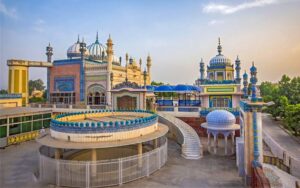
Sakina-Tu-Sughra Mosque
A Pakistani Cardiologist based in the United States Dr. Ismail Bukhari built this mosque in Kotla Raham Ali Shah town which is 11 km from Jatoi and 74 km from Muzaffar Garh.
Before that, there was a madrassa and a small mosque. Maulana Obaid Ullah Sindhi got his early education in this Madrassa. Dr. Ismail Bukhari renovated this mosque and allocated an area of 56 canals. He analyzed different architectural styles of the mosques in the World and selected Turkey’s architectural style for this mosque.
The map of this three-floor mosque was designed by the renowned Turk Architect engineer Najeeb. The raw material was imported from Turkey. The chandeliers in this mosque were designed by the same company which designed the chandeliers of masjid -e- Nabi ﷺ.
Sakina-tu-Sughra mosque
It was completed in a short duration of sixteen months. It gives a pleasant feeling when you enter this mosque.
The sacred names Allah and Muhammad are written with grass. The white marble net in the inner part of the mosque is a fine example of Mughal and Multani art.
The main door of this mosque resembles the front gate of Masjid-e- Nabiﷺ. The height of the mosque is 80 feet and the height of the two minarets is 186 feet. It consists of 23 small domes and teak wood is used in its doors.
A madrassa is connected to this mosque and more than 400 students are getting religious education there.
Transport is available from Multan to Jatoi. People can visit Kotla Raham Ali Shah through local transport.
Kot Addu Fort
Located near Kot Addu, this historic fort dates back to the Mughal era. It stands as a testament to the architectural grandeur of that period and offers a glimpse into the region’s rich history.
Shrine of Hazrat Bahauddin Zakariya
Situated in the city of Muzaffargarh, this shrine is dedicated to Hazrat Bahauddin Zakariya, a prominent Sufi saint. It holds religious and historical significance, attracting devotees and visitors alike.
Alipur Fort
Alipur Fort, also known as Qaisr-e-Nasrullah, is an imposing structure in the city of Alipur. Built during the British colonial period, the fort reflects a blend of British and Mughal architectural styles.
Fort Qasim Bagh
This historic fort is located in Multan but is often associated with Muzaffargarh due to its proximity. Built by the Mughal Emperor Akbar, it served as a military outpost and is now a popular public park.
Ruins of Moenjodaro
While not directly in Muzaffargarh, the district has connections to the ancient Indus Valley Civilization, and remnants of this civilization, including Moenjodaro, can be explored in the broader region.
Kot Sultan
Kot Sultan, a town in Muzaffargarh District, is known for its historical and cultural significance. The town has archaeological sites that showcase the ancient history of the region.
Kot Mithan
This historical town is known for its association with the Sufi saint, Khawaja Ghulam Farid. The shrine of Khawaja Ghulam Farid is a revered place for spiritual seekers and tourists.
Nawab’s Fort, Jatoi
Jatoi, a tehsil in Muzaffargarh District, is home to Nawab’s Fort. The fort carries historical significance and is a reflection of the architectural styles prevalent during the rule of nawabs in the region.
Schools
Govt. High School Muzaffargarh
The Educators School, Muzaffargarh Campus
Bloomfield Hall School, Muzaffargarh
Colleges
Govt. Degree College Muzaffargarh
Superior College Muzaffargarh Campus
Punjab College Muzaffargarh
Hospitals
District Headquarters (DHQ) Hospital Muzaffargarh
Akram Hospital Muzaffargarh
Shifa International Hospital Muzaffargarh
Restaurants
Food Street Muzaffargarh
Green Hut Restaurant
Al-Noor Fast Food
Frequently Asked Questions
Q: What is the significance of Muzaffargarh District in Punjab, Pakistan?
A: Muzaffargarh District holds historical and cultural importance in Punjab, known for its agricultural prowess, strategic location along the Chenab River, and a rich tapestry of diverse communities.
Q: How did Muzaffargarh get its name?
A: The district is named after Nawab Muzaffar Khan, a prominent figure during the Sikh rule in the early 19th century. His contributions to the development of the area led to the district being named in his honor.
Q: What is the geographical location of Muzaffargarh?
A: Muzaffargarh is situated along the banks of the Chenab River, making it a vital part of the fertile plains of the Indus River in Punjab, Pakistan.
Q: Can you provide a brief overview of Muzaffargarh’s historical background?
A: Muzaffargarh has a rich history dating back to ancient times, with evidence of habitation during the Indus Valley Civilization. It became part of various empires, including the Delhi Sultanate and the Mughal Empire, before witnessing the influence of Nawab Muzaffar Khan during the Sikh rule.
Q: How did British colonialism impact Muzaffargarh?
A: The British colonial period marked significant developments in Muzaffargarh, with the introduction of modern irrigation systems that transformed the district into a major agricultural center.
Q: What is the mainstay of Muzaffargarh’s economy?
A: Agriculture is the backbone of Muzaffargarh’s economy. The district is renowned for the production of crops such as cotton, wheat, rice, and sugarcane, owing to its fertile soil and extensive canal system.
Q: What cultural heritage sites can be found in Muzaffargarh?
A: Muzaffargarh boasts numerous cultural heritage sites, including forts, shrines, and ancient settlements. These architectural marvels reflect the diverse influences that have shaped the district over the centuries.
Q: What challenges does Muzaffargarh face today?
A: Muzaffargarh faces challenges such as water scarcity, inadequate infrastructure, and socio-economic disparities. Efforts are underway to address these issues and ensure sustainable growth for the district.
Q: How has Muzaffargarh evolved post-independence in Pakistan?
A: After the partition of India in 1947, Muzaffargarh became part of Pakistan. The region faced challenges associated with population migration but gradually stabilized, continuing its agricultural prominence within the country.
Q: What opportunities are being explored for the future development of Muzaffargarh?
A: Efforts are being made to address challenges and unlock the full potential of Muzaffargarh. This includes initiatives to improve infrastructure, address water scarcity, and promote socio-economic development for the well-being of the community.
Wind Up Lines
Muzaffargarh District, with its storied past and vibrant present, stands as a testament to the resilience of its people and the richness of its cultural heritage. From ancient civilizations to the challenges of the modern era, Muzaffargarh continues to evolve, contributing to the tapestry of Punjab’s history and progress. As the district looks towards the future, it remains a vital and dynamic part of Pakistan’s cultural and economic landscape.
This city is located in Punjab Pakistan. It is abbreviated as D.G. Khan. Fort Manru is a famous tourist spot in the district of Dera Ghazi Khan.
Dera Ghazi Khan, a city nestled in the southwestern part of the Punjab province of Pakistan, beckons travelers with a unique blend of historical charm and natural beauty. Renowned for its cultural heritage, the city offers a captivating journey through time, allowing visitors to witness the legacy of ancient civilizations and the traditions of a vibrant local community.
From historical landmarks to picturesque landscapes, Dera Ghazi Khan emerges as a promising destination for those seeking an immersive and enriching travel experience. Join us on a journey as we unravel the tapestry of tourism in Dera Ghazi Khan.
Key information about Dera Ghazi Khan
Aspect
Details
Name
Dera Ghazi Khan
Location
Southwestern Punjab, Pakistan
Area
Approximately 5,306 square kilometers
Population
Around 2.9 million
Geography
Situated along the western bank of the Indus River, characterized by a mix of plains and riverine landscapes
Historical Significance
Dera Ghazi Khan has a rich history dating back to ancient times, with influences from various civilizations, including the Indus Valley Civilization and the Persian Empire. Notable historical landmarks include the Ghazi Khan Fort and the tomb of Hazrat Sakhi Sarwar.
Economy
Primarily agrarian, with a focus on crops such as cotton, wheat, and sugarcane. The city also plays a role in trade and commerce due to its strategic location.
Culture
Known for its vibrant cultural heritage, Dera Ghazi Khan reflects a blend of Punjabi and Saraiki traditions. The local festivals, music, and traditional dances add to the cultural richness of the region.
Education
Home to various educational institutions, including Ghazi University and several colleges and schools. Educational facilities contribute to the intellectual development of the local population.
Tourist Attractions
Ghazi Khan Fort: A historic fort with architectural significance. Tomb of Hazrat Sakhi Sarwar: A revered Sufi shrine attracting pilgrims and tourists. Taunsa Barrage: A scenic spot along the Indus River offering picturesque views. Tomb of Ghazi Khan: The final resting place of the founder of Dera Ghazi Khan.
Infrastructure
Well-connected by road and rail. The city has hospitals, markets, and other essential facilities for residents and visitors.
Challenges and Development
Faces challenges such as water scarcity and socio-economic disparities. Ongoing development projects aim to address these issues and enhance the overall quality of life.
Sacred Shrines and Sufi Traditions
The city is home to the revered Tomb of Hazrat Sakhi Sarwar, a Sufi saint whose shrine attracts pilgrims and tourists alike. The ambiance around the shrine is infused with spirituality and cultural fervor, providing a glimpse into the Sufi traditions deeply ingrained in the region.
Famous Historical places In Dera Ghazi Khan
Fort Munro
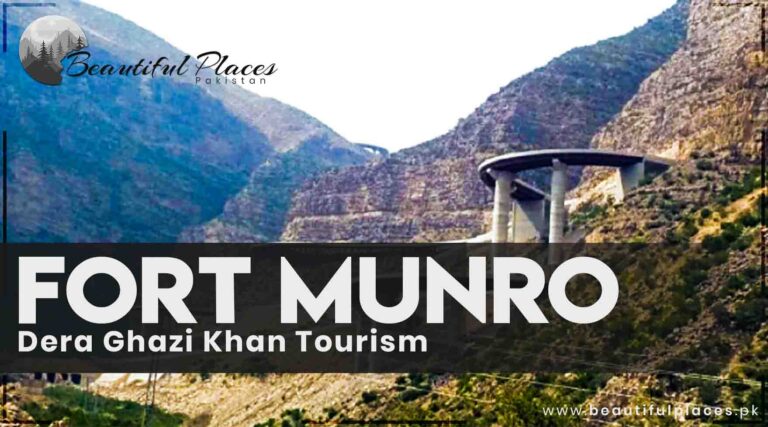
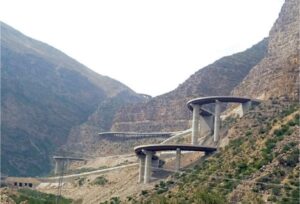
Fort Munro is a hill station built in the Suleman Mountains during British rule.
It is 174 km from Multan and 85 km from Dera Ghazi Khan. It is named after the former British Commissioner. It is 6470 feet above sea level and the only hill station in South Punjab.
It is an attraction for tourists because of its low atmospheric temperature than the surrounding areas. Many tribal chiefs of Balochistan and government departments have established rest houses.
This area is crowded in the summer season but it is deserted in the winter season. This area is famous for the mangoes and the cold climate in the summer season.
Fort Manru, Dera Ghazi Khan
Transport is available from Multan and Dera Ghazi Khan to reach fort Manru.
A TDCP resort and different hotels are there for a night’s stay. A beautiful lake, Ganji hill, and the graveyard of the British era are worth watching places. Sailing can enjoy in the lake of Dam.
The mountains in this area have minerals like iron, gypsum, and uranium.
Ghazi Khan Fort
A testament to the city’s historical legacy, Ghazi Khan Fort stands tall as a symbol of architectural brilliance. Dating back to various eras, the fort offers a captivating journey through the annals of Dera Ghazi Khan’s past.
Tomb of Hazrat Sakhi Sarwar
A revered Sufi shrine, the Tomb of Hazrat Sakhi Sarwar attracts pilgrims and tourists seeking spiritual solace. The vibrant atmosphere surrounding the shrine reflects the deep-rooted Sufi traditions of the region.
Taunsa Barrage
Nature enthusiasts can find respite at the Taunsa Barrage, a picturesque spot along the Indus River. The Barrage not only serves a functional purpose in water management but also provides a scenic backdrop for visitors.
Tomb of Ghazi Khan
Paying homage to the founder of Dera Ghazi Khan, the Tomb of Ghazi Khan is a historical site encapsulating the city’s origins. The mausoleum holds cultural significance and offers insights into the early days of the region.
Saddar Bazaar
For those interested in experiencing the local culture, Saddar Bazaar is a bustling marketplace offering a myriad of sights, sounds, and flavors. From traditional crafts to local delicacies, the bazaar provides a vibrant immersion into daily life.
Indus River Banks
The banks of the Indus River in Dera Ghazi Khan offer serene landscapes and peaceful surroundings. Visitors can take leisurely strolls along the river, enjoy riverine plains, and witness the tranquil beauty of the watercourse.
Choti Zareen
A historical site associated with Alexander the Great’s journey, Choti Zareen is an archaeological site that fascinates history enthusiasts. It is believed to be a location visited by Alexander during his campaigns in the region.
Schools
Beaconhouse School System, Dera Ghazi Khan Campus
The Educators School, Dera Ghazi Khan Campus
Divisional Public School Dera Ghazi Khan
Colleges
Ghazi Khan Medical College
Government College for Women, Dera Ghazi Khan
Postgraduate College Dera Ghazi Khan
Hospitals
Ghazi Khan Medical College Hospital
District Headquarters (DHQ) Hospital Dera Ghazi Khan
Chughtai Medical Center
Restaurants
Grill Avenue
Al-Kabab Restaurant
City Food Point
Frequently Asked Questions
Q: What historical landmarks can be explored in Dera Ghazi Khan?
A: Dera Ghazi Khan is home to historical treasures such as the Ghazi Khan Fort, the Tomb of Hazrat Sakhi Sarwar, and the Tomb of Ghazi Khan, each encapsulating different facets of the city’s past.
Q: Are there natural attractions in Dera Ghazi Khan?
A: Yes, nature enthusiasts can explore the scenic beauty around the Taunsa Barrage and enjoy the lush landscapes along the Indus River.
Q: What cultural experiences can visitors expect in Dera Ghazi Khan?
A: Dera Ghazi Khan offers a rich cultural experience with traditional festivals, music, and dances. Exploring the local markets provides an opportunity to engage with the vibrant local culture.
Q: How can tourists access Dera Ghazi Khan?
A: Dera Ghazi Khan is well-connected by road and rail. Visitors can access the city through various modes of transportation.
Q: What development initiatives are in progress for tourism in Dera Ghazi Khan?
A: Ongoing development projects aim to enhance infrastructure, address challenges, and promote sustainable tourism in Dera Ghazi Khan for the benefit of both residents and visitors.
Wind Up Lines
Dera Ghazi Khan, with its rich historical heritage, vibrant cultural tapestry, and picturesque landscapes, stands as a captivating destination in southwestern Punjab, Pakistan. From the ancient allure of Ghazi Khan Fort to the spiritual ambiance of the Tomb of Hazrat Sakhi Sarwar, the city seamlessly weaves together tradition and modernity.
As travelers explore the bustling markets, historical landmarks, and the serene banks of the Indus River, Dera Ghazi Khan unfolds as a treasure trove of experiences, inviting all to embrace its unique charm and uncover the stories embedded in its streets and monuments.
Balochistan is the largest province of Pakistan in terms of area and the smallest province with respect to population. Quetta is the capital of Balochistan. It has a deep-rooted history.Located in the southwestern part of the country, Balochistan shares borders with Iran to the west and Afghanistan to the north, making it a significant crossroads of cultures and a key player in the geopolitical dynamics of the region.
Largest province by land area, least populated, significant geopolitical importance
History of Balochistan
The latest excavations of the archaeological sites revealed that the Civilization and Reich there are older than other provinces. The Balochistan archaeological novelties are more primeval than Mohen Jodaro and Harappa (the civilization of the Indus valley that is about 2500 to 3000 thousand years old).
Before the Indus Valley communities, these Baloch communities were the first model of the Indo-Pak subcontinent civilizations. The primordial paginations of history told that Balochistan was under the Hakhamanishiya state.
The last Achaemenid king (330 B.C to 336 B.C) was murdered in the attack by the Great Alexander. When the Great Alexander returned to Greece after his expedition to northern India, he took the route of Bella and Makran. After his death, it remained under the control of Governor Seleucus. After his successors came under the control of the Ba’athists. It became a part of the Sasanian regime in the era of Nausherwan – e – Adil. (577- 529 A.D).
In 636 A.D, Sindhi Raja captured Makran. After that, the Roy family successors abducted most of the area in Northern Balochistan.
In 643 A.D, the Arabs conquered Makran and they continued to rule there till the 10th century A.D. Thenceforth, Al-Ghaznavi, and Al- Ghori governed it. The Khwarazm emperor Sultan Muhammad Khan took this area into his authority in 1219 A.D. In 1223 A.D. Tatars invaded this area and reached the seashore of Makran. In the 15th century A.D, Balochistan was under the influence of the Arghoon government.
The Arghoon government was a clean sweep by Babur. From 1556 A.D to 1595 A.D it was under the control of Alvi’s Family. In 1638 A.D, Iran took over it and it lasted until 1718 when the Ghilzais came to power. After gaining complete control over Eastern India, Sir Charles Napier in 1843, defeated the emperors of Sindh and included this area in British India. After six years, Sir Henry Laurance conquered Punjab. But it was a difficult task to take over the mountains and warriors’ tribes. Instead of using the authority and army personnel, they started a series of manipulations, intrigues, and conspiracies and tried to connect with the local flatterers, traitors, greedy and selfish chiefs. At last, on 31st May 1876, they declared their government in Balochistan on the basis of the Mustang contract.
Nevertheless, they were unable to completely influence the Baluch tribes. After 1918, they succeeded in establishing their government and asserting their power. Before the British reign, the borders of Balochistan were extended to Dera Ghazi in the east, to the south-west Hilmand river of Afghanistan in the north, Sestan and Karman’s east till port Abbas in the West, and to the Arabian Sea in the south.
They reduced the geographical area of Balochistan. In 1896, they determined the borders of Afghanistan and hand over the Baluch area of Setan to the port of Abbas to Iran. By making the Durand Line boundary between Afghanistan and India, they included the core Balochistan in Afghanistan. The core of Dera Ghazi Balochistan was involved in Punjab. Khan Garh and its surrounding areas became a part of Sindh and were given the name Jacob Abad. A state was formed named Kalat.
At the beginning of the 20th century, movements were started for freedom against the British. Before 1939, the Muslim League and Tehreek Pakistan were not so popular. Jamiat-e- Ulema Hind and the Indian National Congress party had more influence there.
In 1939, during the conference of Qila Saif Ullah, Muslim League was announced as a political party in Balochistan. Khan Kalat Mir Ahmad Yar Khan, Nawab Muhammad Khan Joghazi, Mir Jaffar Khan Jamali, and Qazi Muhammad Esa struggled a lot to declare Muslim League a political party in Balochistan.
Quid e Azam in Balochistan
When Quaid-e-Azam came to Balochistan in 1945, he was given two silver rods as a present. These silver rods weighed 5500 Tola (320754.84375 carats) and about 60 kg. At that time, Quaid-e-Azam appealed to the Indian Muslims to give silver coins. Khan of Kalat weighed Quaid-e-Azam and Mohtarma Fatima Jinnah in silver and gold. All this gold and silver was added to Muslim League Fund.
During the 1946 elections, the representative of the Muslim League Nawab Muhammad Khan Jogazi won the elections with a great majority.
Today’s Balochistan
By this time, the area of Balochistan is 347190 square kilometers which is about 43.3% of Pakistan’s land area. Iran and Afghanistan are situated in the west and northwest respectively. The Khyber Pakhtunkhwa KPK, (formerly North-West Frontier Province) and Punjab are located on the North Border of Balochistan.
It has Sindh in the east and the Arabian Sea in the south. Quetta is the Capital of Balochistan. Quetta, Sibi, Kalat, Makran, Zhob, Loaralai, Khuzdar, Lasbela, Naseer Abad, and Kharan are considered as the big cities of Balochistan.
Balochistan mainly comprises Hilly areas. Mountains named Suleman, Barohi, Pib, Sayahan, Chaghi, and Tuba are included in the area of Balochistan. Some mountains pass has significant importance in history. Bolan pass, Mola pass, and Khojak pass are famous in Balochistan. Some area of Balochistan is situated on the Arabian seashore.
Ziarat, Balochistan
This coastal area is 471 miles long. The seaports of Mara, Jeuni, Pasni, Sonmiani, and Gwadar port are located here.
Balochistan is Famous for its delicious and good quality fruits. Fine quality grapes, apples, peach yellow plums(apricots), mulberry, pomegranates, melons, and watermelons are produced. While its mountains are full of coal, natural gas, chrome, gold, chromite, Antimony-containing stibnite, known as kohl or Surma, Sulfur, asbestos, marble, glass, and other minerals.
The history of Balochistan dates back to antiquity, with archaeological evidence suggesting human habitation as far back as the Stone Age. The region has witnessed the rise and fall of various civilizations, including the Bronze Age Indus Valley Civilization, whose remnants are found at the renowned Mohenjo-daro archaeological site near the Sindh-Balochistan border.
Persian Influence and Empires
Balochistan, with its strategic location, has been a crossroads for empires and cultures. It was part of the Achaemenid Persian Empire, contributing to its cultural and historical significance. The region witnessed the march of Alexander the Great and the subsequent influence of Hellenistic culture.
Nomadic Tribes and Traditions
Throughout its history, Balochistan has been home to nomadic tribes, including the Baloch people, who have maintained their distinct cultural identity. The Baloch are known for their traditions, music, and the enduring code of conduct known as “Pashtunwali.”
British Era and Post-Independence
During the British colonial period, Balochistan saw geopolitical shifts and changes in governance. The province became part of British India, and later, with the partition of India in 1947, it acceded to Pakistan. Post-independence, Balochistan has been a region of both development and challenges, with efforts to address issues of representation and resource distribution.
Strategic Significance
Balochistan’s strategic importance is underscored by the Bolan Pass, a historic mountain route that has played a pivotal role in trade and military campaigns throughout history. The province’s border with Iran and Afghanistan adds geopolitical significance to its landscape.
Geography and Landmarks
Balochistan is defined by its contrasting geography. The province is home to the arid Makran Coastal Belt, characterized by its vast deserts, as well as the towering peaks of the Toba Kakar and Sulaiman mountain ranges. Notable landmarks include the historic Quaid-e-Azam Residency, the mesmerizing Chotok Waterfall, and the ancient Mohenjo-daro archaeological site, located near the border with Sindh.
Cultural Diversity
The province is a melting pot of diverse ethnicities, including the predominant Baloch people, Pashtuns, Hazaras, Brahuis, Sindhis, and others. This rich ethnic tapestry is reflected in the various languages spoken, including Balochi, Brahui, Urdu, Pashto, Sindhi, and Punjabi, contributing to the cultural vibrancy of the region.
Economic Landscape
Balochistan’s economy is predominantly agrarian and pastoral, with agriculture and livestock playing a central role in the livelihoods of its people. The province also holds significant natural resources, such as natural gas and minerals, contributing to Pakistan’s economic landscape.
Challenges and Opportunities
Despite its vast resources, Balochistan faces challenges, including underdevelopment, political unrest, and disparities in the distribution of resources. However, ongoing efforts for infrastructural development and increased representation aim to address these challenges and unlock the full potential of the province.
Famous Educational Institutions in Balochistan
Tameer-e-Nau Public School, Quetta
Sardar Bahadur Khan Women’s University, Quetta
University of Turbat, Turbat
Prominent Hospitals in Balochistan
Civil Hospital Quetta
Bolan Medical Complex, Quetta
Fatima Jinnah Chest and General Hospital, Quetta
Exploring Famous Restaurants
Hanna Lake Resort Restaurant, Quetta
Serena Hotel Gwadar Restaurant, Gwadar
Zaver Pearl Continental Hotel Restaurant, Quetta
Al-Naseeb Biryani House, Quetta
Shahbaz Tikka Shop, Quetta
BBQ Tonight, Quetta
Frequently Asked Questions (FAQs)
Q: What is the history of Balochistan?
A: Balochistan’s history is ancient and diverse, marked by the presence of civilizations such as the Indus Valley, Persian empires, and influences from Hellenistic cultures. Its strategic location has made it a crossroads for various cultures and empires.
Q: What are the challenges faced by Balochistan?
A: Balochistan faces challenges such as underdevelopment, political unrest, and disparities in resource distribution. Efforts are underway to address these challenges and unlock the province’s full potential.
Q: What are the famous landmarks in Balochistan?
A: Balochistan is home to notable landmarks such as the Quaid-e-Azam Residency in Ziarat, the historic Bolan Pass, and the ancient Mohenjo-daro archaeological site near the Sindh-Balochistan border.
Q: How diverse is the culture of Balochistan?
A: Balochistan’s culture is incredibly diverse, shaped by ancient traditions, nomadic tribes, and a mosaic of ethnicities. The Baloch people, with their distinct traditions and language, contribute significantly to the cultural fabric.
Q: What is the significance of the Bolan Pass?
A: The Bolan Pass is historically significant as a mountain route that has played a pivotal role in trade and military campaigns. Its strategic importance makes it a key feature in Balochistan’s geography.
Q: Are there famous educational institutions in Balochistan?
A: Yes, Balochistan is home to prominent educational institutions such as Tameer-e-Nau Public School, Sardar Bahadur Khan Women’s University, and the University of Turbat.
Q: What are some famous restaurants in Balochistan?
A: Balochistan boasts a burgeoning culinary scene, and some famous restaurants include Hanna Lake Resort Restaurant in Quetta, Serena Hotel Gwadar Restaurant, and Al-Naseeb Biryani House in Quetta.
Q: What is the natural beauty of Balochistan like?
A: Balochistan is known for its diverse landscapes, including rugged mountains, vast deserts, and a picturesque coastline. Hanna Lake, Gorakh Hill Station, and Astola Island are among the natural wonders.
Q: How has Balochistan contributed to Pakistan’s history?
A: Balochistan’s contributions to Pakistan’s history are significant, from being part of the Achaemenid Persian Empire to its role in the creation of Pakistan. The province continues to play a crucial part in the country’s geopolitical landscape.
Q: What efforts are being made for the development of Balochistan?
A: Ongoing efforts include infrastructural development, increased representation, and harnessing the province’s natural resources. These initiatives aim to address challenges and unlock Balochistan’s economic and social potential.
Wind Up Lines
Balochistan is the largest province of Pakistan in terms of area. It is famous for the production of fruits. It is a hilly area and the mountains are full of minerals. Besides this, it has historical places, breathtaking beaches, and beautiful orchards and forests.
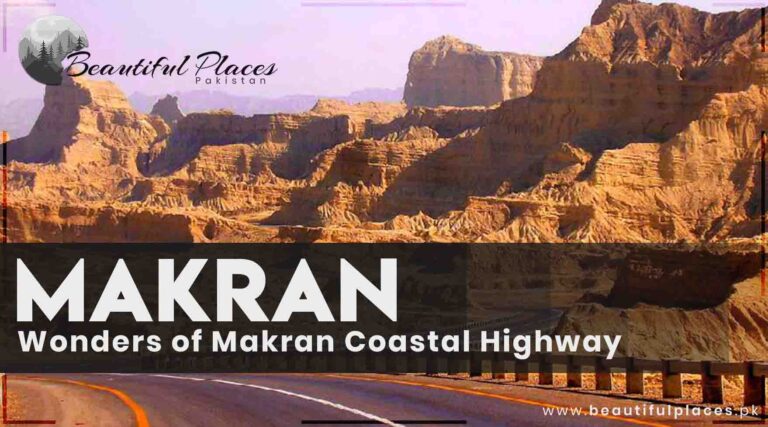
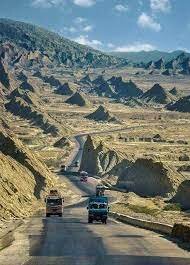
Balochistan coastal highway starts near Karachi and ends atGwadar port near the Pak-Iran border. This highway is a part of national highway N-10.
Before the construction of this highway, Karachi was linked to Gwadar through a single rough road. After the completion of this highway, the distance remained to 6 hours only. Before that, it was about 2 days long. It is also established by the architect of Resham Highway.
The captivating scenes of coastal highway greenery, blue seashores of Pasni, Jeuni, Mara, and Gwadar are the weakness of tourists.
Makran Coastal Highway
Makran Coastal Highway (N-10): Overview
Attribute
Information
Location
Balochistan Province, Pakistan
Total Length
Approximately 653 kilometers
Construction Started
Early 2004
Completion Date
August 2004 (Phase 1) and December 2016 (Phase 2)
Purpose
Connects Karachi to Gwadar Port
Strategic Importance
Vital trade route; facilitates economic activity
Scenic Beauty
Offers breathtaking views of the Arabian Sea
Engineering Feats
Multiple bridges and tunnels; anti-flooding measures
Economic Impact
Boosts trade, tourism, and socio-economic development
Connectivity
Links major cities including Karachi, Ormara, Pasni, and Gwadar
Security Concerns
Some areas require heightened security measures
Maintenance
Ongoing efforts to ensure road safety and usability
Makran Coastal Highway (N-10): In-Depth Information
Location and Purpose
The Makran Coastal Highway, also known as N-10, is a significant road network situated in Balochistan, Pakistan. Stretching approximately 653 kilometers, it serves as a crucial transportation link connecting the bustling city of Karachi to the strategically important Gwadar Port.
Construction and Phases
Construction of the Makran Coastal Highway commenced in the early 2000s, with Phase 1 being completed in August 2004. Subsequently, Phase 2 was finished in December 2016, ensuring a well-connected and efficient roadway system.
Strategic Importance
The highway holds immense strategic importance as a key trade route. Facilitating economic activity, it plays a pivotal role in the transportation of goods and enhances connectivity between major urban centers and the Gwadar Port.
Scenic Beauty
Apart from its practical utility, the Makran Coastal Highway offers travelers breathtaking views of the Arabian Sea. The journey along the coastal stretch provides a unique blend of scenic beauty and rugged landscapes.
Engineering Feats
The construction of the highway involved overcoming challenging terrains. It boasts multiple bridges and tunnels, showcasing engineering excellence. Anti-flooding measures have also been implemented to enhance the highway’s resilience during adverse weather conditions.
Economic Impact
The highway has a profound economic impact, boosting trade activities between Karachi and Gwadar. It has catalyzed tourism and contributed to the socio-economic development of the region.
Connectivity
Linking major cities such as Karachi, Ormara, Pasni, and Gwadar, the Makran Coastal Highway ensures smoother transportation and connectivity. It serves as a lifeline for the movement of goods and people.
Security Concerns
Given the region’s geopolitical landscape, certain areas along the highway require heightened security measures. Efforts are continually made to address security concerns and ensure the safety of travelers.
Maintenance and Ongoing Efforts
Regular maintenance is crucial for the highway’s longevity and safety. Ongoing efforts include periodic inspections, repairs, and improvements to uphold road safety standards and usability.
In essence, the Makran Coastal Highway stands as a testament to infrastructure development in Pakistan, playing a crucial role in regional connectivity, trade, and fostering economic growth in the vast and diverse province of Balochistan.
Famous Sites Along the Highway
Ormara
A coastal town known for its beaches and historical significance, providing a serene stop along the journey.
Pasni
Famous for its fishing industry, Pasni is a picturesque coastal town offering a glimpse into the coastal livelihoods of the region.
Gwadar Port
The final destination of the highway, Gwadar is a rapidly developing port city, pivotal in global trade through its connection to the Arabian Sea.
Frequently Asked Questions (FAQs)
Q: What is the Makran Coastal Highway (N-10)?
A: The Makran Coastal Highway (N-10) is a significant road network in Balochistan, Pakistan, stretching approximately 653 kilometers along the Arabian Sea coastline. It connects Karachi to the strategically important Gwadar Port.
Q: When was the Makran Coastal Highway constructed?
A: Construction of the Makran Coastal Highway began in the early 2000s. Phase 1 was completed in August 2004, and Phase 2 was finished in December 2016.
Q: What is the purpose of the Makran Coastal Highway?
A: The primary purpose of the highway is to enhance connectivity between major cities and facilitate efficient transportation of goods. It plays a crucial role in linking Karachi, a major economic center, to the Gwadar Port.
Q: What is the strategic importance of the Makran Coastal Highway?
A: The highway is strategically vital as it facilitates trade, tourism, and socio-economic growth. It connects Gwadar Port, a key player in the China-Pakistan Economic Corridor (CPEC), to major urban centers.
Q: Are there any famous sites along the Makran Coastal Highway?
A: Yes, there are several notable sites along the highway, including Ormara, known for its beaches; Pasni, famous for its fishing industry; and Gwadar Port, the final destination with significant economic importance.
Q: What are some engineering feats of the Makran Coastal Highway?
A: The highway showcases engineering marvels such as multiple bridges and tunnels. These structures navigate challenging terrains, and anti-flooding measures have been implemented to ensure resilience during adverse weather conditions.
Q: How does the Makran Coastal Highway contribute to economic development?
A: The highway acts as a catalyst for economic development by facilitating trade activities between major cities and the Gwadar Port. It has also contributed to the growth of tourism along the coastal stretch.
Q: What security measures are in place along the Makran Coastal Highway?
A: Some areas along the highway may require heightened security measures due to the region’s geopolitical landscape. Ongoing efforts are made to address security concerns and ensure the safety of travelers.
Q: How does the Makran Coastal Highway contribute to connectivity in Balochistan?
A: The highway connects major cities like Karachi, Ormara, Pasni, and Gwadar, fostering improved connectivity in Balochistan. It serves as a vital transportation link, linking people, cultures, and opportunities.
Q: Is maintenance of the Makran Coastal Highway ongoing?
A: Yes, regular maintenance is crucial to ensure the longevity and safety of the highway. Ongoing efforts include periodic inspections, repairs, and improvements to uphold road safety standards and usability.
Wind Up Lines
The Makran Coastal Highway is not just a road; it’s a story of development, connectivity, and the harmonious coexistence of nature and human ingenuity. As travelers embark on this journey along the Arabian Sea, they witness not only the physical landscape but also the unfolding chapters of history and progress in the province of Balochistan. In the wake of the highway’s asphalt lies the promise of a region connected, a nation united, and a landscape transformed.
Pishin is a district located in the Balochistan province of Pakistan. It is situated in the northwestern part of the province, sharing borders with Afghanistan to the north and the other districts of Balochistan to the south and west. The district is known for its diverse landscape, ranging from mountainous terrain to fertile valleys.
Pishin is an important historical and cultural center in the region, with a rich heritage that reflects the traditions of the Baloch people. The population of Pishin comprises various ethnic groups, including the Baloch, Pashtuns, and other smaller communities. This diversity contributes to the vibrant tapestry of the district’s cultural life.
Overview of Pishin
Aspect
Description
Location
Northwestern part of Balochistan, Pakistan.
Geography
Diverse landscape including mountains and fertile valleys.
Population
Comprises various ethnic groups, including Baloch and Pashtuns.
Economy
Agriculture is a significant economic activity, with a focus on crops such as fruits, vegetables, and grains.
Culture
Rich cultural heritage reflecting Baloch traditions; known for traditional crafts.
Administration
Divided into tehsils and union councils for governance and development.
Challenges
Faces challenges in infrastructure development, healthcare, and education.
Trade and Borders
Strategically located near the Afghanistan border, historically significant for trade and cultural exchange.
Historical Significance
Has played a role in shaping regional interactions due to its proximity to Afghanistan.
Some of the famous places in and around Pishin
Qila Mir Azam
A historical fort dating back to the British colonial era.
It served as a strategic military post and reflects the architectural style of that period.
Pishin Bazaar
A bustling market where locals converge for trade and commerce.
Offers a vibrant display of local goods, crafts, and traditional items.
Ziarat Baba Kharwari
A revered shrine dedicated to a local saint.
A place of spiritual significance, attracting pilgrims and visitors seeking blessings.
Hanna Lake (nearby attraction)
Located a short distance from Pishin, it is a picturesque lake surrounded by hills.
Offers boating facilities and a peaceful environment for visitors.
Sheesh Mahal (Pishin Palace)
A historical palace showcasing intricate glasswork.
Reflects the architectural grandeur of the past and offers a glimpse into the region’s royal history.
Jamia Mosque Pishin
A prominent mosque in the heart of Pishin with distinctive architectural features.
A spiritual and cultural center for the local Muslim community.
Toba Kakar Range (surrounding mountains)
A mountain range surrounding Pishin Valley.
Offers trekking opportunities and panoramic views of the valley.
Pishin Botanical Garden
A green oasis showcasing a variety of plants and trees.
Provides a peaceful setting for nature lovers and those interested in local flora.
Mukhtar Palace (Karezat Fort)
A historical structure reflecting the traditional architecture of the region.
Offers insights into the cultural and historical heritage of Pishin.
Pishin Valley
Situated 50km from Quetta this beautiful valley is full of juicy fruits trees These trees are watered through the old methods of irrigation named “Karez”
Location: Pishin Valley is situated in the northwestern part of Balochistan, Pakistan.
Topography: The valley is characterized by a diverse topography, featuring fertile plains and surrounded by mountains.
Pishin Balochistan
Khush Dil Khan Band
A water reservoir is built artificially about 16km from Pishin. If you are fond of hunting, then this is the best place for hunting ducks.
At a distance of about 16 kilometers from Pishin Valley, the Khush Dil Khan Bund stands as a testament to human ingenuity in harnessing water resources. This dam, named after a local figure, serves multiple purposes, including irrigation, water storage, and flood control. It has significantly contributed to enhancing agricultural productivity in Pishin Valley and the surrounding areas.
Khush Dil Khan Bund
Famous Schools
Government Boys High School Pishin
A key educational institution providing secondary education to young boys.
Plays a crucial role in shaping the academic landscape of the region.
Government Girls High School Pishin
A prominent girls’ school in Pishin offering quality education.
Contributes significantly to the empowerment of young girls in the district.
Muslim Model High School
A school known for its commitment to academic excellence and character development.
Offers education at various levels, contributing to the educational infrastructure of Pishin.
Crescent Model School Pishin
A private institution providing modern education facilities.
Known for a holistic approach to education, combining academics with extracurricular activities.
Balochistan Residential College
A boarding school aiming to provide quality education to students from the region.
Focuses on preparing students for higher education and future leadership roles.
Notable Hospitals
District Headquarters Hospital Pishin
A major healthcare facility catering to the medical needs of the district.
Provides a range of medical services, including emergency care and specialized treatments.
Rural Health Center Pishin
Focuses on providing healthcare services to the rural population.
Plays a critical role in preventive healthcare and community health programs.
Mukhtar Teaching Hospital
A hospital associated with medical education and training.
Offers a range of medical services and serves as a center for medical research.
Al-Hilal Hospital
A private hospital providing healthcare services to the community.
Known for its modern facilities and a team of qualified medical professionals.
FAQs
Q: What is Pishin’s historical significance?
A: Pishin boasts a rich history, with archaeological evidence suggesting habitation since prehistoric times. It played a strategic role during the British colonial era.
Q: How diverse is Pishin’s culture?
A: Pishin is a melting pot of Baloch, Pashtun, and Persian influences, creating a unique cultural blend reflected in traditions, music, and attire.
Q: What are the notable landmarks in Pishin?
A: Key landmarks include Qila Mir Azam (a colonial-era fort), Pishin Bazaar, and Ziarat Baba Kharwari, a revered shrine.
Q: Tell us about Pishin’s educational institutions.
A: Pishin is home to various schools, including Government Boys and Girls High Schools, Muslim Model High School, and Balochistan Residential College.
Q: Which hospitals are significant in Pishin?
A: Healthcare is provided by institutions such as District Headquarters Hospital, Rural Health Center, Mukhtar Teaching Hospital, and private facilities like Al-Hilal Hospital.
Q: What is the economic backbone of Pishin?
A: Agriculture, supported by the Pishin Lora River, is a vital economic sector, cultivating fruits, vegetables, and grains.
Q: What are the attractions near Pishin?
A: Nearby attractions include Hanna Lake, Toba Kakar Range, and the historical Mukhtar Palace.
Q: Tell us about Khush Dil Khan Bund.
A: Khush Dil Khan Bund is a significant water reservoir near Pishin, contributing to water management, agriculture, and flood control.
Q: Which are the famous schools in Pishin?
A: Notable schools include Government Boys and Girls High Schools, Muslim Model High School, and Balochistan Residential College.
Q: What healthcare services are available in Pishin?
A: Healthcare facilities include District Headquarters Hospital, Rural Health Center, Mukhtar Teaching Hospital, and private facilities like Al-Hilal Hospital.
Wind-up Lines
Pishin, Balochistan, is a region that seamlessly weaves together history, culture, education, and healthcare. From its historical forts to vibrant bazaars, from educational institutions nurturing future leaders to hospitals ensuring the health of the community, Pishin stands as a multifaceted gem within the tapestry of Balochistan. Whether you’re drawn to its historical landmarks, cultural diversity, or the resilience of its people, Pishin invites exploration and appreciation for the layers of richness it offers to those who venture into its embrace.
Sindh is blessed with Sufi poets, old civilizations, and heritage sites. Shrine of Shah Abdul Latif Bhaittai is one of the famous poets of the Sindh. Shah Abdul Latif Bhattai is acknowledged as the “Crownless King” of Sindh.
Detaille Info about Sindh PK
Aspect
Information
Name
Sindh City
Location
Sindh Province, Pakistan
Population
Approximately 3 million
Area
Not specified, but it’s a significant urban area
Historical Significance
Sindh City has a rich history and is known for its cultural and historical importance in the region. It is home to several ancient archaeological sites and monuments.
Geography
The city is located in the southern part of Pakistan, near the Arabian Sea, and it has a diverse geography that includes both urban and rural areas.
Climate
Sindh City experiences a hot desert climate, with scorching summers and mild winters. It’s prone to seasonal monsoons.
Economy
The economy of Sindh City is diverse and includes agriculture, manufacturing, trade, and services. It’s a hub for commerce and business activities.
Languages Spoken
The primary language spoken in Sindh City is Sindhi, but Urdu and English are also widely used for business and education.
Culture
The city has a vibrant and diverse cultural scene, with a rich tradition of music, dance, and art. It’s also known for its delicious cuisine, with various local dishes.
Education
Sindh City has several educational institutions, including universities, colleges, and schools. It’s a center for higher education in the region.
Transportation
The city is well-connected through road, rail, and air transport. It has a major seaport that facilitates trade and commerce.
Tourist Attractions
Sindh City offers various attractions, including historical sites, museums, and markets. Notable places include the Mohenjo-daro archaeological site and the Quaid-e-Azam’s Mausoleum.
Exploring the Historical Cities of Sindh
Sindh, the southernmost province of Pakistan, boasts a rich tapestry of history, culture, and spirituality. The region is home to several historical cities that have played pivotal roles in shaping the identity of Sindh. Among the luminaries emerging from this land, Shah Abdul Latif Bhittai stands tall as a revered poet and philosopher. Let’s embark on a journey through the historical cities of Sindh, each echoing tales of antiquity and resilience.
Shrine of Abdul Latif Bhittai
Poet of the Soil In the midst of these historical cities lies the town of Bhit Shah, named after the illustrious poet and scholar, Shah Abdul Latif Bhittai. Born in the 18th century, Shah Latif, as he is affectionately called, contributed significantly to Sindhi literature and Sufi thought. His poetry, compiled in the “Shah Jo Risalo”, reflects his deep connection with the land, its people, and a profound spiritual journey.
Bhit Shah is home to the shrine of Shah Abdul Latif Bhittai, a place where devotees gather to pay homage to the poet’s timeless wisdom. The shrine serves as a cultural and spiritual center, fostering a sense of unity and reverence among Sindhis.
As we conclude our journey through the historical cities of Sindh, we find ourselves immersed in a tapestry woven with threads of ancient civilizations, Sufi mysticism, architectural grandeur, and the timeless verses of Shah Abdul Latif Bhittai. Sindh, with its vibrant past and living traditions, continues to be a testament to the resilience and richness of the human spirit.
Shrine of Shah Abdul Latif Bhittai
As a spiritual leader, he had highlighted the emotions of the poor and oppressed people through his poetry. So, he is respected by the people a lot. At first, the Kulhoro built the tomb. Later, it was decorated by the Talpurs. Both of them tried to make it more beautiful by embellishing it with blue-colored glass tiles. Hala is close to this tomb and the center of these blue tile factories. Tiles were imported from Naseer pur and Multan too. It is the only tomb where “Sufiyana Kalam” (music) is sung at the sunset throughout the year.
Bhatt Shah Cultural Center
Bhit Shah cultural, center
Surrounding up to 120 acres, a garden, Karar Lake, an auditorium, library, and a museum is dedicated to this saint. Situated on the Shah Abdul Latif highway, it has things and information related to life, poetry, teachings, and music.
Mohenjo-daro
Echoes from the Ancient Past Our journey begins with Mohenjo-daro, an archaeological marvel that harks back to the ancient Indus Valley Civilization. Flourishing around 2500 BCE, Mohenjo-daro was one of the largest settlements of its time, featuring advanced urban planning and sophisticated drainage systems. Today, its remnants, a UNESCO World Heritage Site, whisper the stories of an ancient civilization that thrived along the banks of the mighty Indus River.
Sehwan Sharif
Sufi Splendor As we traverse through time, the city of Sehwan Sharif comes into view. Nestled along the banks of the Indus, this city is famed for the Shrine of Lal Shahbaz Qalandar, a Sufi saint whose teachings transcended religious boundaries. The shrine stands as a symbol of Sindh’s syncretic culture, attracting devotees and admirers from various faiths.
Thatta
A Tapestry of History Thatta, the erstwhile capital of Sindh, takes us on a journey through the pages of medieval history. From the 14th to the 18th centuries, Thatta thrived as a center of commerce and culture. Its grand monuments, including the Shah Jahan Mosque and Makli Necropolis, reflect the architectural grandeur of bygone eras.
Hyderabad
Bridging Past and Present Moving forward, we arrive in Hyderabad, a city that seamlessly blends history with modernity. With its roots tracing back to the Kalhora dynasty, Hyderabad showcases a unique cultural fusion. Historical landmarks like the Qadamgah Maula Ali and the iconic Clock Tower add a nostalgic charm to the city’s bustling urban landscape.
Karachi
Gateway to Diversity Karachi, the bustling metropolis and the economic heartbeat of Pakistan, is more than just a city; it is a melting pot of cultures and ethnicities. Once a small fishing village, Karachi has transformed into a dynamic cosmopolitan hub, showcasing the diversity that defines Sindh and Pakistan as a whole.
Sukkur
Engineering Marvels on the Indus Our journey concludes in Sukkur, a city known for the Sukkur Barrage. This engineering marvel, spanning the mighty Indus River, is a testament to human ingenuity. Sukkur’s strategic location and historical significance make it a key player in the economic development of the region.
Schools in city of Sindh:
ABC Public School
Sindh City Grammar School
Beaconhouse School System
The City School
St. Mary’s High School
Colleges in city of Sindh:
Sindh City College
Government Degree College
Sindh Institute of Information Technology
Women’s College Sindh City
SZABIST Sindh City Campus
Universities in city of Sindh:
University of Sindh
Liaquat University of Medical and Health Sciences
SZABIST Sindh City Campus
Sindh Agriculture University
Indus Valley School of Art and Architecture
Hospitals in city of Sindh:
Sindh City General Hospital
Liaquat Medical University Hospital
Patel Hospital
Aga Khan University Hospital (outreach clinic)
Jinnah Postgraduate Medical Center
Restaurants in city of Sindh:
Sindh Delights Restaurant
Al-Makka Restaurant
Kolachi Restaurant
BBQ Tonight
Cafe Clifton
Frequently Asked Questions
What is the significance of Mohenjo-daro in Sindh’s history?
Mohenjo-daro is a UNESCO World Heritage Site and represents one of the largest settlements of the ancient Indus Valley Civilization. It provides insights into advanced urban planning and the social and economic life of an ancient civilization around 2500 BCE.
Tell us more about the Shrine of Lal Shahbaz Qalandar in Sehwan Sharif.
The Shrine of Lal Shahbaz Qalandar is a revered Sufi shrine in Sehwan Sharif, known for its syncretic culture. Lal Shahbaz Qalandar was a Sufi saint whose teachings transcended religious boundaries, attracting devotees from various faiths.
What historical significance does Thatta hold?
Thatta was the former capital of Sindh and thrived as a center of commerce and culture from the 14th to the 18th centuries. Monuments like the Shah Jahan Mosque and Makli Necropolis reflect the architectural grandeur of that era.
How does Hyderabad blend history with modernity?
Hyderabad seamlessly blends historical charm with modern urban life. It has historical landmarks from the Kalhora dynasty, like the Qadamgah Maula Ali, alongside contemporary elements such as the bustling Clock Tower.
What makes Karachi unique among the historical cities of Sindh?
Karachi is the largest city in Pakistan and serves as a melting pot of diverse cultures. From its humble beginnings as a fishing village, Karachi has transformed into a dynamic cosmopolitan hub, reflecting the diversity of Sindh and Pakistan.
What is the Sukkur Barrage, and why is Sukkur significant?
The Sukkur Barrage is an engineering marvel spanning the Indus River, contributing to irrigation and hydropower. Sukkur is strategically located and historically significant, playing a key role in the economic development of the region.
Who was Shah Abdul Latif Bhittai, and what is his legacy?
Shah Abdul Latif Bhittai was an 18th-century Sufi poet and scholar from Sindh. His poetry, compiled in the Shah Jo Risalo, reflects a deep connection with the land and spirituality. His legacy is honored in the town of Bhit Shah, where his shrine stands as a cultural and spiritual center.
Why is Bhit Shah named after Shah Abdul Latif Bhittai?
Bhit Shah is named after Shah Abdul Latif Bhittai as a tribute to the revered poet and scholar. It is the town where he was born, and it houses his shrine, which serves as a place of reverence and cultural significance.
What role does Shah Abdul Latif Bhittai’s shrine play in Sindhi culture?
The shrine of Shah Abdul Latif Bhittai in Bhit Shah is a cultural and spiritual center. It attracts devotees and serves as a symbol of unity, fostering a deep connection with Sindhi culture and traditions.
Wind up lines
The Shrine of Shah Abdul Latif Bhatti is a symbol of Grandeur like his poetry which has been translated to English, Urdu, Punjabi, German and other languages.
On the National Highway, about 56 km from Hyderabad, Hala is located. It is famous for Glazed Pottery and Enameled woodworking.
The saint of 10th Hijri Hazrat Makhdoom Noh belonged to this place who embraced a lot of people to Islam. He was the first in South Asia who translated Quran e Pak in the Persian Language.
Hala is the town that depicts Pakistani Culture through its glazed pottery.
hala city, pottery and handicrafts
Key Information About Hala
Aspect
Information
Location
Hala is a city in the Sindh province of Pakistan. It is situated in the Matiari District.
Geographical Coordinates
Latitude: 25.6157° N, Longitude: 68.3097° E
Population
As of the last available data, the population of Hala is approximately [insert population figure].
Language
The primary language spoken in Hala is Sindhi. Urdu and English are also commonly understood.
Historical Significance
Hala is known for its rich historical and cultural heritage. It has been a center of Sufi culture and is associated with various saints and shrines.
Economy
The economy of Hala is primarily based on agriculture. The region is known for the production of crops such as rice, wheat, and sugarcane. Traditional handicrafts, including Hala pottery, are also significant for the local economy.
Tourist Attractions
– Shrine of Makhdum Nuh: A prominent Sufi shrine in Hala.
– Hala Handicrafts: Known for its traditional pottery and other handicrafts.
– Hala New Cloth Market: Famous for traditional Sindhi Ajrak and other textiles.
Education
Hala has educational institutions ranging from primary schools to colleges, contributing to the educational development of the region.
Transportation
The city is connected by road networks, and local transportation includes buses, rickshaws, and other modes of public transport.
Local Cuisine
Traditional Sindhi cuisine, including Sindhi Biryani, Saag, and various local sweets, is popular in Hala.
Religious Diversity
Hala is characterized by religious diversity, with a significant Muslim population. There are mosques and other religious institutions catering to the spiritual needs of the residents.
Climate
Hala experiences a hot desert climate, with high temperatures in the summer and mild winters. Rainfall is relatively low, and the region is prone to drought conditions.
Explore the city of Sindh – Hala
Hala Handicrafts
The legacy of Hala’s handicrafts dates back centuries. The intricate and delicate craftsmanship has been passed down through generations. From beautiful handwoven textiles to stunning woodwork, Hala offers a wide array of handcrafted treasures.
Exploring Hala’s Craft Bazaars
A visit to Hala is incomplete without strolling through its vibrant craft bazaars. These markets are a treasure trove of exquisite items, including textiles, pottery, and traditional Hala caps. Each piece reflects the dedication and artistic prowess of the artisans.
Hala Glazed Pottery
The Allure of Hala Glazed Pottery
Hala Glazed Pottery is renowned worldwide for its unique beauty and craftsmanship. These exquisite pieces are often adorned with intricate designs and vibrant colors, making them highly sought after by collectors and art enthusiasts.
The Art of Hala Pottery Making
Discover the fascinating process of Hala Glazed Pottery creation. From shaping the clay to the final glazing, every step is a testament to the artisan’s skill and devotion. The result is a breathtaking piece of art that captivates anyone who beholds it.
Must-Try Experiences in Hala
1. Pottery Workshops
Immerse yourself in the world of Hala pottery by joining a pottery workshop. Learn the techniques, try your hand at the pottery wheel, and create your own masterpiece.
2. Exploring Hala’s Streets
Take a leisurely walk through Hala’s streets, and you’ll be greeted with the soothing sound of the potter’s wheel and the rich aroma of local cuisine. Don’t forget to stop by the local food stalls for a taste of authentic Sindhi dishes.
3. Visiting Artisan Homes
Many artisans in Hala welcome visitors to their homes and workshops. This is a great opportunity to witness the creation of Hala Glazed Pottery up close and interact with the skilled craftsmen.
4. Hala’s Annual Craft Fair
Plan your visit during Hala’s annual craft fair, a vibrant and lively celebration of the city’s artistry. You can shop for unique souvenirs and experience the city’s cultural festivities.
Schools:
Hala Public School: A well-established institution known for its quality education.
Government High School Hala: A government-run school offering education at the primary and secondary levels.
Hala Montessori School: A popular choice for early childhood education and Montessori programs.
Colleges:
Government Degree College Hala: Offering intermediate and undergraduate programs in various disciplines.
Hala College of Commerce: Specializing in commerce and business-related education.
Sindh Agriculture University College Hala: Focusing on agricultural studies and research.
Universities:
There are no universities located directly in Hala. However, nearby cities like Hyderabad and Karachi host several universities offering a wide range of academic programs.
Hospitals:
Hala Medical Center: A primary healthcare facility providing medical services and consultations.
Hala General Hospital: Offering a range of medical treatments and services to the local community.
Private Clinics: Several private clinics and healthcare providers are available for routine medical needs.
Restaurants:
Hala Food Street: A popular spot for local cuisine, offering traditional Sindhi dishes.
Al-Sheikh Fast Food: A casual dining option known for its quick bites and fast food.
Cafe Hala: A cozy cafe serving coffee, snacks, and light meals for a relaxed atmosphere.
FAQs
Q: What is the best time to visit Hala?
A: The best time to visit Hala is during the cooler months, from October to March, to comfortably explore the city and its markets.
Q: Are Hala handicrafts expensive?
A: While some items can be pricier due to their intricate craftsmanship, you can find a wide range of affordable handicrafts in Hala’s markets.
Q: Is it possible to ship Hala Glazed Pottery internationally?
A: Yes, many stores in Hala offer international shipping for their pottery items, ensuring you can take a piece of Hala’s artistry home with you.
Q: How do I reach Hala from Karachi?
A: Hala is approximately a 2.5-hour drive from Karachi, and you can also use the train services to reach this charming city.
Q: What are some traditional Sindhi dishes to try in Hala?
A: Don’t miss out on Sindhi Biryani, Saag, and Sindhi Curry – all tantalizing dishes you can savor in Hala.
Q: Is Hala Glazed Pottery microwave-safe?
A: Most Hala Glazed Pottery is not microwave-safe due to the unique glazing process. It’s best suited for decorative purposes.
Windup-lines
Exploring the city of Sindh – Hala, Hala handicrafts, and Hala Glazed Pottery is a journey into the heart of Pakistan’s culture and artistry. Whether you’re captivated by the beauty of Hala’s crafts or the allure of its Glazed Pottery, this city promises an experience like no other.
So, pack your bags, set out on this unforgettable adventure, and let the magic of Hala whisk you away.
Sanghar is an asset of Sindh Province. It is renowned for its historic and tourists spots which include Chotiyari lake, and Mansoura.
1- Chotiyari lake (a grouping of small and large lakes)
When the explorer of the desert becomes exhausted by seeing the large sandy hillocks and the environment seems gloomy, the water seems to be a blessing for travelers and cattle and the desert seems to be a time of spring.
Chotiyari lake is one of the exceptional lakes where all four sides have desert, trees, and wild bushes side by side. This part of Sanghar lake is 30km from the desert Thar. Well-established roads are there to reach this place. Small lakes and hillocks are located outside the Sanghar.
Bakar, Ekanowari, Tajir, Phulili, Bari, and Saunaro lakes are together named Chotiyari Lake. These lakes rise from Nara canal which is a source of water in these lakes.
chotiyari lake
This lake was delayed due to changing of Government and finally completed in 2003. The purpose of this is to collect the water of Monson rain so that it can be used in famine. It is a source of employment for lots of unwaged fishermen. Their houses are located near the lake.
This is also a habitation for crocodiles and turtles. In the winter season, the lake seems to be in full bloom because of millions of birds migrate to this place. Marble tale named bird is noteworthy in these birds. You have to go to Shahdad Pur through Sanghar for reaching this place which is 67 km from Hala.
2-Gharang Bangla (گاڑنگ بنگلہ)
This bungalow was the residence of Hur Leader peer Sibghatullah. Located on the Mir Pur Khas Sanghar, this building was destroyed due to the bombardment of the British army during British control. This place was a headquarters for freedom fighters against British imperialism.
3- Camel Safari
camel safari sindh
The area of Ichiro Thar is an ideal place for Camel Safari. Fishing and sailing can be enjoyed during the season in Hatharo lake. Nara Canal arising from the Sukkar barrage is a habitat for birds and crocodiles. Tile work and fresco of Khani rajor Khapro town is famous here.
4- Mansoura
Mansoora was the first Islamic Sindhi capital from 711 A.D to 1006 A.D. This place was designated as a central cantonment by Umayyad rulers and the army. In the abbasi era, its boundaries spread through Multan and Debel. Arabs developed Debel and Mansoora a lot.
On the coast of river Indus, Mansoura and Debel become the center of trade, tradition, and culture. Herbs, spices, clothes, elephant’s teeth, metal, and lots of other things were sent exported to Baghdad from Mansoura. High-ranked educational institutes were established in the city.
Mansoura the old capital of Sindh
First-ever Sindhi translation of Quran e Pak was done in Mansoura. According to Geology experts, the earthquake of 893 affected Mansoura and Debel.
The remains of Mansoura are 9 km away from the Shahdad Pur district Sanghar. A bus tracking joins Hyderabad and Shahdad Pur. Shahdad Pur railway station is situated on the Main Railway line.
Overview about Sanghar District
Category
Details
Location
Sindh Province, Pakistan
Capital
Sanghar
Area
10,588 square kilometers
Population
Approximately 1.57 million
Official Language
Sindhi, Urdu
District Code
SDU
Main Towns
Sanghar, Tando Adam, Shahdadpur, Khipro
Geography
Mainly agricultural, with fertile plains
Economy
Agriculture is the primary economic activity, with crops like cotton, wheat, and rice being cultivated. Livestock farming is also common.
Major Rivers
Indus River and its tributaries
Education
Several schools, colleges, and a university are present. Literacy rate improving but still relatively lower compared to urban areas.
Culture
Rich Sindhi culture, with traditional music, dance, and festivals.
Historical Sites
Ancient archaeological sites are found in the district, reflecting the historical significance of the region.
Transportation
Well-connected by road. Limited rail connectivity.
Industries
Limited industrialization, with small-scale industries in agriculture processing.
Tourist Attractions
Historical sites, shrines, and natural landscapes contribute to the tourism potential.
Political Significance
Active political participation; several political figures have emerged from Sanghar District.
Exploring the Rich Tapestry of Sanghar District
Cultural Riches
The cultural vibrancy of Sanghar is deeply rooted in its Sindhi heritage. Traditional music, dance forms, and festivals add a colorful dimension to daily life. The district is a melting pot of diverse traditions, with locals celebrating festivals like Urs at various shrines, fostering a sense of community and shared identity.
Historical Landmarks
Sanghar is not only culturally rich but also historically significant. The district is home to ancient archaeological sites that stand as silent witnesses to the passage of time. These sites, some dating back centuries, reflect the historical importance of the region, attracting history enthusiasts and archaeologists.
Fertile Plains and Agriculture
The fertile plains of Sanghar make it an agricultural hub. Crops like cotton, wheat, and rice flourish in the region, contributing significantly to Pakistan’s agrarian landscape. The hardworking farmers of Sanghar play a crucial role in sustaining the country’s agricultural economy.
Local Economy
While agriculture dominates the economic landscape, Sanghar is not devoid of small-scale industries. Agriculture processing units and local businesses thrive, contributing to the overall economic well-being of the district. The entrepreneurial spirit of the locals is evident in the bustling markets and trade activities.
Connectivity and Infrastructure
Sanghar is well-connected by road, facilitating transportation and trade. Though rail connectivity is limited, ongoing efforts are being made to improve infrastructure to bolster economic activities and ease the movement of goods and people.
Tourist Attractions
Beyond its educational and economic facets, Sanghar offers a range of tourist attractions. From historical sites to shrines and natural landscapes, visitors can immerse themselves in the beauty and serenity that the district provides.
Schools in Sanghar District:
Sanghar Model High School
Government Boys High School, Sanghar
Government Girls High School, Sanghar
The Educators School Sanghar
Sanghar Public School
The City School Sanghar Campus
Colleges in Sanghar District:
Government Degree College, Sanghar
Ghazali College of Education, Sanghar
Sindh College, Sanghar
Quaid-e-Azam College, Sanghar
Government Girls Degree College, Sanghar
Universities in Sanghar District:
There are currently no universities in Sanghar District. Students typically travel to nearby cities for higher education.
Hospitals in Sanghar District:
Civil Hospital Sanghar
People’s Medical University Hospital, Sanghar
Ali Medical Center, Sanghar
Sindh Welfare Hospital, Sanghar
Jamal Medical Center, Sanghar
Restaurants in Sanghar District:
Al-Mumtaz Fast Food
Shahbaz Tikka House
Al-Faisal Hotel and Restaurant
Pizza Hut Sanghar
Spicey Bites Fast Food and Restaurant
Frequently Asked Questions (FAQs)
Where is Sanghar District located?
Sanghar District is situated in the Sindh Province of Pakistan.
What is the capital of Sanghar District?
The capital of Sanghar District is Sanghar.
Are there any famous schools in Sanghar District?
Yes, Sanghar is home to notable educational institutions, including Sanghar Cadet College, Government Boys and Girls High Schools, The City School, and Beaconhouse School System.
What is the focus of education in Sanghar?
Sanghar is making strides in improving literacy rates, with a focus on providing quality education and enhancing educational infrastructure.
What cultural aspects make Sanghar unique?
Sanghar is known for its vibrant Sindhi culture, with traditional music, dance forms, and festivals like Urs celebrated at various shrines.
Are there any historical landmarks in Sanghar?
Yes, Sanghar boasts ancient archaeological sites that reflect the historical significance of the region, attracting history enthusiasts and archaeologists.
What is the main economic activity in Sanghar?
Agriculture dominates the economic landscape of Sanghar, with crops like cotton, wheat, and rice being cultivated. There are also small-scale industries and local businesses.
How is Sanghar connected in terms of transportation?
Sanghar is well-connected by road, facilitating transportation and trade. Efforts are ongoing to improve infrastructure, although rail connectivity is currently limited.
Are there tourist attractions in Sanghar?
Yes, Sanghar offers a range of tourist attractions, including historical sites, shrines, and natural landscapes, making it a diverse and interesting destination.
What is the population of Sanghar District?
As of the latest available data in 2021, Sanghar District has an approximate population of 1.57 million people.
Wind up Lines
Sanghar city has famous historical and captivating tourists spots such as Camel Safari, chotiyari lake, and Mansoura. Besides this, it is also famous for the cultivation of crops.
From Sanghar via Shahpur chakkar, Nawab Shah is 86 km away. Peoples Medical College and Quaid e Azam university of Engineering and Technology are being considered as distinctive for this city. In summer, the temperature goes to 51. In September 2008, it was named Benazir Abad.
Key information of Nawabshah
Attribute
Information
Location
Nawabshah, Sindh, Pakistan
Population
Approximately 2 million
District
Shaheed Benazirabad District
Region
Sindh Province
Nickname
“The City of Nawabs”
Language
Sindhi, Urdu, and English
Economy
Agriculture, industry, and trade
Education
Home to various educational institutions and schools.
Landmarks
Nawabshah Airport, Qazi Ahmed, and historical sites.
Transportation
Well-connected by road and rail, with an airport.
Major Industries
Agriculture, textiles, and manufacturing.
Notable Personalities
Birthplace of former Prime Minister Benazir Bhutto and Zulfikar Ali Bhutto.
A brief History of Nawabshah (Benazir Abad)
This city was established by Syed Nawab Shah in 1881 who was an immigrant from Dadu. This city progressed by leaps and bounds and became a district in 1912. Situated on central G.T road, this city also has an airport. This airport was built during World War II and was used by British Royal Air Force. Now, this airport is used in an emergency, as an alternative to Karachi Airport.
Some Famous Places of Nawabshah
Kot Jam Karim Ali
This fort is a private property situated near Qazi Ahmad Town. Constructed from paved bricks, it was built by Jam Family.
Naz Bhag
This beautiful garden is situated in Qazi Ahmad Town located on Qomi High way. It is called the Shahlamar of this area because of Greenery, walking area, playground, and attractive fountains.
Naz Bhag, Nawabshah
H.M Khoja Public Library Park.
This library was built for the sake of education and research in the acknowledgment of well-known researcher H.M Khoja
Thal Meer Rukn
15 km from Dolat Pur, on Qomi Highway, the only Buddha Stupa is present in the Thal. One can go to this thousands of years old building through Qazi Ahmad Town.
Karedo Pir lake
This place is a good picnic spot situated in Sakrand. Syed village in Sakrand, has regional glazed tilework decoration pieces, Pir Zikri Mosque, and a school. One can visit Daleel Daro Fort on Sakrand Nawab Shah Link Road.
Paii Forests
A rough road on the left side of National Highway, on Sakrand Bypass, on Nawab Shah Road from Karachi, will take you to the beautiful Paii forest of WWF in 20 minutes. Ayub Khan, Zulfiqar Ali Bhutto, Arab Kings, and other celebrities have visited this historic and beautiful forest.
Paii forest
You will be surprised to see the Ayub Bangla rest house in the middle of the forest. This forest has seventy kinds of birds and different categories of animals. Different spots are established at different places in the forest for the tourists so that they can observe the wildlife closely. Rest house is present for a night stay. It will be a good decision to visit this place after the rain.
Shaheed Benazir Bhutto Park
A testament to the city’s reverence for its political leaders, Shaheed Benazir Bhutto Park stands as a tranquil oasis dedicated to the memory of the late Prime Minister Benazir Bhutto. The park provides a serene environment for residents and visitors alike.
Nawabshah Clock Tower
The Nawabshah Clock Tower stands proudly as a historic landmark, symbolizing the city’s rich heritage. Its architecture and design tell tales of Nawabshah’s historical significance, making it a point of interest for both locals and tourists.
Quba Masjid
Quba Masjid, with its intricate architectural details, stands as a place of worship and reflection. The mosque not only serves the spiritual needs of the community but also adds to the city’s architectural beauty.
Sindh Museum Nawabshah
The Sindh Museum in Nawabshah is a treasure trove of artifacts and exhibits that showcase the rich cultural heritage of Sindh. Visitors can explore historical relics, traditional crafts, and artifacts that tell the story of the region.
Educational Institutions
Nawabshah Medical College: Nawabshah is home to educational institutions like Nawabshah Medical College, contributing to the training of healthcare professionals. The college plays a crucial role in addressing the healthcare needs of the region.
Benazir Bhutto Shaheed University: The city hosts Benazir Bhutto Shaheed University, which offers a range of academic programs, contributing to the educational landscape of Nawabshah and the surrounding areas.
Schools and Colleges: Nawabshah has numerous schools and colleges that cater to the educational needs of its residents. These institutions play a vital role in shaping the academic future of the youth.
Healthcare Facilities
People’s Medical University Hospital: The People’s Medical University Hospital in Nawabshah provides healthcare services to the community. It is equipped with medical facilities, offering essential medical care to the residents.
Civil Hospital Nawabshah: Civil Hospital Nawabshah is a prominent healthcare facility providing a range of medical services, including emergency care, surgeries, and specialized treatments.
Parks and Recreational Spaces
Bilawal Bagh Park: Bilawal Bagh Park is a popular public park known for its lush greenery, walking tracks, and recreational facilities. It serves as a gathering place for families and individuals seeking outdoor activities.
Frequently Asked Questions
What is the historical significance of Nawabshah?
Nawabshah, now Benazirabad, has a rich history reflected in its landmarks like the Nawabshah Clock Tower and Shaheed Benazir Bhutto Park. These historical sites showcase the city’s cultural heritage and political importance.
Tell me about the educational institutions in Nawabshah.
Nawabshah hosts educational institutions such as Nawabshah Medical College and Benazir Bhutto Shaheed University, contributing to the academic landscape. Numerous schools and colleges play a crucial role in shaping the educational future of the region.
What healthcare facilities are available in Nawabshah?
Healthcare facilities in Nawabshah include People’s Medical University Hospital and Civil Hospital Nawabshah, providing a range of medical services to the community.
What recreational spaces are there in Nawabshah?
Bilawal Bagh Park is a popular recreational space known for its lush greenery and facilities. It serves as a gathering place for families and individuals seeking outdoor activities.
How is Nawabshah embracing its cultural heritage?
Nawabshah embraces its cultural heritage through sites like Quba Masjid and the Sindh Museum, preserving historical artifacts and architectural gems that reflect the city’s past.
Is there a specific significance to the renaming of Nawabshah to Benazirabad?
The renaming of Nawabshah to Benazirabad was a tribute to the late Prime Minister Benazir Bhutto. It symbolizes the city’s respect for its political leaders and their contributions to the nation.
Wind Up Lines
Nawabshah is a city of both ancient and modern culture. Medical college and engineering university is considered to be a great development. It also plays a role in the economy through crops and tourism.
Khair Pur, a city of profound historical significance, is nestled in the heart of Sindh, Pakistan.
Its foundation was led by Meer Sohrab Khan Talpur in 1783. Before the creation of Pakistan, it was a partially independent state. On 14th October 1955, it was affiliated with Pakistan. Shah Latif University is a remarkable educational institute there. It surrounds roughly about 16 thousand km of area, this state remained from 1775 A.D to 1955 A.D. Ali Murad Khan was its last ruler.
Old historic fort Kot D.G is also located here. The shrine of Sufi Sachal Sarmast is located in Darazan Sharif. Khair Pur is a small city in the current context. It was the largest area in the 15th century. The people of the Talpur family were famous as Mir.
It’s also famous for the production of dates and the shrine of Sachal Sarmast, and Kot DG fort. Besides these, Faiz palace, Bali ka Bangla, and Thari Meer Vah are worth watching places.
Key information about Khairpur
Aspect
Information
Name
Khairpur City
Location
Sindh Province, Pakistan
Population
Approximately 128,200 (as of my knowledge cut-off in September 2021; population figures may have changed)
Area
Approximately 15 square kilometers
History
Khairpur City has a rich historical background, with a legacy of former princely state rule before Pakistan’s independence.
Geography
The city is situated in the northern part of Sindh and is known for its arid, desert-like surroundings.
Climate
Khairpur experiences a hot desert climate with scorching summers and mild winters.
Economy
The city’s economy is primarily agrarian, with a focus on agriculture, particularly cotton and sugarcane.
Languages Spoken
The primary language spoken in Khairpur is Sindhi, but Urdu is also commonly used for communication.
Education
Khairpur has educational institutions, including schools and colleges, to cater to the educational needs of the local population.
Transportation
The city is accessible by road, and there is a railway station that connects it to other parts of Sindh and Pakistan.
Landmarks
Notable landmarks include the Faiz Mahal and the Tomb of Kot Diji, both of which hold historical and architectural significance.
Cultural Events
The city hosts various cultural events and fairs, often celebrating Sindhi traditions, music, and festivals.
Healthcare
Khairpur has medical facilities, including hospitals and clinics, to cater to the healthcare needs of its residents.
Dining
Local cuisine in Khairpur includes Sindhi specialties like Sindhi Biryani and Saag with Makai Roti.
Exploring Khair Pur
Khair Pur
Kot D.G Fort
On 26th February 1958, in the district, Khair Pur, traces of civilization were discovered which is about three hundred years old than Mohen JoDaro. The civilizations of Harappa and Mohan jo Daro have been revealed after the detection of Kot D.G. This town was the capital during the Talpur era. Formally, this was called “Ahmad Abad”.
Kot DG Fort
The ruler of Upper Sindh’s Empire, Mir Sohrab Khan renovated this fort in 1783. A 5 km boundary of soil was constructed around the city. This fort is located near desert Rajasthan. And it was the best source of defense from the attackers in the east.
Interestingly, no one attacked this fort. Here at this point, The River Indus flows about 40 km in the west. If you want to visit this fort, it is located 20 km from Khair Pur city in the west on the Qomi Highway.
Faiz Mahal (Faiz Palace)
Faiz Mahal, Khair Pur
In 1978 A.D, A Talpur ruler completed this beautiful palace for his residence at the cost of one lace. They enjoyed living in camps rather than fortresses. This place is a symbol of dignity for the Khair Pur Meeras. Khair Pur is famous for the production of dates.
Bali ka Bangla (Dilshad Manzil)
The ninth monarch of Khiar Pur, Noor Ali Khan fell in love with a prostitute of the brothel of Lahore. instead of making Iqbal Begum (Bali Begum) his concubine, he married her. In 1895, he built a magnificent Bungalow exclusively for Iqbal Begum. Furnished with paintings, this building is located on station road near Girls’ college. A garden decked with beautiful fountains is enhancing its charm.
Mehran Wild Life
Built-in 1970, this hunting ground is Pakistan’s private wildlife sanctuary. Thousands of animals are living in this natural environment. It is located near Kot D.G.
Thari Meer Vah
District Khair Pur is famous for the production of high-quality dates. After the care of three to four years, the date tree gives fruit for the rest of its life. One can relish and earn a lot of money if he nurtures date trees in a massive quantity. Halwa(Multan famous sweets), chutney, marmalade, pickles, and biscuits are prepared from dates in the famous town of “Thari Mir Wah” a few km away from Khair Pur City. This place is famous for its confectionery items. These items are exported to Arab countries.
Economic Landscape:
Khair Pur’s economy is primarily agrarian, with a focus on agriculture, particularly cotton production. It also has a strategic location for trade and commerce.
Tourist Attractions:
Beyond its historical landmarks, tourists can explore Ranipur Wildlife Park, known for its natural beauty and diverse wildlife.
The Sachal Sarmast Shrine is another attraction, celebrating the life and poetry of the revered Sufi saint.
Schools:
Khair Pur Model School
Government Girls High School
Government Boys High School
Government Higher Secondary School
Al-Khair Public School
Colleges:
Government Degree College for Boys
Government Degree College for Women
Sindh College Khair Pur
Hashmani’s College
Shah Abdul Latif University Khair Pur
University:
Shah Abdul Latif University Khair Pur
Hospitals:
Civil Hospital Khair Pur
Fatima Medical Center
Dr. Ishaq Hospital
Bismillah Hospital
Hamdard Hospital
Restaurants:
Pakwan Hotel
Dua Cafe
Chawla Fast Food
Lal Qila Restaurant
Karishma Ice Cream
Frequently Asked Questions
What is the historical significance of Khair Pur?
Khair Pur, founded in 1783 by Mir Sohrab Khan, holds historical significance as a former princely state in northern Sindh.
What are the main historical landmarks in Khair Pur?
Khair Pur is home to historical landmarks such as Faiz Mahal and Kot Diji Fort, reflecting its rich cultural heritage.
Tell us about the cultural scene in Khair Pur.
Khair Pur boasts a vibrant cultural scene, featuring traditional Sindhi music and dance during various festivals and events.
What educational institutions are present in Khair Pur?
Shah Abdul Latif University and several schools and colleges contribute to the education sector in Khair Pur.
How is the healthcare infrastructure in Khair Pur?
Khair Pur has hospitals and clinics, ensuring residents have access to quality healthcare services.
What is the economic landscape of Khair Pur?
The city’s economy is primarily based on agriculture, with a focus on cotton production, and it has a strategic location for trade and commerce.
Are there any modern amenities in Khair Pur?
In recent years, Khair Pur has seen developments in infrastructure, providing residents with modern amenities while preserving its historical charm.
What are some famous sites other than historical landmarks?
Ranipur Wildlife Park and Sachal Sarmast Shrine are notable attractions in addition to the historical landmarks.
How can I explore Khair Pur as a tourist?
Tourists can visit historical landmarks, participate in cultural events, explore wildlife parks, and engage with the local community.
Wind Up Lines
The historical places of Khair Pur make it a remarkable city. It also contributes to the economy of the country by exporting dates and confectionery items. A one-day trip can be arranged for Kot D.G, Sachal Sarmast’s shrine, and Khair Pur city from Sukkar. But one must have their vehicle.
Sukkar Rohri is the third-largest city of Sindh Province is located on the western coast of the River Indus. The world’s famous Ayyub Burj is constructed on the Sukkar Barrage River Indus in between Sukkar and Rohri. Lance Down Burj is linked to Ayub Burj. Seven giant-sized canals arise from Sukkar Barrage for cultivation.
Rohri Canal Panama is longer than the sovenir canal. Sukkar city is located on G.T road while Rohri Junction is situated on the main railway line. These are called the twin cities just like Islamabad and Rawalpindi.
Key information about Sukkur and Rohri
Aspect
Sukkur City
Rohri City
Name
Sukkur City
Rohri City
Location
Sindh Province, Pakistan
Sindh Province, Pakistan
Population
Approximately 494,228
Approximately 304,286
Area
Approximately 5,165 square kilometers
Approximately 1,200 square kilometers
History
Sukkur has a rich history and was an important center during the Indus Valley Civilization. It was also a significant trading hub during British rule.
Rohri, located on the other side of the River Indus, is closely linked to Sukkur’s history and development, serving as a twin city across the river.
Geography
Sukkur is situated on the western bank of the River Indus and is known for its vibrant bazaars and historic landmarks.
Rohri is located on the eastern bank of the River Indus, directly across from Sukkur. It is known for its connectivity with Sukkur and as a vital transportation hub.
Economy
Sukkur’s economy is diverse, with trade, agriculture, and small-scale industries playing significant roles. The city is known for its rice production.
Rohri’s economy is closely tied to Sukkur’s, benefiting from trade and transportation activities facilitated by the Sukkur Barrage and the Indus River.
Languages Spoken
Sindhi, Urdu, and English are commonly spoken.
Sindhi, Urdu, and English are commonly spoken.
Education
Sukkur hosts educational institutions, including schools and colleges, and is home to the renowned Sukkur IBA University.
Rohri has educational institutions, including schools and colleges, that contribute to the education of the local population.
Transportation
Sukkur is well-connected by road, with the iconic Lansdowne Bridge linking it to Rohri. The city also has a railway station and an airport.
Rohri is an important transportation hub, primarily due to the Sukkur Barrage and its connection to Sukkur via Lansdowne Bridge.
Landmarks
Sukkur boasts several landmarks, including the Lansdowne Bridge, Minaret of Masum Shah, and the Sukkur Barrage, which is a vital irrigation structure.
While Rohri doesn’t have as many prominent landmarks, it plays a significant role in the region’s transportation and commerce.
Cultural Events
Sukkur hosts various cultural events, including Sindhi music and dance festivals. The city celebrates Sindhi culture and traditions.
Rohri’s cultural scene is closely tied to Sukkur, and its residents often participate in the cultural events and festivals of Sukkur.
Healthcare
Sukkur has medical facilities, including hospitals and clinics, to cater to the healthcare needs of its residents.
Rohri benefits from the healthcare infrastructure of Sukkur and has medical facilities that serve the local population.
Dining
Local cuisine in Sukkur includes Sindhi specialties, as well as a range of traditional Pakistani and international dishes.
Dining options in Rohri are often intertwined with those in Sukkur, offering a variety of culinary delights.
History of Sukkar Rohri
It is said that when Arabs conquered Sindh, they suffered from extremely hot weather and they named this place “Safar” which has a meaning of “hard”. In the regional language, it changed to Sukkar. The Great Alexander invaded this place in 326 B.C. Before the Arabs, the Royal family “Roy” used to govern there.
Later on, Umayyad Caliphs, Sama, Somro, Mughals, Kulhora, Talpur, and other tribes ruled this area. Jamya Masjid (1564 A.D) and Eid Gha (1593 A.D) established by Fateh Khan are worth watching places.
Famous places of Sukkar Rohri
Masoom Shah’s Shrine and minaret
Masoom Shah was appointed as the ambassador of Iran during the sway of the Mughal king Akbar. Later on, he was selected as Commander in the army, and after that as governor’s Sindh. Mir Muhammad Masoom was the best calligrapher of the Mughals era. He adorned the mosques, routes, and buildings in India, Tabrez, and Isfahan through his calligraphy.
Scriptures on the mosque of Fateh Pur, the door of Agra Fort, Jmaya Masjid Delhi, are designed by him. He also painted and wrote his own grave’s scripture. Masoom Shah constructed the highest and ancient minaret of Sindh Province on the order of King Akbar based on the architectural style of Qutab Minar Delhi.
This project was completed and inaugurated by king Akbar in 1605. This minaret is located in the middle of Sukkar City at some height and linked to his tomb. It has a diameter, height, and depth of 84 feet and with 84 staircases.
The cone-shaped minaret has screwed shape stairways. The upper portion has a balcony, which presents an aerial view of the city. The stone is imported from Jay Pur India and the bones of Halal animals are mixed in the mixture of building.
Minaret Masum Shah-Sukkur
This minaret is waterproof and so strong that a steel nail will be bent if one tries to fix it in the minaret. A dome-shaped building close to this is also famous as “Faiz Mahal”. The Quranic Ayahs are carved on the walls.
Lub-e-Mehran
As you walk along this beautiful park by the river Indus, your footsteps stop. This is “Lab e Mehran” park. Surrounded by green trees and situated on the bank of the river Indus, this park is always full of holidaymakers. The 66 doors of Sukkar Barrage can be seen from one of its benches. On the other side, Lance down bridge can be seen. One can enjoy boating and sailing. This place becomes memorable if a dolphin comes out.
Sukkar Barrage
Built on the river Indus, this barrage has 66 gates. Each gate has a width of 60 feet. This irrigation system is one of the largest irrigation systems in the world. Besides this, Lands down Burj is a unique tower of its kind situated between Sukkar and Rohri.
The 66 gates of SUKKUR BARRAGE
LLOYD Museum
Situated on Sukkar barrage, this museum was started in 1923 and finished in 1932. This museum has all the information and statistics related to Barrage. Maps, models, pictures, and information related to the canals are provided. Come from the Lab-Mehran side, cross the barrage to reach the museum on the right side.
Kanhiya Lal Cottage
On the bank of the river Indus, in the city Rohri, Kanhiya Lal built this grand seven stories building in 1934. This building has gained popularity in every age because of its unique architectural style.
Bal Mubarak
Mian Muhammad Kulhoro took the hair of Holy Prophet Muhammad ﷺ to Rohri. He built a separate building and mosque for it. The Bal Mubarak is exhibited in this mosque.
Lakhan Jodaro
Look at the antiques of the Sukkar site area. They belonged to 2400 B.C. Besides this, the first emperor Kulhora family Adam Shah Kulhora’s shrine is a symbol of beautiful architecture. This tomb was built by his grandson Mian Muhammad Kulhoro.
Sadho Bella Mandir (temple)
This temple is situated on an island in the middle of the river Indus. Earlier this, Sadho Bella forest was there. In 1823, Sengro Baba Kundi Mahraj made this temple when he came here from Nepal. This temple is Pakistan’s third largest ritual bath place. According to Hindu beliefs, all their sins are washed by taking a bath at this place. An annual fair is held at this place on the occasion of Sab-e Barat. Thousands of Indians visit this temple.
Muhammad Bin Qasim Mosque
Great Muslim conqueror and Commander Muhammad Bin Qasim attacked Sindh in 711 A.D. and constructed a mosque at the place of Arwar. This mosque is still present on a high rock in a terrible state. Azan is called 5 times a day. During his attack on India, a Hindu Raja (king) was killed.
Muhammad Bin Qasim shifted his two daughters to Damascus to join the Caliph’s Harem. They protested and claimed that Muhammad Bin Qasim rapped them and the caliph didn’t worth them. The caliph got angry at this and ordered to sew Muhammad Bin Qasim in the fur of a cow. (This meant to be un ultimate death). And sent him back to Damascus.
The servants took immediate action. When the dead body of Muhammad Bin Qasim reached Damascus, the girls openly expressed their happiness. And said that the Qasim was innocent. They took revenge on their father. The caliph beheaded them.
Malkan Mandir(temple)
Hindu’s Malkan temple is located on a hill 4 km away from Muhammad Bin Qasim Mosque. It is supposed that this temple is one and a half thousand years old. It has a cave. It is claimed that this cave went to Kolkata. After the earthquake, this cave was closed. A small distance can be covered by lying down in this cave.
Muhabbat ki Chatan (NEENHU JABAL)
Muhabbat ki Chatan(The rock of love), a masterpiece of strange natural carvings, is also a sight to behold. On the top of the rock, the captivating view of the oasis and hilly desert will urge you to praise Allah. A similar type of rock is present in France’s seashore but is built because of sea waves. However, this is a natural rock.
Schools in Sukkur and Rohri:
Sukkur Public School & College
Rohri Public School
St. Mary’s English High School
Rohri Grammar School
The Educators Sukkur
Colleges in Sukkur and Rohri:
Government Islamia Arts & Commerce College Sukkur
Government Degree College Rohri
Pannu Aqil Institute of Management Sciences
Quaid-e-Awam University College of Engineering, Science & Technology
Sardar Institute of Technology, Rohri
Universities in Sukkur and Rohri:
Sukkur IBA University
Quaid-e-Awam University of Engineering, Science & Technology
Sindh Agriculture University, Sukkur Campus
People’s University of Medical & Health Sciences for Women, Nawabshah, Campus Sukkur
Shaheed Benazir Bhutto University, Shaheed Benazirabad, Campus Sukkur
Hospitals in Sukkur and Rohri:
Civil Hospital Sukkur
Ghulam Muhammad Mahar Medical College Hospital
Piyara Lal Shikarpuri Hospital, Rohri
Life Line Hospital, Sukkur
Al-Ameen Medical & Surgical Hospital, Rohri
Restaurants in Sukkur and Rohri:
Salt Bae Restaurant
KFC Sukkur
Hot & Spicy Restaurant, Rohri
El Toro Restaurant & Fast Food
Tandoori Hut, Sukkur
FAQs
What is Sukkur Rohri, and where is it located?
Sukkur Rohri is a city in the Sindh province of Pakistan, situated on the western bank of the Indus River. It is the third-largest city in the province.
What is the significance of Sukkur Rohri in the context of Sindh?
Sukkur Rohri serves as an important economic and cultural hub in Sindh. It has historical importance, contributing to the region’s development and heritage.
What are the major attractions in Sukkur Rohri?
Sukkur Barrage, Ayub Bridge, Lansdowne Bridge, and Sadhu Bela Temple are some of the notable attractions in the city. The Indus River itself is a prominent feature.
How is the transportation infrastructure in Sukkur Rohri?
Sukkur Rohri is well-connected by road and rail. The Sukkur Airport facilitates air travel, and the city is a major transit point due to its strategic location.
What is the economic significance of Sukkur Rohri?
The city plays a crucial role in trade and commerce due to its proximity to the Indus River. Agriculture is a key economic activity, and the city serves as a market for the surrounding rural areas.
What is the demographic composition of Sukkur Rohri?
The population is diverse, comprising various ethnic and cultural groups. Urdu and Sindhi are the predominant languages spoken in the region.
Is Sukkur Rohri a historical city?
Yes, Sukkur Rohri has a rich historical background, with evidence of ancient civilizations. The Lansdowne Bridge, dating back to the British colonial era, is one of the city’s historical landmarks.
How is the educational infrastructure in Sukkur Rohri?
The city has educational institutions ranging from schools to colleges and universities. It contributes to the educational development of the region.
What festivals and events are celebrated in Sukkur Rohri?
Cultural and religious festivals, such as Eid, Diwali, and Urs celebrations, are observed in Sukkur Rohri. These events showcase the diversity and harmony among the residents.
Are there any plans for future development in Sukkur Rohri?
Development projects aimed at improving infrastructure, healthcare, and education are ongoing. The government is working to enhance the city’s economic prospects and overall well-being.
How is the healthcare system in Sukkur Rohri?
Sukkur Rohri has hospitals and healthcare facilities catering to the needs of the population. Efforts are being made to improve and expand healthcare services in the city.
Can tourists find accommodations easily in Sukkur Rohri?
Yes, the city has a range of hotels and guesthouses that cater to tourists and travelers. These accommodations provide various options to suit different preferences and budgets.
Is Sukkur Rohri prone to natural disasters, particularly floods?
Due to its proximity to the Indus River, Sukkur Rohri is susceptible to flooding during the monsoon season. However, various measures, including the Sukkur Barrage, are in place to mitigate the impact of floods.
What is the local cuisine like in Sukkur Rohri?
The local cuisine reflects the culture and flavors of Sindh. Sindhi biryani, saag, and Sindhi karhi are some of the popular dishes that one can savor in Sukkur Rohri.
How can one reach Sukkur Rohri from major cities in Pakistan?
Sukkur Rohri is accessible by road, rail, and air. Major highways and the railway network connect it to cities like Karachi, Lahore, and Islamabad. The Sukkur Airport serves as the air travel gateway to the city.
Wind Up Lines
It is the third-largest city of Sindh Province with one of the largest irrigation systems in the world. Masoom Shah’s Shrine and minaret, Sukkar Barrage, Lance down the lake, Lab-e Mehran, Bal Mubrak are the remarkable sites of these twin cities.
The Sindh Province is enriched with historical and modern sites. Shikar Pur, is famous for its unique culture, historical places, handicrafts, and industry.
Shikar Pur
In Sukkur city, take a van from Shikarpuri gate and walk 39 km to Shikarpur on the right bank of river Indus. It is famous for pickles and sweets. Comprising of four districts, two national highways N-55 and N-65 have routes from this district. From Shikar Pur to Gawadar, M-8 is located by way of Ratto Daro.
Shikarpur, Sindh.
In the past, Shikarpur was an important stop for caravans going to India from Iran and Central Asia via Kandahar. In the British era, Shikar Pur lost its importance because of the development in Sukkar.
Roy Bahadur Odhadas Tara Chand hospital, Commercial college, Lakhi Ghulam Shah minaret, Dhak Bazaar, the shrine of Faqeer Ullah Alvi, Sheikh Mari, historical Shahi Garden (a part of it was established by mere veder), and clock tower (built from red tiles) are worth watching.
Shikar Pur is a big market for Carpet weaving, pottery making, and cotton cloth. The embroidery and silk embroidery work on the Gents and females’ shirts, two straps of the shalwar kameez is done with great sophistication. Leather embroidery is the best gift from Shikarpur.
Also visit the historical Bohi Qabah in Dakhan village of Garhi Yasin on Indus Highway, Agha Siraj Khan Durrani’s library in Overkot Durrani, Ashiyana Adab, and the adjoining beautiful park.
Key Information about Shikarpur
Aspect
Details
Location
Shikarpur, Sindh Province, Pakistan
Historical Significance
Ancient trading and cultural hub
Foundation
Founded over 400 years ago
Architecture
Blend of Islamic and Rajput influences
Economy
Historically known for trade and commerce
Cultural Heritage
Rich in traditional Sindhi culture
Notable Landmarks
– Grand Jamia Masjid
– Lakhi Gate
– Khan Mosque
Languages Spoken
Sindhi, Urdu
Festivals
Celebrates religious and cultural events
Trade and Commerce
Known for its bustling bazaars and markets
Challenges
Faces urbanization and preservation issues
Tourist Attractions
– Historical architecture
– Traditional festivals and events
Shikarpur’s Remarkable Past
Shikarpur’s history can be traced back to ancient civilizations, making it a cradle of civilization. Over the centuries, it has witnessed the rise and fall of dynasties, making it a living chronicle of Sindh’s past. The city’s historical significance is underscored by its architectural marvels, such as the Adam Shah Darbar, which is a testimony to the city’s architectural excellence.
A Melting Pot of Cultures
Shikarpur is a unique blend of diverse cultures, with influences from Persian, Mughal, and British periods. Its multicultural heritage is celebrated through various festivals and events, including the Sindhi Topi Day, which showcases the colorful and intricate Sindhi attire. You’ll also find the city’s bustling bazaars adorned with handicrafts, textiles, and mouthwatering street food.
The Gems of the City
Shikarpur is a treasure trove of architectural marvels. The city’s stunning mosques, including the Lakhi Dar Mosque, are exquisite examples of Mughal and Persian architectural influences. These awe-inspiring structures are not only places of worship but also a testament to the city’s artistic prowess.
A Food Lover’s Paradise
Shikarpur is a food lover’s paradise, with an array of mouthwatering delicacies. Don’t miss the savory Aloo Samosas and the sweet delights of Sutarfeni, which are local favorites. The aromatic flavors of Sindh’s traditional cuisine will tantalize your taste buds and leave you craving for more.
Joyous Occasions
Shikarpur is known for its vibrant festivals, celebrating the rich Sindhi culture. The Urs of Shah Bilawal, a Sufi saint, is one of the most awaited events. The city comes alive with music, dance, and spirituality, offering a unique experience to visitors.
Handicrafts Galore
Explore the city’s thriving art and craft scene, where you can shop for beautifully handcrafted Ajraks, Sindhi caps, and intricate jewelry. These unique creations make for fantastic souvenirs to remember your visit to Shikarpur.
Must-Visit Attractions
Shikarpur boasts several must-visit landmarks, including the mesmerizing Manthar Sharif, a revered Sufi shrine, and the historical Bagh Ibne Qasim Park, providing a serene escape from the bustling city life.
Warm and Welcoming
The people of Shikarpur are known for their hospitality and friendliness. You’ll be welcomed with open arms and a cup of aromatic Sindh tea, a tradition deeply rooted in the city’s culture.
Economic Prosperity
Shikarpur is not just a city of culture but also a city of economic opportunities. The city has a thriving trade industry, making it a significant economic hub in Sindh.
Preserving Tradition
Shikarpur has taken significant steps to preserve its cultural heritage, with various cultural centers and museums. The Sindh Museum in the heart of the city is a hub for preserving and showcasing the city’s history and traditions.
A City on the Rise
As Shikarpur embraces the future, it continues to hold on to its roots and traditions. The city’s progressive mindset and love for its heritage create a unique blend that sets it apart.
Frequently Asked Questions
Q: What is the best time to visit Shikarpur?
A: The best time to visit Shikarpur is during the winter months, from October to March, when the weather is pleasant.
Q: Is Shikarpur safe for tourists?
A: Shikarpur is generally a safe city for tourists. However, like any other place, it’s essential to take standard safety precautions.
Q: Are there accommodations for tourists in Shikarpur?
A: Yes, Shikarpur offers various hotels and guesthouses that cater to tourists, ensuring a comfortable stay.
Q: Can I explore Shikarpur on foot?
A: Shikarpur’s city center is easily explorable on foot, allowing you to soak in the city’s ambiance and architecture.
Q: How can I reach Shikarpur?
A: Shikarpur is well-connected by road and rail, and the nearest airport is Sukkur Airport, approximately 60 kilometers away.
Q: What makes Shikarpur unique among Sindh’s cities?
A: Shikarpur’s rich history, cultural diversity, and architectural wonders set it apart as a unique destination in Sindh.
Windup-lines
Shikarpur, a famous historical city of Sindh Province, is a place where the past harmoniously blends with the present. With its rich history, vibrant culture, and warm hospitality, it offers an unforgettable experience to all who visit. Shikarpur is a city that invites you to explore its architectural marvels, savor its culinary delights, and immerse yourself in its rich traditions. This hidden gem in Sindh’s crown is a testament to the splendor of history and the promise of the future.
Jacob Abad is a district of Sindh Province and also the center of Tehsil Saddar. The city is also named “Jacob Abad”. 50 km away from Shikar Pur, Jacob Abad is located near the border of Sindh and Balochistan and on the highway going from Sukkar to Quetta.
Jacob Abbad is located in the hottest area of Pakistan. The temperature goes beyond 52 in the summer season. Its old name was Khan Garh. Later on, it was named Jacob Abad in the salutation of British General Jon Jacob for his services.
Died on 26th September 1858, Brigadier General Jacob Jon’s residency and tomb are beautiful buildings.
An excellent example of Kashi tile work is Bukhari Mosque, a unique three-domed old grand mosque of the Kalhora period, two minarets, three large and several small domes.
Kot Jang Ju Masjid, Dove cot, Astu Bhalandino mosque (Kashi tile work) and Victoria tower are worth visible buildings.
Jacobabad Junction Railway Station
Overview Of Jacobabad
Attribute
Details
Location
Jacobabad, Sindh, Pakistan
Geographical Coordinates
28.2810° N, 68.4388° E
Climate
Desert climate with extremely hot temperatures
Temperature
Often reaches temperatures above 50°C (122°F)
Hot Season
April to September
Monsoon Season
Limited rainfall during July and August
Average Rainfall
Around 100 mm annually
Recorded High
Highest temperature recorded: 53.5°C (128.3°F) in 2010
Factors Contributing to Heat
Proximity to desert areas, low vegetation, and geographical factors
Challenges
High temperatures pose health risks, water scarcity issues, and agricultural challenges
Significance
Known as one of the hottest places in Pakistan and South Asia
Adaptations
Local population adapts by using traditional cooling methods, staying indoors during peak heat, and adjusting daily routines
Infrastructure
Limited air-conditioning and cooling facilities
Economic Activities
Agriculture (mainly rice and cotton), but heat poses challenges to crop yields
Notable Events
Regularly experiences heatwaves with extreme temperatures
Health Concerns
Heat-related illnesses are common, and precautions are necessary
Government Initiatives
Implementation of heatwave management plans and awareness campaigns
Future Challenges
Potential increase in temperatures due to climate change, requiring sustainable adaptation strategies
Geographical Location
Jacobabad is situated in the northern part of Sindh, close to the border with Balochistan. It lies in a flat and arid region, characterized by vast expanses of barren land and minimal vegetation. The city is approximately 309 kilometers (192 miles) northeast of Karachi, the provincial capital of Sindh.
Climate
The climate of Jacobabad can be best described as desert-like. It experiences a hot desert climate, which means that it typically has scorching summers and mild winters. During the summer months, the temperature can soar to extreme levels, often exceeding 50 degrees Celsius (122 degrees Fahrenheit). This heat is a result of its low elevation and geographical location, which places it in close proximity to the arid desert regions of neighboring Balochistan.
Summer Extremes
Jacobabad’s summers are notorious for their extreme heat. The city often makes headlines for recording some of the highest temperatures not only in Pakistan but in the entire Asian continent. The intense heat can be oppressive, making outdoor activities virtually impossible during the peak of summer. Residents and visitors alike have to take extreme precautions to avoid heat-related illnesses.
Winters and Mild Season
While the summers are unbearably hot, the winters in Jacobabad are relatively mild and pleasant. During the winter season, the temperature drops to more comfortable levels, making it a more agreeable time for outdoor activities and travel.
Economy and Agriculture
Despite its challenging climate, Jacobabad is an important center for agriculture in the region. The city is known for its production of dates, wheat, and cotton, with agriculture being a significant part of the local economy.
Military Presence
Jacobabad is home to an airbase of the Pakistan Air Force, which has strategic importance for the country’s defense.
Transportation
The city is well-connected by road, and there is a railway station that facilitates transportation to and from Jacobabad.
Challenges and Opportunities
The extreme weather conditions in Jacobabad present challenges for the residents, but the city’s strategic location and agricultural activities offer economic opportunities. Efforts to mitigate the impact of extreme heat and adapt to the changing climate are ongoing, and Jacobabad remains an integral part of Sindh’s cultural and economic landscape.
Schools in Jacobabad
Government High School Jacobabad
The Educators School
Punjab Public School Jacobabad
Government Boys Degree College Jacobabad
Government Girls Degree College Jacobabad
Colleges in Jacobabad
Government Boys Degree College Jacobabad
Government Girls Degree College Jacobabad
Sardar Ghulam Muhammad Mahesar Science and Commerce College
Sardar Ghulam Muhammad Mahesar Law College
University in Jacobabad
Shah Abdul Latif University, Khairpur (Jacobabad Campus) – This campus offers a range of undergraduate and postgraduate programs.
Hospitals in Jacobabad
Civil Hospital Jacobabad
Medicare Hospital Jacobabad
Hashmani Medical Complex Jacobabad
Aftab Memon Hospital Jacobabad
Al Khidmat Hospital Jacobabad
Restaurants in Jacobabad
Al Sheikh Fast Food & Restaurant
Swagat Fast Food & Restaurant
Zaiqa Fast Food & Restaurant
Lahore Chatkhara Fast Food & Restaurant
Khayyam Fast Food & Restaurant
Frequently Asked Questions (FAQs)
What are the famous historical sites in Jacobabad?
Jacobabad boasts several historical sites, including the Mughal Fort (Khangarh Fort), the tombs of Hazrat Shah Jewna and Ghulam Shah Kalhoro, and the Jacobabad Clock Tower.
Tell me about the educational institutions in Jacobabad.
Notable educational institutions in Jacobabad include Jacobabad Grammar School, Sindh Public School, Fauji Foundation Model School, The Educators Jacobabad Campus, and Quaid Public School.
What are the popular dishes in Jacobabad?
Jacobabad is known for its diverse culinary offerings. Some popular dishes include Sindhi Biryani, Sai Bhaji, Sindhi Karhi, Sindhi Saag, Sindhi Pulao, Sindhi Kebabs, and local desserts like Kheer.
Can you recommend any famous healthcare facilities in Jacobabad?
Healthcare in Jacobabad is supported by institutions such as Civil Hospital Jacobabad, District Headquarters (DHQ) Hospital Jacobabad, Bilal Medical Centre, Al-Hamd Medical Centre, and Fatima Medical Centre.
What challenges does Jacobabad face, especially regarding climate?
Jacobabad faces challenges related to its extreme climate, with high temperatures posing health risks. Sustainable solutions are being explored to adapt to climate changes and ensure the well-being of the community.
Are there any initiatives addressing the challenges in Jacobabad?
Yes, the government and local communities are actively involved in initiatives to address challenges, including the implementation of heatwave management plans and raising awareness about climate resilience.
What notable events or festivals are celebrated in Jacobabad?
While specific events may vary, Jacobabad, like many Pakistani cities, celebrates cultural and religious festivals such as Eid, which are marked by community gatherings, feasts, and festive activities.
How can one explore the historical and cultural aspects of Jacobabad?
To explore the historical and cultural facets of Jacobabad, visitors can visit landmarks like the Mughal Fort, tombs, and cultural centers. Local markets and festivals also provide insights into the city’s traditions.
Are there any challenges in the agricultural sector in Jacobabad?
The agricultural sector in Jacobabad faces challenges due to the extreme climate, affecting crop yields. Efforts are ongoing to address these challenges and promote sustainable agricultural practices.
How is Jacobabad adapting to modern trends and development?
Jacobabad is adapting to modern trends through its educational institutions, healthcare facilities, and community initiatives. Efforts are being made to blend tradition with modernity for a sustainable and vibrant future.
Wind Up Lines
Jacobabad stands as a city where history, education, cuisine, and healthcare converge, creating a dynamic and diverse community. As it continues to evolve, Jacobabad remains a fascinating destination, inviting all to explore its past, engage with its present, and envision its future.
This island is located 25 km in the south from the Makran coastal highway and about 40 km in the southeast from the seaport of the fishery the Pasni. It is also known as Gezira Haft Talar Satadip which means the island of seven hills.
Astola Island, Balochistan , Pakistan
It is the only island in the regional waters of Pakistan and the northern Arabian sea. It has a length of 6.7 km and a width of 3.2 km. It is said that the army of the Great Alexander stayed here. The island’s hills, 246 feet above sea level, have caves on the ground and in the middle.
Reaching the hilltop is a difficult task. There is a steep path to this area. A mosque is situated on the island and signs of Kali Mata temple can be seen.
The government of Pakistan has established a solar power plant on the island. The people coming for fishery can benefit from this power plant.
You will be amazed to see the beauty of plants on the seashore and the creatures in the sea in Astola Island. One day trip from Pasni can be enjoyed here. This place is ideal for Camping, swimming, surfing, scuba diving, fishery, and water sports.
Key information about Astola Island
Aspect
Details
Location
Arabian Sea, off the coast of Balochistan, Pakistan
Geography
Largest island in Pakistan, rocky outcrop, seven small hills
Distance from Pasni
Approximately 25 kilometers southeast
Biodiversity
Designated wildlife sanctuary, rich marine life, diverse bird species
Flora and Fauna
Adapted plants to arid and rocky environment, nesting site for birds
Coral Reefs
Surrounding waters feature coral reefs, contribute to marine biodiversity
Conservation Status
Marine protected area, conservation efforts in place
Accessibility
Limited tourism, special permits may be required
Cultural Significance
Myths and legends associated with its formation
Historical Use
Used by fishermen and traders historically
Tourism
Limited, activities include snorkeling and bird watching
Environmental Challenges
Faces threats such as overfishing, pollution, and climate change
Astola Island
Historical Significance
Astola Island, also known as ‘Island of the Seven Hills,’ carries a rich history embedded in the folklore of the region. Local myths and legends surround its formation, adding an air of mystique to this rocky outcrop. Historically, Astola Island has served as a point of reference for fishermen and traders navigating the waters of the Arabian Sea.
Biodiversity and Conservation
Beyond its historical allure, Astola Island stands out for its diverse ecosystem. Designated as a wildlife sanctuary, the island is home to various marine species and serves as a crucial nesting site for birds. The surrounding waters boast vibrant coral reefs, contributing to the overall marine biodiversity. Recognizing the ecological importance of Astola Island, conservation efforts have been implemented, and it has been declared a marine protected area.
Tourism and Famous Historical Places
Astola Island’s unique landscape attracts a select number of tourists each year. With limited accessibility to minimize environmental impact, visitors can explore the seven small hills and engage in activities such as snorkeling and bird watching. While the island itself holds historical significance, the broader Balochistan region is adorned with several famous historical places, each telling a story of the rich cultural heritage of the area.
Frequently Asked Questions
Q: What is Astola Island?
A: Astola Island, also known as ‘Haft Talar’ or ‘Island of the Seven Hills,’ is a small uninhabited island located in the Arabian Sea, off the coast of Balochistan, Pakistan.
Q: How do I reach Astola Island?
A: The island is accessible by boat from Pasni, a town on the Makran coast of Balochistan. It is advisable to arrange transportation with local boat operators.
Q: Is Astola Island open to tourists?
A: Yes, Astola Island is open to tourists. However, visitors should obtain the necessary permits from the local authorities before planning their trip.
Q: Are there any accommodations on Astola Island?
A: No, there are no accommodations on the island. Visitors usually camp on the island, and it’s essential to bring camping gear and supplies.
Q: What is the best time to visit Astola Island?
A: The best time to visit Astola Island is during the winter months, from November to March, when the weather is relatively mild.
Q: Can I engage in water activities around Astola Island?
A: Yes, visitors can engage in snorkeling and scuba diving in the clear waters around Astola Island. The marine life and coral reefs make it a popular spot for underwater activities.
Q: Are there any restrictions for visitors?
A: Visitors should respect the ecological and environmental significance of the island. It is essential to follow local regulations and guidelines to preserve the natural beauty of Astola.
Q: Is there a fee for visiting Astola Island?
A: There may be an entry fee or permit fee for visiting Astola Island. It is recommended to check with the local authorities for the current regulations and fees.
Q: What wildlife can be found on Astola Island?
A: Astola Island is home to a variety of wildlife, including birds and reptiles. It serves as a nesting ground for endangered green sea turtles.
Q: Can I bring my own food and water to Astola Island?
A: Yes, visitors are advised to bring their own food, water, and other supplies, as there are no facilities on the island. It’s crucial to practice responsible tourism and carry back all waste.
Q: Is camping allowed on Astola Island?
A: Yes, camping is allowed on Astola Island, and it provides a unique experience for visitors who want to enjoy the natural beauty of the island. Campers should follow Leave No Trace principles.
Wind Up Lines
Astola Island stands as a pristine gem in the Arabian Sea, offering a unique blend of natural beauty and marine wonders. Accessible by boat, this uninhabited island welcomes adventurous souls to experience its untouched shores and vibrant marine life. As you plan your journey, remember to obtain the necessary permits, bring your camping gear, and immerse yourself in the tranquility of Astola’s seven hills.
Cherish the opportunity to explore the underwater realm through snorkeling and diving, respecting the delicate ecosystem. Make memories, leave only footprints, and revel in the extraordinary allure that Astola Island, Balochistan, graciously unveils to those who seek its enchantment.
Gwadar Beach Resort is 100 km to the west of Pasni, Gwadar seaport is located. Many small seaports for fishery are located in between the two ports. Shumal Bandar, kapar Bandar, and Sur Bandar are prominent seaports.
At the time of the creation of Pakistan, Gwadar and the surrounding area of 300 miles were under the control of the Sultan of Masqat. In 1949, prime minister Liaqat Ali Khan demanded that Gwadar is a part of Pakistan.
Gwadar Pakistan
The sultan didn’t agree to give it without any cost. When Feroz Khan Noon was elected as a prime minister, he purchased this place worth 4 million pounds. A contract was signed on 7th September 1958.
Now the government is trying to convert this zone into an international seaport.
Gwadar Beach Resort
Attribute
Information
Name
Gwadar Port (Gwadar Deep Sea Port)
Location
Gwadar, Balochistan, Pakistan
Type
Deepwater seaport and free trade zone
Operator
China Overseas Port Holding Company (COPHC)
Inauguration
Port operations officially began in 2008
Importance
A strategic maritime location for trade and commerce; part of the China-Pakistan Economic Corridor (CPEC)
Connectivity
Connected to major international shipping routes; links South Asia, Central Asia, and the Middle East
Facilities
– Container terminals – Bulk cargo handling – Warehousing and logistics – Oil and gas terminals – Industrial and commercial zones
Economic Impact
Driving economic development and trade in the region; a key component of Pakistan’s trade and energy plans
Environmental Impact
Care is taken to minimize environmental impact and protect the coastal ecosystem
Notable Projects
Construction of Gwadar Free Zone, Gwadar Eastbay Expressway, and other infrastructure projects to enhance connectivity
Exploring The Gwadar Beach Resort
Unveiling Paradise
Situated in the strategically significant port city of Gwadar, the resort benefits from its proximity to the Gwadar Port, a hub of maritime trade. The resort’s location allows guests to witness the meeting point of tradition and progress, where the azure waters of the Arabian Sea meet the bustling activities of one of Pakistan’s key ports.
Beyond the resort’s gates lie wonders like the Hammerhead (Jabal-e-Mehran), a geological marvel, and Astola Island, a serene isle with crystal-clear waters and vibrant marine life. Ormara Beach, with its golden sands, is also within reach, offering a chance to bask in the sun and indulge in water sports.
Luxury Redefined
Gwadar Beach Resort sets a new standard for opulence with its diverse range of accommodations. From elegantly appointed deluxe rooms to spacious suites and exclusive beachfront villas, each abode is meticulously designed to provide comfort and a sense of indulgence. The interiors seamlessly blend modern aesthetics with touches of local craftsmanship, creating a unique and inviting ambiance.
The resort’s dining options further elevate the guest experience. A seafood restaurant tempts with the freshest catches of the day, while international cuisine caters to diverse palates. The beachside bar, with its panoramic views, becomes the perfect spot for sundowners and moments of relaxation.
Recreational offerings at Gwadar Beach Resort are designed to cater to varied tastes. Whether it’s taking a dip in the inviting swimming pool, indulging in thrilling water sports, rejuvenating at the spa, or simply strolling along the private beach, guests are spoiled for choice.
Eventful Elegance
Beyond leisure, the resort is equipped to host events of significance. State-of-the-art conference halls provide an ideal setting for business meetings and seminars. Meanwhile, the designated wedding venue, with its scenic backdrop and impeccable service, transforms celebrations into unforgettable experiences.
Seamless Service
The commitment to excellence is evident in the seamless services provided at Gwadar Beach Resort. With 24/7 room service, attentive concierge, and convenient airport shuttle services, the resort ensures that every guest’s needs are met promptly and with a touch of hospitality.
Frequently Asked Questions (FAQs)
Q: What makes Gwadar Beach Resort unique?
A: Gwadar Beach Resort stands out for its prime location on the picturesque Gwadar coastline, offering guests a perfect blend of luxury and natural beauty. The resort is designed to provide a tranquil retreat with modern amenities.
Q: What types of accommodations are available at Gwadar Beach Resort?
A: The resort offers a range of accommodations, including deluxe rooms, suites, and beachfront villas, each designed for comfort and luxury.
Q: Are there dining options within the resort?
A: Yes, Gwadar Beach Resort features a variety of dining options, including a seafood restaurant, international cuisine, and a beachside bar, providing guests with diverse culinary experiences.
Q: What recreational facilities are available for guests?
A: Guests can enjoy a range of recreational facilities, including a swimming pool, water sports, a spa, and direct access to the beach, ensuring a relaxing and enjoyable stay.
Q: Does Gwadar Beach Resort cater to events and conferences?
A: Yes, the resort has conference halls and a designated wedding venue, making it an ideal choice for business meetings, conferences, and special events.
Q: Are there services available around the clock?
A: Gwadar Beach Resort offers 24/7 room service, ensuring that guests’ needs are promptly attended to. Additionally, airport shuttle services and concierge services are available.
Q: What are the nearby attractions to explore?
A: Guests can explore nearby attractions such as Gwadar Port, Hammerhead (Jabal-e-Mehran), Astola Island, and Ormara Beach, adding cultural and natural experiences to their stay.
Wind Up Lines
Gwadar Beach Resort is more than a place to stay; it’s a journey into the heart of coastal elegance and Pakistani hospitality. Whether seeking a tranquil escape, a venue for an event, or an exploration of the region’s beauty, this resort offers a canvas where luxury meets the vast expanse of the Arabian Sea.
Located at the verge of Bolan pass and surrounded by the up and down chaotic but charming mountain ranges of Chilten, Mardar, Taktu, and Zarghoon, this lush green bowl-shaped valley named Quetta covers an area of 160 miles.
1692 km above sea level, Quetta is the capital of Balochistan. Balochi glasswork, embroidery, Balochi handicrafts, carpets, Fur coats, woolen jackets (واسکٹ), caps/hats, valuable stones, and dry fruits are the gifts of Balochistan.
Quetta, Balochistan Pakistan
Fruits like Peach, plums, pomegranate, apricot, apples, melons, cherry, pistachio, and almonds are produced in the valley of Quetta. This is the reason Quetta is called the fruit basket of Pakistan.
No place is better than Quetta for purchasing Iranian and Afghani rugs. Kashmiri Bazar, Liaqat Bazar, and Suraj Gunj Bazar are the best-shopping markets.
A lot of things in Quetta are imported from Afghanistan, Iran, and Central Asia. Therefore, they are available in different varieties. Quetta is close to Qandahar, the city of Afghanistan.
Key Info Of Quetta PK
Aspect
Details
Location
Balochistan, Pakistan
Population
Approximately 1.2 million
Official Languages
Urdu, Pashto, Balochi
Geography
Surrounded by Chiltan and Zarghoon mountains
Climate
Arid climate with cold winters
Economy
Agriculture, trade, fruit processing, textiles
Major Industries
Fruit processing, marble industry, textiles
Transportation
Quetta International Airport, road networks
Educational Centers
University of Balochistan, Bolan Medical College
Tourist Attractions
Hanna Lake, Quaid-e-Azam Residency, Hazarganji National Park
Historical Sites
Khojak Pass Railway Tunnel, Archaeological Museum Quetta
The museum of Quetta is different from the other museums in Pakistan. This museum has antique guns, Swords, unpublished drafts/ transcripts, tools from the Stone Age, coins, and prehistoric utensils discovered by Mehar Garh. The pictures before 1935 are also exhibited. You have to travel Wafar road to visit this museum. Where Pakistan is full of history.
Geological Survey of Pakistan Museum
This museum has archeological models, Pieces of meteorites coming from space about 47 million years old, fossils of whales, large reptiles, and lots of other informational things. This treasured museum is situated on Saryab Road near Balochistan University.
Command and Staff College Museum
This museum is established in the area of command and staff college in the bungalow of a former Field Marshal. A visit to this museum helps you in understanding the history of the British army.
Liaqat Park
Situated on the Iqbal Highway, this park has a playland for children, a cafeteria, and an airplane. These facilities make this park unique.
Askari Park
Situated in the Cantonment area and on airport road, this park is famous for its security arrangements, Chagi model mountain, playland, and cafeteria.
Chilten Hill View Point
To enjoy the beautiful aerial view of Quetta, go to the Brory road, situated on Chilten hill viewpoint. A splendid building of Balochistan Arts Council is located on Jinnah Road.
Karkhasa Park
This park is 10 km from Quetta and situated in a 16km narrow valley. It has herbs and shrubs of different kinds. Pheasants, hawks, and wild birds abound here. Before visiting this park, contact the department of forestry for better facilities.
Hanna Lake
Hanna Lake has situated 10 km from Quetta at the start of Urak Valley. It was built in 1894. Greenish blue lake water, brown mountains, and pine trees have enhanced the beauty of this lake.Golden fish can be seen swimming in the lake. There is an island between the lake. The eastern side has Durrani Water Sports Academy.
People for Kayaking, rowing and sailing are trained here. This lake has everything you need for a picnic spot
Hanna Orak/Urak (Urak valley)
21 km in the suburbs of Quetta city, beyond Hanna Lake, the valley is famous for plums, apricots, apples, and other fruits. It is also a good picnic spot. At the end of Hnna Urak and the start of the narrow valley, a beautiful waterfall is the best tourist spot.
The water from the waterfall turns into the lake and increases the attractiveness of this place. The groups of young people swim in the cold water of zarghoon and play traditional games.When you enter the lake from Quetta’s side, the row of roses and flowery trees on both sides will refresh your body and soul. Enjoy tea and fritters on the way to the valley. A wagon can be hired for the valley from Suraklar road.
Hazar Ghunji, Chilten National Park
Hazar Ghunji means a thousand treasures. According to folk tales, a thousand treasures are buried here. No one knows about the truth of this tale. This national park is established for the safety of Markhor (screw-horned goat) and is situated on the Saryab road, about 20 km away from the southwest of Quetta.
Hazar Ganji, National park Quetta
The quantity of markhor has increased after the development of this park. Twelve kinds of Markhors are placed in the park and the Chilten is famous for its longhorns.
In addition to these, rare kinds of animals and birds are kept there. About 225 kinds of plants are rooted there. Surrounding an area of 32500 acres, this park has a natural history museum.
A rest house is there for the night’s stay of tourists.
Tale of Chilten (داستان چلتن)
Chilten mountain is located at a height of 10853 feet from sea level. Chilten means “forty souls”. According to the anecdote, a poor couple had 40 sons. They were living hand to mouth. It became hard for them to raise forty sons.They found a solution. When a son was born, they used to leave him at the mountain. And they thought they had given their sons to God. They hand over 39 sons to God. When they took their fortieth son to the mountain, all the 39 sons came and carried their brother with them. Suddenly, all of them disappeared.After that, no one found a clue about them. This mountain was named after them. It is narrated that; their souls come there and carry lonely wanderers.
Jabal Noor ul Quran
In 1992, two brothers Haji Abdul Rasheed Lehri and Haji Abdul Samad took the initiative to store the old pages of the Holy Quran. For this purpose, they dug the tunnels in the mountain of Chilten.26 tunnels have been dug to date. They are divided into four blocks. One lac bag of holy pages and drafts are made and stored in the tunnels. These holy Qurans are about sixty to seventy lacs. Furthermore, they are renewed for use.
Jabal Noor Ul Quran
About one lac Quran-e-Pak are renewed and delivered all across the country. Valuable and rare drafts are kept in the showcase. The pieces of Quran-e-Pak before the Mughal regime are also present. One out of four blocks is open to the public.
Makhmal Tangi
This place is beautiful because of a small room-shaped cave situated on a large spring at a hill. The water continuously dripped over the cave and it is covered with fresh soggy algae. It seems like it is covered with velvety layers.
Luk Pas / Lak Pas
Famous Pass, Luk Pas is situated in the south,17 miles away from Quetta at a height of 6888 feet from sea level. At this pass, an ariel view of Quetta city and Mastaung can be enjoyed at the same time.At night, this bowl-shaped Quetta looks like a city of lights. Water continuously flows from a rock there. According to experts, a huge water reservoir can break this rock.A cave is also present in the mountain and no one knows where it terminates. A cold breeze blows from the cave in the months of June and July. And warmth can feel like a heater in the months of January and February.
Kambela Valley
The captivating valley of Kambela is located in the center of Luk Pass Mountain. Kambela means “the natural hillside”. The whole area is comprised of orchards and crops and presents a splendid view.
Spin Karez
Quetta’s mountains are full of minerals. World-renowned Sultan golden trained people for bike jumping in Spin Karez.
Famous foods of Balochistan
Quetta Cantt has different restaurants where whole roasted goats are filled with rice and cooked. This dish is regionally known as “Khaddi Kebab” and is usually called “Sajji”.
Landhi and Pulao are also good food items. Mir Afzal Karhai on Jinnah Road and Lehri Sajji house on the back of Liaqat Bazaar are famous for food. Meezan Chowk is renowned for tea.
Famous dishes of Quetta
Prince road, Jinnah Road, Sarena hotel, coffee shop, and Loralai restaurant are the best spots for foodie people. Relish fresh fruit juice from the flora juice shop on mission road, the largest fruit juice shop in Balochistan.
Must try “Rosh” (roast) on in Kachlak area, situated 30-minute drive from Quetta near Bulbuli check post. Its taste is matchless.
Schools In Quetta
ameer-i-Nau Public College
Quetta Grammar School
Colleges In Quetta
Bolan Medical College
University of Balochistan
Restaurants In Quetta
Lehri Sajji
Kuchlak Restaurant
BBQ Tonight
Shah Jahan Restaurant
Hospitals In Quetta
Sandeman Provincial Hospital
Bolan Medical Complex Hospital
Fatima Jinnah Chest and General Hospital
Akram Hospital
Frequently Asked Questions
Q: What is the significance of Quetta’s geographical location?
A: Quetta is strategically located in the Chiltan Hills of Balochistan, Pakistan, surrounded by the Chiltan and Takatu ranges. This unique geography not only adds to the city’s beauty but also positions it as a gateway between South Asia, Central Asia, and the Middle East.
Q: What historical events have shaped Quetta’s identity?
A: Quetta has a rich history, influenced by various civilizations. The city served as a crucial military outpost during the British Raj and witnessed the devastating earthquake of 1935. The Residency, a British-era structure, stands as a reminder of this historical significance.
Q: How diverse is the population of Quetta?
A: Quetta is a melting pot of cultures, with a population that includes Pashtuns, Baloch, Hazaras, Punjabis, and more. This diversity is reflected in the city’s markets, cuisine, and overall cultural fabric.
Q: What challenges has Quetta faced over the years?
A: Quetta has confronted challenges such as geopolitical tensions, natural disasters, and developmental issues. The earthquake of 1935 caused widespread destruction, but the city has demonstrated resilience in rebuilding itself.
Q: Which educational institutions are prominent in Quetta?
A: Quetta is home to institutions like the University of Balochistan and Bolan Medical College, contributing significantly to the educational landscape of the region. These institutions attract students from diverse backgrounds.
Q: What are some notable tourist attractions in Quetta?
A: Tourists often visit Hanna Lake for its turquoise waters, the Ziarat Residency associated with Quaid-e-Azam, and the nearby Ziarat town known for juniper forests. Adventure seekers are drawn to the surrounding mountains for trekking and mountaineering.
Q: How does Quetta celebrate its cultural diversity?
A: The cultural diversity in Quetta is celebrated through its bazaars, where goods from various traditions are available. The city’s cuisine is a fusion of flavors influenced by different ethnic groups.
Q: Are there opportunities for adventure activities in and around Quetta?
A: Yes, Quetta offers opportunities for adventure enthusiasts, including trekking and mountaineering in the surrounding mountains. Additionally, the city hosts the Quetta Gladiators cricket matches in the Pakistan Super League.
Q: What is the role of Quetta in the broader context of Balochistan?
A: As the provincial capital, Quetta plays a vital role in the economic, educational, and cultural development of Balochistan. It serves as a hub for trade, education, and various cultural activities.
Wind up Lines
Quetta is considered the fruit basket of Pakistan. It is not only famous for its beautiful historical places but also for the delicious street food, culture, traditions, and local industry that is booming by leaps and bounds.
Larkana is famous for Mohen Jo Daro , this city Larkana is located 95 km away from Sukkar city. Jhokar Jodaro historical archeology signs are also present.
28 km from Larkana, Bhutto Graveyard is located in Garhi Khuda Baksh. This grand and splendid building has the graves of the former prime minister Zulfiqar Ali Bhutto, Benazir Bhutto, Nusrat Bhutto, and lots of others. Pakistanhave famous places.
Famous folk singer Abida Parveen also belonged to this city.
G arhi Khuda Buksh, Larkana
Dargha Masjid new Buddha, the shrine of Shah Baharo, the tomb of Pir Muhammad Qasim Mashori, Government girls degree college, Shah Nawaz Bhutto library, Zulfiqar Garden are the identity of Larkana. Resham Ghutti, Shahi Bazar, and Jalees Bazar are famous shopping markets.
Key information about Larkana
Aspect
Information
Location
Larkana District, Sindh Province, Pakistan
City
Larkana
Historical Significance
Home to Mohenjo-daro, an ancient Indus Valley Civilization city
Population
Approximately [insert population figure] (as of [insert year])
Official Language
Sindhi, Urdu, and English
Geography
Located on the west bank of the Indus River
Economy
Mainly agrarian economy, with agriculture as a primary source of livelihood
Notable Landmarks
– Mohenjo-daro archaeological site and museum
– Garhi Khuda Bakhsh, mausoleum of Zulfikar Ali Bhutto and Benazir Bhutto
Education
– Several schools, colleges, and a university (Liaquat University of Medical and Health Sciences)
Transportation
Well-connected by road and rail networks
Local Cuisine
Reflects Sindhi cuisine, with dishes like Sindhi Biryani, Saag, and Lolo
Climate
Hot summers and mild winters, typical of the Indus Valley region
Cultural Festivals
– Sindhi Cultural Day (celebrated annually on December 6th)
– Urs of Shah Baharo (a local cultural and religious festival)
Industries
Agriculture-based industries, including cotton ginning and rice milling
Government
Administered as part of the Sindh Province, with local government representation
Tourist Attractions
– Mohenjo-daro archaeological site and museum
– Bhutto family mausoleum and the nearby agricultural landscapes
Healthcare
Several healthcare facilities and hospitals in the district
History
Larkana boasts a storied history that dates back to ancient times. It is widely believed to be the ancient city of Chandka, which was mentioned in historical records as far back as 1000 BC. The city was a significant center during the Indus Valley Civilization, showcasing its role as a hub of trade and cultural exchange. Larkana’s historical importance is also evident in its connection to the legendary city of Mohenjo-Daro, an archaeological site located nearby.
Famous Landmarks: Treasures of the Past
Mohenjo-Daro
A short distance from Larkana, Mohenjo-Daro is an iconic archaeological site that offers a glimpse into one of the world’s earliest urban centers. Its well-preserved ruins provide valuable insights into the daily life and urban planning of the Indus Valley Civilization.
Shrine of Bhutto Family
Larkana is renowned for its association with the Bhutto family, a prominent political dynasty in Pakistan. The shrine of Zulfikar Ali Bhutto and Benazir Bhutto, two prominent political leaders, is a place of reverence and remembrance for many.
Chandka Medical College
Established in 1973, this medical college is a prominent educational institution and a significant landmark in the city, contributing to healthcare and medical education in the region.
Ratodero Railway Station
A nod to Larkana’s historical significance in transportation, the Ratodero Railway Station is a testament to the city’s role in connecting various parts of the country.
Culture and Way of Life
Larkana is deeply immersed in the rich cultural tapestry of Sindh. Its people are known for their warmth and hospitality, and they take great pride in preserving their cultural heritage. Sindhi music and dance, often accompanied by the soulful melodies of the “Sindhi Shehnai” are integral to the city’s cultural celebrations.
Various festivals, including Sindhi cultural festivals, Urs celebrations at shrines, and local fairs, punctuate the calendar and provide opportunities for communal gatherings and artistic expressions.
Best Foods
Sindh, and by extension Larkana, is renowned for its delectable cuisine. The culinary offerings are an enticing blend of traditional Sindhi dishes and flavors from neighboring regions. Notable Sindhi specialties include:
Sindhi Biryani: A fragrant and flavorful rice dish cooked with succulent pieces of meat, aromatic spices, and the tangy kick of dried plums.
Sai Bhaji: A wholesome vegetarian curry made from spinach and other seasonal greens, often accompanied by unleavened bread.
Sindhi Curry: A tangy and spicy curry featuring tamarind and a medley of vegetables, often paired with fragrant steamed rice.
Aloo Tuk: Crispy fried potatoes seasoned with a blend of spices, making for a delightful snack or side dish.
Sindhi Kadhi: A savory and sour curry made with chickpea flour and an assortment of vegetables.
Larkana’s culinary landscape also welcomes flavors from neighboring provinces, offering a diverse range of dining experiences that cater to various palates.
Schools:
Chandka High School
Government Girls High School Larkana
Public School Larkana
Islamabad Model School Larkana
Citizen Public School Larkana
Colleges:
Chandka Medical College
Sindh Agriculture University Larkana
Government Girls Degree College Larkana
Government Degree College for Women
Shah Abdul Latif University Khairpur, Campus Larkana
Hospitals:
Chandka Medical College Hospital
Liaquat University Hospital
Lady Dufferin Hospital
Sindh Government Children Hospital
Jinnah Bagh Medical Center
Restaurants:
Al-Saif Restaurant
Tufail Fast Food & Restaurant
Meer’s Fast Food
Roshan Fast Food
Amin Fast Food
Frequently Asked Questions
Q: What is the historical significance of Larkana?
A: Larkana is historically significant as the modern-day city hosting the ancient ruins of Mohenjo-daro, a UNESCO World Heritage site that belonged to the Indus Valley Civilization.
Q: How can one explore the archaeological site of Mohenjo-daro in Larkana?
A: Visitors can explore Mohenjo-daro by touring the archaeological site, witnessing the excavated remnants, and gaining insights into the advanced urban planning of the ancient civilization.
Q: What makes Larkana an educational hub?
A: Larkana is home to several notable schools that contribute significantly to the intellectual development of the region, fostering a culture of learning and knowledge.
Q: What healthcare facilities are available in Larkana?
A: Larkana boasts modern hospitals and wellness centers, offering a blend of traditional healing practices and cutting-edge medical technologies to cater to the health needs of the local population.
Q: What is the local cuisine like in Larkana?
A: Larkana’s cuisine is a vibrant mix of flavors, drawing inspiration from the diverse culinary traditions of the region. It features iconic dishes such as Sindhi biryani and a variety of delicious local sweets.
Q: Are there any festivals or cultural events in Larkana?
A: Larkana hosts various cultural events and festivals throughout the year, celebrating its rich heritage. These events showcase traditional music, dance, and crafts, providing a glimpse into the local culture.
Q: What are some recommended activities for tourists in Larkana?
A: Tourists can explore the archaeological site of Mohenjo-daro, visit local museums, indulge in the city’s culinary delights, and attend cultural events to fully experience the essence of Larkana.
Q: How can one travel to Larkana?
A: Larkana is accessible by road and rail. The nearest airport is in Mohenjo-daro, facilitating air travel to the region. Well-connected transportation networks make it relatively easy for visitors to reach Larkana.
Q: Are there guided tours available for visitors in Larkana?
A: Yes, guided tours are available for visitors interested in exploring Mohenjo-daro and learning about the historical and cultural aspects of Larkana. Knowledgeable guides provide insights into the city’s rich heritage.
Q: What are the local crafts or souvenirs one can find in Larkana?
A: Larkana offers a variety of local crafts and souvenirs, including traditional Sindhi handicrafts, pottery, and artifacts that reflect the artistic heritage of the region.
Wind Up Lines
Larkana stands as a captivating destination that seamlessly weaves the ancient threads of Mohenjo-daro into the vibrant tapestry of modern life.
As visitors explore the archaeological wonders, immerse themselves in the city’s educational and healthcare offerings, savor the diverse culinary palette, and participate in its lively cultural events, they become part of a narrative that spans centuries.
Larkana beckons as a city where history and progress coalesce, inviting all to witness the echoes of a bygone era while embracing the promises of the future. This unique blend makes Larkana not just a place on the map but a living testament to the resilience and continuity of human civilization.
(Sonmiani)It is situated on the Lasbella seashore, which is 45 km away from Karachithrough a land route. Before the British regime, it was famous in central Asia.
The sailing boats went to India, Arab, Persian Gulf ports from here. In 1805, Portugal’s pirates looted this port destroyed it.
Sonmiani Beach, Balochistan
Nowadays fish is exported in a great quantity through this port. Due to a shortage of water, Ships cannot be anchored here.
Key information about Sonmiani Beach
Attribute
Information
Location
Sonmiani Beach, Balochistan, Pakistan
Geography
A coastal area along the Arabian Sea in the Balochistan province of Pakistan.
Scenic Beauty
Sonmiani Beach is known for its picturesque coastline, with golden sands and clear waters.
Activities
Popular for swimming, picnics, camping, and beach sports. It’s also a great spot for bird watching.
Accessibility
Accessible by road from Karachi, approximately 260 kilometers away.
Natural Features
The beach is surrounded by dunes and offers stunning views of the Arabian Sea.
Wildlife
It is home to various marine and bird species, making it a site for wildlife enthusiasts.
Conservation
Sonmiani Beach is recognized for its ecological importance and is part of conservation efforts.
Local Culture
Nearby areas may feature local fishing communities, providing insights into coastal lifestyles.
Accommodation
Limited accommodation options, so visitors often plan day trips.
Best Time to Visit
The winter months, from November to March, are ideal for a visit due to pleasant weather.
Exploring The Sonmiani
Sonmiani Beach
Sonmiani Beach stands as a testament to nature’s artistry. The sandy shoreline stretches languidly, meeting the crystal-clear waters of the Arabian Sea. The beach offers more than just scenic beauty; it invites visitors to partake in a variety of activities. From leisurely sunbathing to invigorating beach sports, Sonmiani Beach is a haven for those seeking both relaxation and adventure.
Preserving its natural charm, Sonmiani Beach provides a peaceful escape from the hustle and bustle of urban life. The local community benefits from tourism, and efforts are in place to ensure the conservation of the area’s ecological balance.
Sonmiani Seaport
Adjacent to the tranquil Sonmiani Beach lies the Sonmiani Seaport, a vital hub for maritime activities. This seaport plays a pivotal role in facilitating trade and commerce in the region. Modern infrastructure, including efficient cargo handling facilities and vessel servicing, positions Sonmiani Seaport as a linchpin for regional economic growth.
The strategic location of the seaport enhances connectivity to major transportation routes, promoting efficient trade relations and bolstering the local economy. Stringent environmental regulations are implemented to ensure sustainable maritime operations, aligning the port’s prosperity with responsible practices.
The Sonmiani Beach Resort
For those seeking a lavish escape, The Sonmiani Beach Resort beckons with its opulence. Situated in close proximity to the beach, this resort offers a panoramic view of the Arabian Sea and its coastal surroundings. The resort seamlessly combines upscale accommodations with a range of amenities to provide guests with an unforgettable experience.
Guests at The Sonmiani Beach Resort can indulge in water sports, relax in the spa, savor fine dining options, and immerse themselves in cultural experiences. The resort’s commitment to sustainability is reflected in its eco-friendly initiatives, ensuring that guests can enjoy luxury without compromising environmental responsibility.
Historical Sites
Kalmat Kali Temple
Standing as a testament to the region’s historical and cultural diversity, the Kalmat Kali Temple is a sacred site that has weathered the sands of time. Pilgrims and history enthusiasts alike visit this site, marveling at its architectural significance and the stories it carries.
Makran Coastal Highway
While not a traditional historical site, the Makran Coastal Highway, passing through Sonmiani, is a modern marvel that connects the region’s history with contemporary progress. The highway offers breathtaking views of the Arabian Sea and is an integral part of the historical landscape.
Educational Institutions
Sonmiani Development Foundation School
Committed to providing quality education, the Sonmiani Development Foundation School stands as an educational beacon in the region. Catering to the local community, it plays a vital role in shaping the future of the youth and fostering a culture of learning.
Maritime Training Institutes
Complementing the maritime significance of Sonmiani, the region hosts institutes dedicated to training the next generation of seafarers. These institutions contribute not only to the local economy but also to the national and international maritime workforce.
Famous Sites
Princess of Hope
Located not far from Sonmiani, the Princess of Hope is a natural rock formation that has become an iconic landmark. Its unique shape and the myths surrounding its origin make it a must-visit site for tourists and a source of local pride.
Hingol National Park
While a short drive from Sonmiani, Hingol National Park is a natural wonder that deserves mention. The park is a haven for wildlife enthusiasts, featuring diverse flora and fauna, and is home to landmarks like the mystical Kund Malir Beach.
Frequently Asked Questions (FAQ)
What is Sonmiani known for?
Sonmiani is renowned for its picturesque beaches, notably Sonmiani Beach, which offers pristine sandy shores and clear blue waters. The region is also recognized for the Sonmiani Seaport, a strategic hub for maritime trade, and The Sonmiani Beach Resort, a luxury beachfront retreat.
How do I get to Sonmiani?
Sonmiani is accessible by road. The nearest major city is [insert city name], and the region is connected to major transportation routes. Additionally, [insert name] Airport is the closest airport for those traveling by air.
What activities can I enjoy at Sonmiani Beach?
Sonmiani Beach offers a range of activities, including swimming, sunbathing, and various beach sports. It’s a perfect destination for both relaxation and adventure enthusiasts.
Tell me more about Sonmiani Seaport.
Sonmiani Seaport is a vital maritime facility facilitating trade and commerce. It features modern infrastructure for cargo handling, vessel servicing, and other maritime activities, contributing significantly to the regional economy.
What historical sites are there in Sonmiani?
Sonmiani boasts historical sites such as the Kalmat Kali Temple, reflecting the region’s cultural diversity, and the Makran Coastal Highway, a modern marvel with breathtaking views.
Are there educational institutions in Sonmiani?
Yes, Sonmiani is home to educational institutions like the Sonmiani Development Foundation School and maritime training institutes. These institutions play a crucial role in providing education and training opportunities.
What are some famous sites near Sonmiani?
Notable sites include the Princess of Hope, a natural rock formation, and Hingol National Park, a diverse wildlife sanctuary with landmarks such as Kund Malir Beach.
Can I visit The Sonmiani Beach Resort for day activities?
The Sonmiani Beach Resort offers day activities, including water sports, spa services, and dining options. It’s a perfect spot for a day retreat or a longer stay.
Is Sonmiani environmentally conscious?
Yes, efforts are made to preserve the natural beauty of Sonmiani Beach. Additionally, environmental regulations are in place for sustainable maritime operations at Sonmiani Seaport, and The Sonmiani Beach Resort follows eco-friendly initiatives.
What is the best time to visit Sonmiani?
The best time to visit Sonmiani is during the winter months (November to February) when the weather is mild and comfortable. This time allows for enjoyable beach activities and exploration of the region’s attractions.
Wind Up Lines
Sonmiani unfolds as a destination where history, education, and natural wonders converge. From the echoes of ancient temples to the corridors of modern schools, the region tells a rich tale. As maritime trade thrives in the seaport, and as students learn and grow in educational institutions, Sonmiani remains a vibrant mosaic of past, present, and future, inviting visitors to explore its diverse facets and experience the harmonious blend of heritage and progress.
It is famous for ship breaking industry. And located in Balochistan at a distance of 50 km (covered in two hours). That is the reason, tourists come here for enjoyment.
Gaddani Beach Balochistan
This clean blue water port is famous for its location. Its coastline has white sand. It is considered to be the sandiest beach.
It has no stones, pebbles, or gravel. One can enjoy walking and swimming all day long. To enjoy the captivating sites of the seashore, you must view this beach from hill stones. The way from Hub Choki is the best route to reach Gadani Beach.
Gadani Beach, Balochistan
Aspect
Information
Location
Balochistan, Pakistan
Geographic Coordinates
25.1225° N, 66.5822° E
Significance
Major ship-breaking yard
Economic Importance
Contributes significantly to the ship-breaking industry in Pakistan
Ship-breaking Industry
One of the largest ship-breaking yards in the world
Environmental Concerns
Historically associated with environmental issues due to improper disposal of materials; efforts made to address and improve environmental practices
Occupational Safety
Concerns regarding worker safety and health; improvements have been made over the years
Tourism
Limited tourism due to industrial nature; potential for eco-tourism
Infrastructure
Developing infrastructure to support the ship-breaking industry
Local Economy
Significant impact on the local economy through employment and business opportunities
Regulation
Subject to environmental regulations and safety standards; periodic inspections and audits
Challenges
Environmental concerns, safety issues, international scrutiny, balancing economic benefits with environmental sustainability
Future Development
Balancing industrial growth with sustainable practices; potential for diversification of activities
Geographical Location
Gadani Beach is situated in the district of Lasbela, Balochistan, approximately 50 kilometers northwest of Karachi. This strategic location places it as one of Pakistan’s most accessible coastal areas, drawing both tourists and industrial interests to its vicinity.
Natural Beauty
The beach itself is a sight to behold, with its long stretch of golden sand and the azure waters of the Arabian Sea gently lapping at its shore. The unspoiled beauty of the Gadani Beach provides an ideal backdrop for those seeking a tranquil escape from the hustle and bustle of city life.
One of the beach’s prominent features is the dramatic contrast between the arid, rugged mountains that frame the coastline and the serene, expansive beachfront. The landscape offers a breathtaking blend of nature’s elements, providing ample opportunities for photography, nature walks, and relaxation.
Maritime History
Gadani Beach has a rich maritime history that dates back to ancient times. The region has served as a hub for maritime trade and fishing, making it a center of cultural exchange and interaction. Visitors can explore the remnants of old fishing villages and witness the traditional fishing techniques that have been passed down through generations.
Moreover, Gadani has gained international recognition as a ship-breaking yard. The ship-breaking industry here is one of the largest in the world, providing employment to thousands of people and contributing significantly to the country’s economy. While this industry plays a vital role in the region’s economic development, it also raises environmental concerns, and efforts are being made to improve safety and environmental practices.
Rich Marine Life
Gadani Beach is not only a picturesque spot; it also hosts a diverse marine ecosystem. The warm waters of the Arabian Sea support various marine species, making it a haven for anglers and marine enthusiasts. You can engage in fishing or simply marvel at the beauty of marine life, such as colorful fish and the occasional sighting of dolphins and turtles.
Local Culture
Balochistan has a distinct cultural identity, and this is reflected in the people and traditions of Gadani Beach. The local population, predominantly from the Baloch ethnic group, is warm and hospitable. Visitors can interact with the locals, partake in traditional cuisine, and experience the indigenous music and dance forms that have been preserved through the ages.
The traditional crafts of Gadani, including pottery, weaving, and hand-embroidery, offer a glimpse into the rich artisanal culture of the region. These crafts are not only expressions of local artistry but also contribute to the livelihoods of many local families.
Tourism and Accommodation
As Gadani Beach gains popularity, infrastructure development is taking place to cater to the increasing number of tourists. Visitors can find a range of accommodations, from guesthouses and beach huts to more upscale options in nearby towns and cities.
For adventure seekers, there are opportunities for water sports, including jet skiing and banana boat rides. Beach camping is also a popular choice, allowing you to experience the beauty of the starlit nights by the sea.
Environmental Conservation
While Gadani Beach is a stunning destination, its natural beauty faces challenges, including environmental degradation. The ship-breaking industry has raised concerns about pollution and the impact on marine ecosystems. Efforts are underway to promote sustainable practices and protect the environment while preserving the area’s unique heritage.
In conclusion, Gadani Beach in Balochistan, Pakistan, is a destination that encapsulates the natural beauty, cultural richness, and maritime heritage of the region. Visitors can explore its pristine beaches, engage with the local culture, and witness the age-old traditions that have endured through time. As you plan your next coastal escape, consider Gadani Beach, a place where the past meets the present in a harmonious blend of history and natural splendor.
Frequently Asked Questions (FAQs)
What is Gadani Beach known for?
Gadani Beach is renowned as one of the largest ship-breaking yards in the world. It is a major hub for the dismantling and recycling of decommissioned ships.
Where is Gadani Beach located?
Gadani Beach is located along the coastline of Balochistan, Pakistan, with geographic coordinates approximately at 25.1225° N, 66.5822° E.
Why is the ship-breaking industry significant at Gadani Beach?
The ship-breaking industry at Gadani Beach is economically significant, contributing raw materials to various sectors and providing employment opportunities, thereby playing a crucial role in Pakistan’s economy.
What are the environmental concerns associated with Gadani Beach?
Historically, Gadani Beach has faced environmental challenges, including improper disposal practices leading to concerns about water pollution and habitat degradation. Efforts are being made to address these issues and promote sustainable practices.
How is occupational safety addressed in the ship-breaking industry at Gadani Beach?
Occupational safety is a priority, with the implementation of safety protocols, training initiatives, and health measures to ensure the well-being of the workforce involved in ship-breaking activities.
Is tourism prominent at Gadani Beach?
While tourism at Gadani Beach is somewhat limited due to its industrial nature, there is potential for eco-tourism, allowing visitors to appreciate the scenic beauty of the coastline and witness sustainable industrial practices.
What are the social impacts of the ship-breaking industry on the local community?
The industry has both positive and challenging social impacts. It provides employment opportunities but also necessitates a careful examination of broader social implications, including housing, education, and healthcare needs.
How is the balance between industrial growth and environmental preservation maintained?
Gadani Beach operates within a framework of stringent environmental regulations and safety standards. Regular inspections and audits ensure compliance with international norms, and there is a growing emphasis on implementing sustainable and environmentally friendly practices.
What efforts are being made for community development around Gadani Beach?
Efforts are underway to strengthen healthcare infrastructure and educational facilities, recognizing the need for a holistic approach to community development. Balancing economic growth with investments in healthcare and education is a key focus.
What is the future outlook for Gadani Beach?
The future of Gadani Beach involves navigating the delicate balance between industrial growth and environmental preservation. The ship-breaking industry is expected to evolve, embracing technological advancements and sustainable practices to secure a prosperous and responsible future.
Wind Up Lines
Gadani Beach stands as a microcosm of the global challenge of reconciling industrial progress with environmental and social responsibility. Its story is one of resilience, adaptation, and the continuous pursuit of a harmonious coexistence between industry and nature. As Gadani Beach navigates the complexities of the 21st century, it serves as a symbol of the evolving relationship between human enterprise and the environment.
The charming area of Kanraj is situated on the highway going from Hub to Karachi. Come to Winder through Hub and Gadani. Beyond Winder rough mountain ranges start. The air becomes cold as the city ends.
As the mountain ends, an endless blue seashore of the Sea appears. The bus stops at the town of fishermen. A private jeep is hired to reach the coastline.
Kanraj valley, Balochistan
The habitants of the town go to the seashores of Balochistan for catching fish and prawns. A lot of Springs of sweet water are present there because of the rocky area.
Fish can be caught in the afternoon. It’s a wonderful experience to visit the forest there. Partridges and rabbits are the best prey there. To visit this place with a guide is a better option.
Kanraj – Where the Sea Meets the Mountains
Fishing in Kanraj: The late afternoon hours provide the perfect opportunity for fishing. Casting your net into the cerulean waters is an experience you won’t soon forget. The catch of the day often includes a variety of fish and prawns.
Exploring the Forest: Kanraj isn’t just about the sea; the area boasts an enchanting forest. It’s a sanctuary for partridges and rabbits, making it a paradise for hunters. For a deeper connection to the wilderness, consider hiring a local guide to navigate this unique landscape.
FAQs (Frequently Asked Questions)
1. How do I get to Kanraj from Hub or Karachi?
Kanraj is accessible by road from Hub to Karachi. You can take a bus to Winder and then hire a private jeep to reach the coastal area.
2. What’s the best time for fishing in Kanraj?
Late afternoons are ideal for fishing in Kanraj. The sea offers a diverse catch of fish and prawns.
3. Is Kanraj suitable for nature enthusiasts?
Absolutely! Kanraj’s forested areas are a haven for wildlife, including partridges and rabbits. It’s an excellent destination for nature lovers.
4. Are there local guides available for exploring Kanraj?
Yes, it’s recommended to hire a local guide for a more enriching and safe experience when exploring the area.
Wind-up Lines
As you leave the urban hustle behind and venture into the serene beauty of Kanraj, you’ll discover a world where the sea kisses the mountains, and nature’s wonders abound. With the afternoon sun casting its golden glow on the sea, and the forest echoing with the calls of wildlife, Kanraj offers a unique blend of coastal and wilderness experiences. A visit to this remarkable place with a knowledgeable guide promises an adventure that will linger in your memories for years to come.
Nestled in the southwestern reaches of Pakistan, Lasbela emerges as a district that weaves together a rich tapestry of cultural heritage, diverse landscapes, and economic significance. Situated in the province of Balochistan, Lasbela stands as a testament to the resilience and uniqueness that characterize this region. From its coastal stretches along the Arabian Sea to the rugged mountainous terrain and arid plains, Lasbela offers a journey into the heart of Balochistan’s natural beauty and historical depth.
Lasbela Balochistan
There are ancient historical archeological sites in the semi-mountain range of Sea Waro Choddo (sea Nala) and Bakar Boothi near Paboni Naka at a distance of 68 km from Karachi.
Overview Of District Lasbela, Balochistan
Aspect
Details
Location
Balochistan, Pakistan
Capital
Uthal
Area
12,548 square kilometers
Population
Approximately 500,000
Languages
Balochi, Sindhi, Urdu
Major Cities
Uthal, Bela, Hub, and Gadani
Geography
Diverse landscapes including coastal areas, mountains, and arid plains
Economy
Mainly dependent on agriculture, fishing, and industrial activities, particularly in the Gadani shipbreaking yard.
Transportation
Road networks connecting Lasbela to major cities; nearest airport is in Karachi
Education
Limited but growing educational facilities with schools and colleges
Healthcare
Presence of hospitals and clinics, with some healthcare challenges in remote areas
Tourist Attractions
Historical sites, coastal areas, and cultural heritage make it an emerging tourist destination
Lasbela’s Ancient Historical Archaeological Sites
In the heart of Balochistan’s Lasbela district lies a treasure trove of ancient historical and archaeological sites, whispering tales of civilizations that once thrived in this rugged and diverse landscape. These sites, steeped in history, provide a fascinating glimpse into the rich cultural tapestry that has woven through Lasbela over centuries.
Uthal Fort
Dominating the landscape of Uthal, the capital of Lasbela, is the formidable Uthal Fort. This ancient structure bears witness to the passage of time, displaying architectural remnants that echo the influence of various historical periods. Perched strategically, the fort provides insights into the strategic importance of this region throughout history.
Bela’s Old Town
Bela, a city with a history as ancient as it is intriguing, boasts an Old Town that serves as a living testament to the traditions and lifestyles of bygone eras. Narrow lanes wind through historic buildings, each telling a silent story of the people who once inhabited this charming corner of Lasbela.
Kot Diji Fort
While technically located just beyond the district borders in Khuzdar, Kot Diji Fort is an archaeological gem that has significance for the entire region, including Lasbela. Dating back to the 18th century, the fort showcases the architectural prowess of the Talpur dynasty and stands as a sentinel guarding the heritage of the land.
Lasbela’s Rock Art
Scattered across the district are rock art sites that offer a fascinating glimpse into the prehistoric cultures that once thrived in this region. Petroglyphs and ancient engravings on rocks tell stories of daily life, rituals, and the natural environment, providing a unique connection to Lasbela’s ancient past.
Nani Mandir (Grandmother’s Temple)
This ancient Hindu temple, also known as the Grandmother’s Temple, stands as a testament to the religious diversity that once characterized the region. The temple’s architectural details and the surrounding landscape evoke a sense of reverence and historical continuity.
Schools in Lasbela
Cadet College Ormara
Lasbela Public School
Government Girls High School, Lasbela
Balochistan Residential College, Uthal
The Educators School, Hub
College in Lasbela
Government Degree College, Hub
University in Lasbela
Lasbela University of Agriculture, Water and Marine Sciences (LUAWMS)
LUAWMS offers various undergraduate and postgraduate programs.
Hospitals in Lasbela
Civil Hospital, Uthal
District Headquarters Hospital, Lasbela
Combined Military Hospital (CMH), Hub
Public Health Hospital, Ormara
Restaurants in Lasbela
Golden BBQ Restaurant, Hub
Firdous Hotel and Restaurant, Uthal
Al-Hamd Restaurant, Bela
Sajjad Restaurant, Hub
Lasbela Hotel and Restaurant, Lasbela
Frequently Asked Questions
What is the geographical makeup of District Lasbela?
District Lasbela encompasses diverse landscapes, including coastal areas along the Arabian Sea, mountainous terrain, and arid plains. This geographical diversity contributes to the district’s economic and cultural richness.
Which are the major cities in District Lasbela?
The major cities in District Lasbela include Uthal (the capital), Bela, Hub, and Gadani. Each city contributes uniquely to the district’s economic and cultural tapestry.
What economic activities drive the district’s economy?
The economy of District Lasbela is diverse, with a focus on agriculture, fishing, and industrial activities. The Gadani shipbreaking yard, one of the world’s largest, plays a significant role in the district’s economic landscape.
How is the educational infrastructure in District Lasbela?
While educational facilities exist, there is ongoing development to enhance educational infrastructure, especially in more remote areas. Schools and colleges are gradually emerging to meet the educational needs of the population.
What healthcare facilities are available in District Lasbela?
District Lasbela has hospitals and clinics to address healthcare needs. However, challenges persist in ensuring widespread access, particularly in more remote regions.
How is District Lasbela connected to major cities and airports?
The district is connected to major cities through road networks. The nearest airport is in Karachi, providing air connectivity. Ongoing efforts are in place to improve transportation infrastructure for better accessibility.
What are the notable tourist attractions in District Lasbela?
District Lasbela offers a mix of historical sites and natural attractions. Notable places include Uthal Fort, Bela’s Old Town, Hub Dam, and Gadani Beach. These sites provide a glimpse into the district’s rich history and natural beauty.
What are the challenges faced by District Lasbela?
Challenges include the need for further development in education and healthcare, ensuring sustainable economic growth, and addressing infrastructure needs in more remote areas. These challenges present opportunities for growth and improvement.
How does District Lasbela contribute to the broader Balochistan region?
District Lasbela’s economic activities, cultural heritage, and geographical significance contribute to the broader tapestry of Balochistan. The district plays a role in the development and prosperity of the region.
What is the historical significance of Uthal Fort?
Uthal Fort, located in the capital city, holds historical remnants from different periods, showcasing the rich history and cultural heritage of District Lasbela.
What opportunities for tourism does District Lasbela offer?
District Lasbela is an emerging destination for tourists seeking history, culture, and natural beauty. With historical sites, coastal areas, and cultural richness, the district provides opportunities for unique and authentic travel experiences.
Wind Up Lines
District Lasbela in Balochistan is a region on the cusp of transformation, offering a glimpse into the cultural, historical, and economic diversity that defines this part of Pakistan. As infrastructure and services continue to develop, Lasbela has the potential to become a notable destination for those seeking to explore the untapped beauty of Balochistan.
This area is thousands of years old spread over an area of two to three kilometers near Lasbela city. Hundreds of houses with double, triple, and four stories are constructed inside the caves and over the mountains.
Most of the houses comprise two to three rooms and these rooms are connected with each other through tunnels. It is said that it was a Buddhist monastery. It is also narrated that; Buddhismwas on peak thousand years ago. There were almost 1500 caves but now they are 500 only.
Gondrani Caves Balochistan
According to a folk tale, Prince Saif -ul -Malook established this town. According to some sayings, it was settled during the King Chach. Some people connect this place to Hazrat Suleman (A.S).
It is considered to be one of the largest towns of caves in the world. Turkey and other European countries earn millions of dollars in terms of tourism. Its condition is getting worst because of the effect of the weather. You have to reach the Gond Rani area, on the RCD Highway, 15km from Bella to Khuzdar road.
Mysterious City of Caves – Balochistan”
Category
Subcategory
Details
Location
Gondrani, Balochistan
Situated in the heart of Balochistan, the Mysterious City of Caves, Shehr-e-Roghan, is located in the region of Gondrani.
Historical Period
Ancient
Shehr-e-Roghan dates back to ancient civilizations, showcasing a historical timeline that remains a subject of ongoing research.
Architectural Style
Cave Architecture
The city features a unique blend of natural cave formations and human craftsmanship. The caves exhibit intricate carvings and a labyrinthine layout.
Archaeological Finds
Artifacts and Relics
Recent excavations have revealed pottery fragments, tools, and artifacts that provide insights into the lifestyle and technology of the ancient inhabitants.
Cultural Significance
Symbolism and Iconography
The caves are adorned with carvings depicting scenes of daily life, religious rituals, and symbols, suggesting a rich cultural and religious significance.
Access and Permissions
Visitor Information
Access to Shehr-e-Roghan may require permissions due to its archaeological importance. Visitors are advised to coordinate with local authorities or hire knowledgeable guides.
Mysteries and Legends
Local Folklore
The site is surrounded by local legends that add a layer of mystery to the historical narrative, contributing to the enigma of Shehr-e-Roghan.
Research Status
Ongoing
Ongoing research and archaeological studies aim to unravel the mysteries surrounding Shehr-e-Roghan, providing a deeper understanding of its historical context.
Visit Recommendations
Guided Tours
To fully appreciate the historical and cultural significance, it is recommended to engage in guided tours led by experts familiar with the area and its archaeological importance.
Environmental Context
Natural Landscape
Shehr-e-Roghan is set against the rugged landscapes of Balochistan, enhancing the overall experience and providing a natural backdrop to the archaeological wonders.
Conclusion
Timeless Legacy
As the sun sets over Balochistan, Shehr-e-Roghan stands as a silent witness to a bygone era, challenging modern explorers to connect with the timeless legacy of ancient civilizations.
DiscoveringShehr-e-Roghan
Nestled in the heart of Balochistan, the enigmatic Shehr-e-Roghan, also known as the Mysterious City of Caves, in Gondrani, stands as a testament to the rich historical and cultural tapestry of the region. This hidden gem, veiled by the rugged landscapes, invites archaeologists, historians, and adventurers alike to unravel its secrets.
Historical Significance
Dating back centuries, Shehr-e-Roghan holds a profound historical significance, with roots tracing back to ancient civilizations. The city’s strategic location and unique architecture hint at a civilization that thrived amidst the challenges of its time. From the mysterious carvings on the cave walls to the remnants of ancient settlements, each stone whispers tales of a bygone era.
Architectural Marvels
The caves of Shehr-e-Roghan exhibit a remarkable fusion of nature and human craftsmanship. Intricate carvings adorn the cave walls, depicting scenes of daily life, religious rituals, and perhaps the mysteries of the cosmos. The structural design, with its labyrinthine corridors and interconnected chambers, adds to the allure of this architectural marvel.
Archaeological Discoveries
Recent archaeological excavations have unearthed artifacts that shed light on the lifestyle and technological advancements of the inhabitants of Shehr-e-Roghan. From pottery fragments to tools, each discovery deepens our understanding of the societal dynamics that once thrived within these rocky confines.
Cultural and Religious Connections
Shehr-e-Roghan’s cultural and religious significance is evident in the symbols and iconography found throughout the caves. Scholars speculate on the rituals and ceremonies that took place, unveiling a mosaic of beliefs and practices that blend seamlessly with the natural beauty of the surroundings.
Schools and Colleges
Quetta Grammar School (QGS):
Location: Quetta
Type: Private school
Notable for providing quality education.
Sardar Bahadur Khan Women’s University (SBKWU):
Location: Quetta
Type: Women’s university
Offers undergraduate and postgraduate programs.
Balochistan University of Information Technology, Engineering, and Management Sciences (BUITEMS):
Location: Quetta
Type: Public university
Offers programs in IT, engineering, and management.
Tameer-e-Nau Public College:
Location: Quetta
Type: Private college
Provides education at the intermediate and undergraduate levels.
Hospitals:
Sandeman Provincial Hospital:
Location: Quetta
Type: Public hospital
A major healthcare facility providing a range of medical services.
Bolan Medical Complex Hospital:
Location: Quetta
Type: Public hospital
Known for medical education and healthcare services.
Fatima Jinnah General and Chest Hospital:
Location: Quetta
Type: Public hospital
Specializes in chest diseases and general healthcare.
Civil Hospital Turbat:
Location: Turbat
Type: Public hospital
Provides healthcare services to the local population.
FAQs:
Q1: What is the history of Shehr-e-Roghan?
Shehr-e-Roghan boasts a rich history dating back centuries, with archaeological evidence suggesting the presence of ancient civilizations. The exact timeline remains a subject of ongoing research.
Q2: How can one visit Shehr-e-Roghan?
Access to Shehr-e-Roghan may require permissions due to its archaeological significance. It is advisable to coordinate with local authorities or hire a guide familiar with the area.
Q3: What makes Shehr-e-Roghan a mysterious city?
The mystery lies in the intricate carvings, unique architectural layout, and the enigmatic symbols found within the caves, which continue to puzzle researchers about the purpose and nature of the city.
Q4: Are there any legends associated with Shehr-e-Roghan?
Local legends often intertwine with the history of Shehr-e-Roghan, adding a layer of mystique to the site. These legends may vary, highlighting the diverse cultural fabric of the region.
Wind Up Lines
Shehr-e-Roghan stands as a silent guardian of a forgotten era, challenging us to unravel its mysteries and celebrate the resilience of ancient civilizations. Gondrani’s Mysterious City of Caves beckons the curious, promising a journey through time and a glimpse into the profound tapestry of human history.
Hingol National Park is the largest park in Balochistan and Pakistan. It surrounds an area of 639043 hectares. 190 km from Karachi, this park included three districts of Balochistan named Gwadar, Lasbela, and Awaran.
It is named after the river Hingol flowing in this area. Situated on the Makran Coastal Highway, it was given the title of National Park in 1988.
This park is considered to be unique because of the four different ecosystems. The famous “Hanglaj Temple” of Hindus is also located here.
Hingol river at Hingol national park -Balochistan-province-Pakistan
This park is divided into mountains, sandy rocks, and a flood plain near the river.
The Hingol Canal passes through this park. It forms a tidal wave before falling into the sea. It is a habitat for many Immigrants birds and crocodiles. Numerous birds and animals are present in the park. Countless valuable and rare plants are also found in this area.
Overview Of Hingol National Park
Category
Details
Location
Makran coastal region, Pakistan
Area
Approximately 6,100 square kilometers
Ecosystems
Mountains, deserts, Hingol River basin
Mammals
35 species, including Baluchistan bear, Indian pangolin, houbara bustard, Persian leopard, caracal, and ibex
Amphibians & Reptiles
65 species, including Russell’s viper, Indian cobra, Sindh krait, spiny-tailed lizard, and various species of frogs
Birds
Over 200 species, including migratory birds like Demoiselle Crane, hawks, eagles, vultures, and flamingos
Landscapes
Mud Volcanoes, Princess of Hope rock formation, Hingol River
Marine Life
Extends to the Arabian Sea with dolphins, green sea turtles, and diverse fish species
Conservation Efforts
Ongoing initiatives focus on habitat preservation, anti-poaching measures, and community involvement. Collaborative programs with local communities aim for sustainable development.
Challenges
Habitat degradation, poaching, and climate change impacts. Addressing these issues is crucial for the long-term survival of wildlife and ecosystems.
Hingol National Park: Preserving Pakistan’s Natural Splendor
Nestled within the enchanting Makran coastal region, Hingol National Park unfolds as a vast tapestry of ecological wonders, spanning approximately 6,100 square kilometers. This expansive sanctuary, situated in Pakistan, showcases an extraordinary diversity of landscapes and hosts a rich array of wildlife, establishing itself as a crucial bastion for biodiversity conservation in the region.
Geographic Kaleidoscope
The park’s geographic allure lies in its diverse ecosystems, encompassing everything from rugged mountains to arid deserts, and the life-giving embrace of the Hingol River basin. This amalgamation of terrains provides a home for an astonishing variety of flora and fauna, making Hingol a unique and vital component of Pakistan’s natural heritage.
Wildlife Extravaganza
Hingol National Park boasts an impressive roster of wildlife, with 35 species of mammals taking residence in its diverse landscapes. Among these inhabitants are the elusive Baluchistan bear, the intriguing Indian pangolin, the regal houbara bustard, the elusive Persian leopard, the agile caracal, and the nimble ibex. The park doesn’t just limit itself to terrestrial wonders; it extends its reach into the Arabian Sea, housing a marine spectacle with dolphins, green sea turtles, and a myriad of fish species.
The avian population of Hingol is equally captivating, with over 200 species of birds gracing the skies. Migratory birds like the ethereal Demoiselle Crane make a seasonal stopover, adding a dynamic and colorful dimension to the arid landscape. Hawks, eagles, vultures, and flamingos complete the avian ensemble, making Hingol a haven for ornithologists and bird enthusiasts.
Landscapes that Tell Stories
The topography of Hingol National Park is a narrative of geological wonders. The ethereal Mud Volcanoes, bubbling with geothermal activity, present a mesmerizing spectacle. The Sphinx-like Princess of Hope rock formation captures the imagination with its grandeur, while the life-sustaining Hingol River cuts through the arid expanse, providing a lifeline to the diverse inhabitants.
Conservation Crusade
Recognizing the need to protect this natural marvel, conservation efforts in Hingol National Park are multifaceted. Habitat preservation initiatives ensure that the various ecosystems continue to flourish, providing a safe haven for the resident wildlife. Anti-poaching measures are in place to safeguard endangered species such as the Baluchistan bear and houbara bustard. Additionally, collaborative programs with local communities strive to strike a delicate balance between conservation imperatives and sustainable development.
Challenges on the Horizon
While Hingol stands as a beacon of conservation, it is not immune to challenges. Habitat degradation, poaching, and the impacts of climate change pose threats to the delicate balance of this ecosystem. Addressing these challenges is imperative for ensuring the sustained survival of the diverse flora and fauna that call Hingol home.
Frequently Asked Questions
What is Hingol National Park, and where is it located?
Hingol National Park is a vast protected area situated in the Makran coastal region of Pakistan. It spans approximately 6,100 square kilometers, showcasing diverse landscapes and ecosystems.
What makes Hingol National Park unique in terms of wildlife?
The park is renowned for its exceptional biodiversity, hosting 35 species of mammals, including the Baluchistan bear, Indian pangolin, and Persian leopard. It is also home to over 200 species of birds, including migratory species like the Demoiselle Crane.
What are the key landscapes and attractions within Hingol National Park?
Notable landscapes include the mesmerizing Mud Volcanoes, the Sphinx-like Princess of Hope rock formation, and the Hingol River, which cuts through the arid terrain. These natural wonders contribute to the park’s allure.
How is Hingol National Park contributing to conservation efforts?
Conservation initiatives in Hingol focus on habitat preservation, anti-poaching measures, and collaborative programs with local communities. The park aims to strike a balance between conservation imperatives and sustainable development.
Are there any endangered species in Hingol National Park?
Yes, the park serves as a refuge for endangered species such as the Baluchistan bear, Indian pangolin, and houbara bustard. Conservation efforts are directed towards protecting and preserving these vulnerable species.
What is the significance of the Hingol River in the park?
The Hingol River is a vital component of the park’s ecosystem, providing a lifeline to the diverse flora and fauna. It sustains the surrounding landscapes and contributes to the overall ecological balance.
Are there opportunities for birdwatching in Hingol National Park?
Absolutely. Hingol is a paradise for bird enthusiasts, with over 200 species of birds, including migratory birds like the Demoiselle Crane. The park offers unique opportunities for birdwatching against a backdrop of diverse landscapes.
How can visitors contribute to the conservation of Hingol National Park?
Visitors can contribute by respecting park regulations, avoiding littering, and supporting local conservation initiatives. Responsible tourism helps in maintaining the delicate balance between human activities and the preservation of the park’s natural wonders.
Wind Up Lines
In the heart of Hingol National Park, where the Mud Volcanoes meet the Arabian Sea, a delicate dance of nature unfolds. This vast expanse not only shelters a kaleidoscope of wildlife but also stands as a testament to Pakistan’s commitment to preserving its natural splendor. As the sun sets over the Hingol River, it casts a warm glow on a sanctuary where the wild thrives, and the spirit of conservation prevails. Hingol is not merely a park; it is a living testament to the harmonious coexistence of diverse ecosystems and a symbol of Pakistan’s dedication to protecting its ecological heritage.
Kund Malir is a wonderful site with mountains on one side, an ocean on the other side, and deserts on the third side. All of these can be viewed at the same time.
This area of the magical atmosphere is a three to four hours drive from Karachi. From Karachi, about the drive of one hour, comes the Hingol Bridge. After crossing this bridge, the dust blows from the grey mountains. These are the alluring volcanos of soil.
Kund Malir Beach
This place is sacred for Hindus. It is narrated that, billions of years ago, when the continents Asia and Europe collided with each other, great mountain ranges came into being such as Himalayan and Karakorum. Malaysia, Indonesia, and Pakistan become volcanoes of soil.
At the Kund Malir, the enchanted atmosphere of the sea scatters blue color. Even the footprints are not visible on the yellow desert spreading near this beautiful seashore. The splendid hills of Hanglaj are situated at some distance.
Kund Malir Beach and Mud Volcanoes in Balochistan
Attribute
Kund Malir Beach
Mud Volcanoes in Balochistan
Location
Hingol National Park, Balochistan
Various locations in Balochistan
Description
A pristine and picturesque beach on the Makran Coastal Highway, known for its golden sands and crystal-clear blue waters.
Mud volcanoes are geological phenomena where natural gases push mud and minerals to the surface, creating cone-like structures. Balochistan has several areas with these mud volcanoes.
Scenic Beauty
Kund Malir Beach offers stunning coastal views, and its serene environment makes it a popular tourist destination.
Mud volcanoes create unique and otherworldly landscapes, often surrounded by barren terrain.
Activities
Visitors can relax on the beach, swim in the sea, and enjoy picnics in the area. It’s a great place for photography and bird watching.
Mud volcanoes are a geological wonder to observe. Visitors can explore these unusual formations and witness the bubbling mud and gases.
Accessibility
Accessible via the Makran Coastal Highway, which connects it to major cities like Karachi and Gwadar.
The locations of mud volcanoes can vary, and some may require off-road exploration.
Natural Beauty
The beach is known for its untouched beauty, with pristine shores and unique rock formations.
Mud volcanoes create a distinctive and intriguing natural landscape, often with a lunar or Martian appearance.
Notable Features
It is part of Hingol National Park, which is home to diverse wildlife and ecosystems.
Mud volcanoes can sometimes emit flammable gases, creating fascinating and surreal natural phenomena.
Conservation Efforts
Efforts are in place to preserve the natural beauty of Kund Malir Beach and its surrounding environment.
Balochistan is known for its efforts to protect and conserve the unique geological features, including mud volcanoes.
Exploring Kund Malir Beach
Kund Malir Beach
Nestled along the turquoise waters of the Arabian Sea, Kund Malir Beach is a haven for beach enthusiasts and nature lovers. The golden sands stretch as far as the eye can see, framed by majestic cliffs and intriguing rock formations. The beach’s allure is heightened by the nearby Princess of Hope, a natural rock sculpture that stands as a testament to the region’s geological diversity.
Visitors to Kund Malir Beach can indulge in sunbathing, enjoy camel rides along the shoreline, and partake in various beach sports. The serene beauty of the beach, coupled with its relative isolation, provides a tranquil escape from the hustle and bustle of urban life.
Mud Volcanoes
Venture further into Balochistan, and you’ll encounter a surreal landscape defined by the enigmatic Mud Volcanoes. These geological wonders, including the Chandragup Mud Volcano nestled within Hingol National Park, paint a landscape that seems straight out of a science fiction movie.
Unlike traditional volcanoes that spew molten lava, mud volcanoes emit a concoction of mud, gases, and water. The result is a mesmerizing display of mud cones and crater-like structures, offering a glimpse into the Earth’s geological processes.
Guided tours to the Mud Volcanoes allow intrepid explorers to witness these mud eruptions up close, providing a rare and memorable experience. While the economic impact of the mud volcanoes is limited compared to tourist destinations, their significance lies in their role as a natural wonder, contributing to the region’s geological and ecological diversity.
Preserving Nature’s Gifts
Efforts are underway to balance the exploration of these natural wonders with conservation initiatives. Kund Malir Beach benefits from conservation measures aimed at preserving its pristine beauty, while the Mud Volcanoes, being natural geological formations, have a minimal environmental impact.
Historical and Notable Sites
Princess of Hope
The Princess of Hope is a natural rock formation sculpted by wind and erosion, standing as a silent witness to the passage of time. This iconic landmark adds a touch of historical and geological significance to the coastal landscape.
Makran Coastal Highway
While not a traditional historical site, the Makran Coastal Highway is a modern marvel that offers breathtaking views of the Arabian Sea. Its construction represents a significant infrastructural development connecting the region and providing access to Kund Malir Beach.
Chandragup Mud Volcano (Hingol National Park)
The Chandragup Mud Volcano is a geological wonder with historical significance. Its eruptions have shaped the landscape over time, offering a glimpse into the Earth’s ancient processes and adding a unique layer to the historical narrative of the region.
Astola Island
Astola Island, also known as Jezira Haft Talar, is the largest offshore island in Pakistan. It has historical importance as it is believed to have been visited by Alexander the Great. The island is a biodiversity hotspot and a site for historical exploration.
Ormara Fort
The historical Ormara Fort, situated along the coastline, bears witness to the region’s maritime history. Built during the colonial era, the fort has played a strategic role in protecting the coastal areas and is a testament to the historical significance of Balochistan.
Kalmat Kali Temple
The Kalmat Kali Temple is a historical and cultural site reflecting the diversity of the region. Pilgrims and visitors alike frequent this sacred place, contributing to the rich tapestry of Balochistan’s historical and religious heritage.
Hinglaj Mata Temple
The Hinglaj Mata Temple is one of the most revered Hindu temples in Balochistan, with historical roots tracing back centuries. The temple attracts pilgrims and tourists, offering a glimpse into the multicultural history of the region.
Buzi Pass
Buzi Pass is a mountain pass with historical significance, providing a route through the rugged landscape. It offers panoramic views of the surrounding hills and valleys, making it a spot of both historical and natural appeal.
Frequently Asked Questions (FAQs)
What is the historical significance of Princess of Hope?
The Princess of Hope is a natural rock formation near Kund Malir Beach, shaped by wind and time. It adds historical and geological significance to the coastal landscape.
How accessible is Kund Malir Beach?
Kund Malir Beach is accessible by road, primarily through the Makran Coastal Highway. The nearest major city is [insert city name], and the beach is reachable by both private and public transportation.
Tell me more about Chandragup Mud Volcano in Hingol National Park.
The Chandragup Mud Volcano, situated within Hingol National Park, is a geological marvel known for its eruptions. It offers insight into Earth’s ancient processes and is a unique historical and natural site.
What other historical sites are there in the vicinity of Kund Malir Beach?
There are several historical sites nearby, including the historical Ormara Fort, the Kalmat Kali Temple, Hinglaj Mata Temple, Astola Island, and the scenic Buzi Pass.
Is there a cultural aspect to the region?
Yes, the region is culturally diverse. The Kalmat Kali Temple and Hinglaj Mata Temple, for example, reflect the religious and cultural diversity of Balochistan.
How can I explore the Mud Volcanoes up close?
Guided tours are available for visitors interested in exploring the Mud Volcanoes up close. These tours provide a thrilling experience to witness the eruptions and unique geological formations.
What is the best time to visit Kund Malir Beach and the Mud Volcanoes?
The best time to visit is during the winter months (November to February) when the weather is mild and comfortable, allowing for an enjoyable exploration of both the beach and the Mud Volcanoes.
Are there accommodations near Kund Malir Beach?
While accommodations near Kund Malir Beach may be limited, nearby towns and cities offer lodging options. It’s advisable to plan accommodation in advance, especially during peak tourist seasons.
Can I combine a visit to Kund Malir Beach with other nearby attractions?
Absolutely. Kund Malir Beach can be part of a broader exploration that includes other historical sites like Ormara Fort, temples, Astola Island, and the fascinating Buzi Pass.
How can I contribute to environmental conservation while visiting?
Visitors can contribute to environmental conservation by following responsible tourism practices. Avoid littering, respect local wildlife, and adhere to guidelines provided during guided tours to minimize environmental impact.
What is the significance of the Makran Coastal Highway?
The Makran Coastal Highway is a modern marvel that not only provides access to Kund Malir Beach but also offers breathtaking views of the Arabian Sea. It represents a significant infrastructural development connecting the region.
Wind Up Lines
Kund Malir Beach and the Mud Volcanoes of Balochistan stand as testament to the Earth’s geological diversity. Whether you seek the tranquility of a sun-kissed beach or the otherworldly spectacle of mud eruptions, this corner of Pakistan invites you to explore the magic of nature in its purest form.
Beyond Kand Malir Beach, the Makran Coastal Highway enters the Bozi Pass area half an hour’s drive from Hingol Bridge.
Rare-shaped rocks exist in the Bozi Pass. A rock resembles the sculpture of the Great Sphiny of Gazasituated in Egypt.
Princes of Hope, Balochistan Pakistan
There is a rock like the female figure is standing. It seems as a female is standing with a wrapped shawl. In 2005, the Hollywood actress Angelina Julie visited this place. She called the Feminine sculpture “Princess of Hope”.
These two sculptures can be seen from the main road.
Overview about the Princess of Hope
Feature
Princess of Hope
Location
Near Kund Malir Beach, Hingol National Park, Balochistan
Description
Natural rock formation sculpted by wind and erosion
Historical Significance
Iconic landmark with cultural and geological importance
Appearance
Resembles a woman in a regal pose, giving it its name
Access
Accessible by road, often visited by tourists exploring the coastal area
Cultural Significance
Part of the diverse cultural heritage of Balochistan
Best Time to Visit
Winter months (November to February) for pleasant weather
Accommodations
Limited accommodations nearby; plan lodging in advance
Activities
Sightseeing, photography, exploring the surrounding coastal landscape
Conservation
Conservation efforts in place to protect the natural beauty of the site
Exploring The Princess of Hope
Nature’s Masterpiece
The Princess of Hope emerges majestically from the arid landscape, resembling a woman frozen in a regal pose. Carved by the forces of nature, this striking rock formation captivates the imagination with its graceful curves and intricate details. It is a testament to the artistic prowess of wind and time, crafting a sculpture that transcends the boundaries of mere geology.
Historical Significance
Beyond its geological allure, the Princess of Hope holds a special place in the cultural and historical tapestry of Balochistan. Local lore suggests that the rock formation has witnessed the passage of centuries, silently observing the ebb and flow of civilizations in the region. Its name, “Princess of Hope,” adds a touch of mystique, inviting contemplation on the stories and legends that surround this natural monument.
Famous Sites
Kalmat Kali Temple
A historical and cultural site, the Kalmat Kali Temple is a place of pilgrimage and reflection. It adds a spiritual dimension to the landscape, complementing the natural beauty of the region.
Kund Malir Beach
Famous for its golden sands and clear blue waters, Kund Malir Beach is a popular destination for beach enthusiasts. It offers a serene coastal retreat, complementing the regal presence of the Princess of Hope.
Hinglaj Mata Temple
The Hinglaj Mata Temple is one of the most revered Hindu temples in Balochistan. A site of religious significance, it attracts pilgrims and tourists, contributing to the cultural diversity of the region.
Buzi Pass
Buzi Pass is a mountain pass with historical significance, offering panoramic views of the surrounding hills and valleys. Its historical and natural appeal makes it a fascinating stop for travelers exploring the region.
Makran Coastal Highway
The Makran Coastal Highway is a modern marvel that not only provides access to Princess of Hope but also offers breathtaking views of the Arabian Sea. It represents a significant infrastructural development connecting the region.
Ormara Fort
Ormara Fort is a historical site that bears witness to the maritime history of the region. Built during the colonial era, it stands as a reminder of the strategic importance of the coastal areas.
Astola Island
Astola Island, also known as Jezira Haft Talar, is the largest offshore island in Pakistan. It has historical importance as it is believed to have been visited by Alexander the Great. The island is a biodiversity hotspot and a site for historical exploration.
Frequently Asked Questions (FAQs)
What is the historical significance of the Princess of Hope?
The Princess of Hope is a natural rock formation near Kund Malir Beach in Balochistan, shaped by wind and erosion. While its geological marvel is awe-inspiring, it holds cultural and historical importance, with locals attributing stories and legends to its presence.
Are there other famous sites near the Princess of Hope?
Yes, the region boasts several famous sites such as the Kalmat Kali Temple, Kund Malir Beach, Hinglaj Mata Temple, Buzi Pass, Makran Coastal Highway, Ormara Fort, and the captivating Astola Island.
What educational institutions are located near the Princess of Hope?
While specific details may vary, nearby towns and cities in Balochistan provide educational facilities. Schools in these areas contribute to the educational landscape, nurturing the minds of the local community.
How can one access the Princess of Hope?
The Princess of Hope is accessible by road, often visited by tourists exploring the coastal wonders of Balochistan. It is commonly included in guided tours that offer insights into its geological formations and historical significance.
What is the best time to visit the Princess of Hope and its surrounding attractions?
The Princess of Hope can be visited throughout the year, but the winter months (November to February) offer mild temperatures, making it an ideal time for exploration. This season provides comfortable weather for visits to Kund Malir Beach, Hinglaj Mata Temple, and other nearby attractions.
Is accommodation available near the Princess of Hope?
Accommodations near the Princess of Hope may be limited. It is advisable to plan lodging in advance, considering nearby towns and cities for overnight stays. Kund Malir Beach is a popular destination for those seeking beachfront accommodations.
Can I explore the surrounding attractions in a single visit?
Yes, many of the famous sites, including Kund Malir Beach, Hinglaj Mata Temple, and Buzi Pass, are relatively close to each other. Visitors can plan a comprehensive itinerary to explore multiple attractions during a single trip.
What cultural significance does the region hold?
The region is culturally diverse, with temples like Kalmat Kali and Hinglaj Mata contributing to the religious and cultural heritage of Balochistan. The Princess of Hope, while a geological wonder, is also part of the cultural narrative of the area.
Are there guided tours available for visitors?
Yes, guided tours are commonly available for tourists exploring the Princess of Hope and surrounding attractions. These tours provide informative insights into the geological formations, historical aspects, and cultural significance of the sites.
How can visitors contribute to environmental conservation during their visit?
Visitors can contribute to environmental conservation by practicing responsible tourism. This includes refraining from littering, respecting local wildlife, and following guidelines provided during guided tours to minimize environmental impact.
Wind Up Lines
In the gentle whispers of the wind, Balochistan unfolds its tale of timeless beauty and cultural richness. From the regal silhouette of the Princess of Hope to the vibrant tapestry of Kalmat Kali Temple, Kund Malir Beach, and the windswept wonders along the Makran Coastal Highway, each site becomes a chapter in the story of a region where history, nature, and culture converge. As visitors tread the sands of this remarkable land, they become part of a narrative that transcends time—an exploration not just of geological marvels but of the enduring spirit that weaves together the past, the present, and the promise of a future filled with discovery and appreciation.
(Ormara Beach)It was included in the Lasbela but nowadays it is a part of the Makran Division.
In 1938, three shipswere used to anchor here and the luggage was imported and exported. It is close these days.
Overview Of Ormara Beach
Location
Ormara Beach, Balochistan
Geography
Coastal area along the Arabian Sea
Scenic Beauty
Pristine sandy beach with clear blue waters
Activities
Swimming, sunbathing, and picnicking. Beachcombing and seashell collection. Fishing and boating. Birdwatching. Exploring nearby caves and rock formations
Local Cuisine
Seafood, particularly fresh fish and prawns
Accommodation
Limited options, mainly small guesthouses and camping
Accessibility
By road: Ormara is accessible via the Coastal Highway (N-10)
The nearest major city is Karachi, approximately 360 km away
Special Attractions
Buzzi Pass, offering panoramic views of the coastline
Historical remnants including the Hingol River Bridge
Marine life and dolphin sightings
Best Time to Visit
Winter months (November to March) for pleasant weather
Local Culture
Rich Balochi culture with traditional music and dance
Safety Considerations
Be cautious when swimming due to strong currents
Additional Information
Ormara Beach is part of the larger Hingol National Park, known for its diverse ecosystem.
Emergency Contacts
In case of emergencies, contact local authorities or the nearest hospital.
It’s advisable to inform someone about your visit to Ormara Beach and your expected return time for safety.
Exploring the Rich Tapestry of Ormara Beach
Ormara Beach
Ormara Beach is a hidden gem nestled along the Makran Coastal Highway in Balochistan, Pakistan. This picturesque beach is renowned for its pristine beauty and unspoiled landscapes, attracting both locals and adventurous travelers seeking a tranquil escape.
The beach is characterized by golden sands stretching for miles, bordered by the azure waters of the Arabian Sea. The serene atmosphere and minimal human intervention make Ormara Beach an ideal destination for those seeking solitude and a break from the hustle and bustle of city life.
Visitors can indulge in various activities, including beachcombing, camel rides, and simply basking in the sun against the backdrop of stunning coastal cliffs. The area is also rich in marine life, making it a haven for birdwatchers and nature enthusiasts. Ormara Beach, with its untouched beauty and soothing ambiance, offers a unique coastal experience for those looking to explore the untamed charm of Pakistan’s coastline
Ormara Beach
Historical Significance
Ormara’s history dates back centuries, with its strategic location along the Arabian Sea making it a crucial maritime point. Historically, it served as a trading post, connecting the Arabian Peninsula with the Indian subcontinent. The remnants of ancient settlements and trade routes in the surrounding areas bear testimony to the region’s historical importance.
During the colonial era, Ormara gained prominence as a port under British rule. The strategic significance of the region heightened during World War II when it served as a naval base. The remnants of military installations and structures from that era add a layer of historical intrigue to the landscape.
Cultural Heritage
The cultural fabric of Ormara is woven with threads of Balochi traditions and customs. The local population, deeply rooted in their heritage, contributes to the vibrant cultural tapestry of the region. Traditional music, dance, and art forms are integral parts of the Balochi identity, and visitors may have the opportunity to witness these expressions of culture during their stay.
The architecture in and around Ormara reflects a blend of indigenous styles influenced by various historical periods. Mosques with intricate designs, reflecting the region’s Islamic heritage, stand as cultural landmarks. The local bazaars, adorned with traditional crafts and artifacts, provide a glimpse into the rich artisanal heritage of the Baloch people.
Natural Splendor
Beyond its historical and cultural significance, Ormara Beach is a sanctuary of natural beauty. The golden sands stretching along the coast offer a serene setting for relaxation and reflection. The turquoise waters of the Arabian Sea teem with marine life, providing a captivating backdrop for both locals and tourists.
The coastal cliffs surrounding the beach add a dramatic element to the scenery, creating a breathtaking panorama that changes hues during sunrise and sunset. Nature enthusiasts can explore the diverse ecosystems, from mangroves to coastal flora and fauna, making Ormara a haven for eco-tourism.
Recreational Opportunities
Ormara Beach offers more than just historical and cultural exploration. Adventurous souls can partake in a variety of activities such as camel rides along the shore, beachcombing, and fishing. The pristine waters are ideal for snorkeling and diving, allowing visitors to discover the underwater wonders of the Arabian Sea.
Preserving the Legacy
Efforts to preserve the historical and cultural legacy of Ormara are ongoing. Conservation initiatives focus on maintaining the ecological balance and safeguarding historical structures. Local communities actively participate in sustaining the region’s unique identity, ensuring that future generations can continue to experience the beauty of Ormara and its multifaceted heritage.
FAQs
Q: Where is Ormara Beach located?
A: Ormara Beach is situated along the Makran Coastal Highway in the Balochistan province of Pakistan, overlooking the Arabian Sea.
Q: What makes Ormara historically significant?
A: Ormara has a rich history, serving as a vital maritime trading post and later gaining importance as a naval base during World War II.
Q: What cultural experiences can visitors enjoy at Ormara?
A: Visitors can immerse themselves in Balochi traditions, witnessing traditional music, dance, and art forms. Local bazaars showcase traditional crafts, providing insight into the cultural heritage of the Baloch people.
Q: Are there remnants of historical structures at Ormara?
A: Yes, there are remnants of military installations from the colonial era and World War II, adding historical intrigue to the landscape.
Q: What recreational activities are available at Ormara Beach?
A: Ormara offers a range of recreational activities, including camel rides, beachcombing, fishing, snorkeling, and diving, making it an ideal destination for both relaxation and adventure.
Q: When is the best time to visit Ormara Beach?
A: The best time to visit Ormara is during the winter months (October to March) when the weather is mild and pleasant, suitable for outdoor activities.
Q: Is Ormara suitable for eco-tourism?
A: Yes, Ormara is a haven for eco-tourism with diverse ecosystems, including mangroves and coastal flora and fauna. Conservation initiatives are in place to maintain the ecological balance.
Q: How can one reach Ormara Beach?
A: Ormara is accessible by road through the Makran Coastal Highway. The nearest airport is Gwadar International Airport, and there are also land routes connecting it to major cities in Pakistan.
Q: Are accommodations available near Ormara Beach?
A: Yes, there are accommodations ranging from guesthouses to resorts in and around Ormara, providing options for various budgets.
Q: Are guided tours available for exploring the historical and cultural aspects of Ormara?
A: Yes, guided tours are available for visitors interested in exploring the historical and cultural facets of Ormara, providing insights into the region’s rich heritage.
Q: Are there conservation initiatives in place at Ormara?
A: Yes, there are conservation initiatives aimed at preserving the natural beauty and historical structures of Ormara. Local communities actively participate in these efforts to sustain the region’s unique identity.
Q: Can visitors engage in water activities at Ormara Beach?
A: Absolutely. Ormara Beach offers opportunities for snorkeling and diving in its pristine waters, allowing visitors to discover the underwater wonders of the Arabian Sea.
Wind Up Lines
Ormara Beach stands as a coastal masterpiece, a serene escape that transcends the ordinary. Its untouched beauty, golden sands, and azure waters weave a tapestry of tranquility along the Balochistan coastline. The symphony of the wind through the palms, the rhythmic dance of the waves, and the sun’s warm embrace create an atmosphere where time seems to slow down.
Ormara Beach is not just a destination; it’s a sanctuary that invites visitors to unwind, reconnect with nature, and embrace the simplicity of seaside serenity. Whether seeking solitude or sharing moments with loved ones, Ormara Beach offers an idyllic retreat, leaving an indelible mark on those fortunate enough to experience its unspoiled charm.
This seaport is 200 miles from Karachialong the land route. It was a small seaport. In 1931, Khan of Kalat Mir Ahmad Yar Khanfocused on its development and expansion.
In no time, this seaport of fishermen become famous in middle Asia. It became popular for exports and imports. In 1942, a severe earthquake hit this area. Sea waves destroyed the city.
Pasni Beach
Overview about Pasni Beach in Balochistan
aspect
Information
Location
Pasni Beach is situated in the southwestern province of Balochistan, Pakistan.
Geographical Features
It is a coastal area with a sandy shoreline along the Arabian Sea.
Scenic Beauty
Pasni Beach offers stunning views of the sea, with a backdrop of arid hills.
Activities
Fishing is a significant activity due to the abundance of marine life.
Cultural Significance
The beach is surrounded by a traditional fishing village, showcasing local life.
Accessibility
Pasni is accessible by road, and there are local transportation options.
Best Time to Visit
The weather is most pleasant from late autumn to early spring (October to March).
Local Cuisine
Fresh seafood is a highlight, with local eateries offering a taste of the sea.
Wildlife
The beach area is known for diverse marine life, attracting seabirds and more.
Local Markets
Pasni hosts a small market where visitors can find local crafts and fresh produce.
Accommodation
Limited accommodation options, with guesthouses and small hotels available.
Safety Tips
Visitors should be cautious about tides and currents while enjoying the beach.
Local Festivals
Pasni is known for its vibrant fisherman festivals, showcasing local traditions.
Medical Facilities
Basic medical facilities are available in Pasni, but it’s advisable to carry essentials.
Pasni Beach, Balochistan
This hidden gem on the Arabian Sea offers a tranquil escape for those seeking a serene retreat away from bustling city life.
Geographical Splendor
Pasni Beach unfolds like a canvas, showcasing a sandy shoreline that gently kisses the azure waters of the Arabian Sea. The landscape is characterized by arid hills that provide a dramatic backdrop, creating a striking contrast against the vastness of the sea. The beach stretches along the coastal town of Pasni, inviting visitors to explore its natural wonders and immerse themselves in the simplicity of coastal life.
Maritime Legacy
Pasni is more than just a beach; it is a gateway to Balochistan’s rich maritime heritage. The beach is fringed by a traditional fishing village, where colorful boats bob gently in the waves. The sight of fishermen casting their nets and preparing for their daily catch adds a cultural richness to the experience. It’s an opportunity to witness the harmonious coexistence of the local community with the bounty of the sea.
Activities and Exploration
Pasni Beach is a haven for fishing enthusiasts. The abundance of marine life in the Arabian Sea makes it an ideal spot for anglers to try their luck. Visitors can engage with the local fishermen, gaining insights into their time-honored fishing techniques and the vibrant culture that revolves around the sea.
Beyond fishing, Pasni offers a serene environment for leisurely strolls along the beach, where the rhythmic sounds of the waves create a soothing melody. The golden hues of the sand, especially during sunset, paint a mesmerizing picture that lingers in the memory.
Local Flavors and Markets
A visit to Pasni would be incomplete without savoring the local cuisine. Fresh seafood is a highlight, and visitors can indulge in the catch of the day prepared in traditional Balochi style. The town also boasts a small market where local crafts, fresh produce, and the vibrant culture of the region come to life. It’s an opportunity to interact with the friendly locals and acquire a piece of Pasni’s unique charm.
Practical Information
Pasni is accessible by road, and the journey itself is an adventure, offering glimpses of the arid beauty that defines Balochistan. While accommodation options are limited, there are guesthouses and small hotels that cater to visitors seeking a modest stay.
Safety is paramount when visiting Pasni Beach. Visitors should be cautious about tides and currents, especially if venturing into the water. It’s advisable to carry essentials, including water, sunscreen, and basic medical supplies, to ensure a comfortable and enjoyable experience.
Beautiful Sites
The beauty of Pasni Beach lies not just in its pristine shoreline but also in the surrounding landscapes. The sight of arid hills framing the beach creates a dramatic contrast, turning every sunrise and sunset into a breathtaking panorama. Walking along the shoreline, one can witness the ebb and flow of the Arabian Sea, a rhythmic dance that whispers tales of the vastness beyond.
As the beach is a gateway to the sea, it offers a peek into the maritime legacy of Balochistan. Colorful fishing boats adorn the coastline, painting a vivid picture of the symbiotic relationship between the local community and the sea. The beach becomes a vantage point to observe the daily rituals of fishermen, casting nets and preparing for their seafaring journeys.
Local Flavors
Pasni’s charm extends beyond its natural beauty to the flavors that define its culinary identity. Fresh seafood takes center stage, with the catch of the day transformed into delectable dishes that reflect the authenticity of Balochi cuisine. From aromatic grilled fish to spiced curries, every bite is a journey into the rich maritime heritage of the region.
Exploring the local market reveals a treasure trove of flavors and aromas. Fishermen bring in their catch, and the market becomes a lively hub where locals and visitors converge. It’s an opportunity to engage with the community, taste traditional treats, and perhaps even bring home some spices and souvenirs that encapsulate Pasni’s unique essence.
Shipping and Commerce
Pasni has a functional port, adding a dynamic aspect to its coastal identity. The port is a hub of shipping activities, playing a crucial role in the transportation of goods and fostering trade. Fishing vessels set sail, creating a bustling scene that mirrors the economic significance of Pasni in the region.
The shipping activities also contribute to the livelihoods of the local community. The commerce and trade that take place at the port underscore Pasni’s role as not just a serene beach but also as a pivotal point connecting the land and the sea.
Practical Information
For those planning to explore Pasni Beach, it’s accessible by road, providing a scenic journey through the arid beauty of Balochistan. Accommodations, though limited, cater to those seeking an authentic and modest stay. Safety remains a priority, especially for those venturing into the water, where an awareness of tides and currents is essential.
Frequently asked questions (FAQs)
Q: Where is Pasni Beach located?
A: Pasni Beach is located in Balochistan, a province in southwestern Pakistan, along the Arabian Sea.
Q: What makes Pasni Beach unique?
A: Pasni Beach is unique for its pristine shoreline, scenic views of arid hills, and its role as a gateway to Balochistan’s rich maritime heritage.
Q: What activities can I do at Pasni Beach?
A: Fishing is a significant activity at Pasni Beach. You can also enjoy leisurely strolls along the shoreline, taking in the beauty of the Arabian Sea.
Q: What is the best time to visit Pasni Beach?
A: The best time to visit Pasni Beach is during late autumn to early spring (October to March) for pleasant weather.
Q: What is the local cuisine like at Pasni Beach?
A: Pasni is known for its fresh seafood. You can savor dishes like grilled fish and spiced curries, reflecting the authentic flavors of Balochi cuisine.
Q: Are there markets near Pasni Beach?
A: Yes, Pasni has a small market where you can find local crafts, fresh produce, and experience the vibrant culture of the region.
Q: How can I get to Pasni Beach?
A: Pasni is accessible by road, providing a scenic journey through the arid landscapes of Balochistan.
Q: Is Pasni Beach safe for swimming?
A: Visitors should be cautious about tides and currents, especially if venturing into the water. It’s important to be aware of safety precautions.
Q: Are there accommodations near Pasni Beach?
A: Yes, there are limited accommodations such as guesthouses and small hotels that cater to visitors seeking a modest stay.
Q: What is the significance of the port at Pasni Beach?
A: The port at Pasni is a hub of shipping activities, playing a crucial role in transportation and fostering trade in the region.
Wind Up Lines
Pasni Beach encapsulates the essence of coastal living—a fusion of natural beauty, culinary delights, and the vibrant pulse of local life. Whether it’s the allure of the sea, the flavors that dance on the taste buds, or the bustling commerce at the port, Pasni is a destination where every aspect harmonizes to create an unforgettable experience. It’s not just a beach; it’s a living portrait of Balochistan’s coastal charm.
The district Thar Parkar accommodates a large part of Desert Thar while marshy areas and salty lakes are located in the south. Most of the people are residing in small villages. According to the 1998 census, 4.54 % of the population is living in cities.
Tharparkar, Sindh, Pakistan
The weather quite changes. It is hot in the daytime and the weather is windy cold at the night. Day times of April, May, and June are too much hot. And the night times of December, January, and February are famous for the freezing cold nights. August to September and December to February are the best tourist season.
Vegetables are cultivated without fertilizers and water. They are stored after drying them. They are edible for one year. One can relish the Mushroom’s curry, wheat tortilla, millet tortilla(bread), Kathia curry, and Singari curry prepared from rainwater with Desi Ghee (pure form of cooking oil obtained from milk and butter).
Mainly agrarian, with a focus on livestock farming and agriculture. Handicrafts and artisanship are also part of the local economy.
Landmarks
The district is known for its desert landscapes, including the Thar Desert, and its distinctive culture, particularly its traditional huts called “bhungas.”
Culture
Rich cultural traditions with a unique blend of music, art, and folk stories.
Education
Several schools and educational institutions, although access to quality education can be a challenge in some areas.
Healthcare
Health facilities are present, but healthcare access can be limited in remote parts of the district.
Notable Feature
Tharparkar is known for its resilience in the face of arid conditions and periodic droughts, as well as its distinct way of life.
Famous Places of Tharparkar
NAUKOT Fort
NAUKOT has the status of desert’s gateway. 67 km from Hyderabad to Mir Pur Khas and 100km from there comes NAUKOT. The last station(city) of THARPARKAR, NAGAR PARKER, is at a distance of 197 km from Mirpur Khas. The Barrage area ends at 6km from Naukot and the Desert starts here.
Naukot fort ,Sindh
At the starting point of the desert, is the fort of Talpur era, which is still in good physical condition. Talpur family architectured forts in Islam Kot, Singharo, and, Mithi but they didn’t get the recognition as Naukot.
Mithi
The head office of district Mithi Tharparkar has located 50 km from Naukot. When the Talpur family came to Mithi, at the beginning of the last century, they built two forts there. Besides this, they also constructed spacious residential mansions regionally known as “Gaddi”.
A park, playland, restaurant, and a guest house has been built in Mithi on the traces of about 800 ft high Gaddi. It is famous for its embroidery work. Its better quality can be found in the market near “Gym Khana”. On the way to Mitti, there comes the place(home) of folk singer “Mai Bhaggi”. One can see Ubiquitous queues of camels there.
Mithi , SIndh Pakistan
In the surrounding of Mitti, Golden hued Sand layer seems to be spread in miles. Jeeps are available for traveling in different areas beyond Mitti. Apart from these, truck-like lorries also run known as “Kakray”.
Every year, the “Thar Desert rally” is organized here. Mitti is the central point of the 200 km long jeep rally. A splendid ceremony is held at the end of this four-categorized jeep rally. Winners are awarded prizes and trophies. Spectacular fireworks are exhibited at the end of this rally.
Thar Rally
Bhalwa and Umar Marvi
It is the hometown of Marvi, who is a symbol of patriotism, Chastity, and infallibility on this land. A girl, who never accepted any oppression. Instead of a crown, she preferred to live a life full of poverty and complications.
The chief of Umar Kot belonged to the nation of Umar Somro. The People of Sindh not only considered him as a chief but also as a spiritual leader. One day he was resolving people’s issues in the court. A courtier came to him and told him about a gorgeous girl named Marvi.
She used to live in Maleer town. She was a daughter of a poor Shepherd. The chief got fascinated by the story of Marvi. He immediately took two camels and moved to Maleer Town with the courtier. This town was a few miles away from the Thar Desert.
Marvi was engaged to his First cousin, Khate. They also loved each other. But, the chief umar came between them and abducted her when she was fetching water from the well along with her friends. She kept mourning and sighing. The chief wanted to marry him. But she refused by saying “Your heaps of wealth and jewels are less than the dust of my lovers’ feet”. Umar ordered to keep her in prison until she agreed to marry him. However, her parents choose to pocket the insult and remained quiet. At last, khate stood up for his right. He pretended to be a beggar and managed to meet Marvi. They devised a plan to flee away. Marvi Started to meet him at the shrine outside the city. Marvi agreed to marry Chief Umar with certain Conditions. One of them was to visit the shrine with other females. In this way, she got a chance to meet Khate.
The Chief was pleased with the Marvi’s consent. So, he lifted the ban. After a few days later, Khate and Marvi took to their heels. The chief tried his best but didn’t get a clue. This fable of Chastity, infallibility, and loyalty are a part of Sindhi Culture.
Marvi Well, Tharparkar
According to some narrators, his fiancé questioned her virginity. The king took the oath of the Quran e Pak to prove her purity. Some said that the king called her foster sister and married her from the palace.
The well from where the marvi was kidnapped is still present in Bhalwa town. These folk tales are transferred from one generation to the next generation so they are changed to some extent.
Gori
Outside the Gori village, situated in between Islam Kot and Nagar Parkar, A temple (Mandar) is located in good condition. It was constructed by a Jain broker about six hundred years ago. It is an important symbol of exceptional architectural style.
Virawah
This village is located about 24 km before Nagar Parkar. In the past, the ranger’s headquarter was there. Pari Nagar village is located near Virawah. It is narrated that it was established in the 5th or 6th century and ruined about 12 times. It was an extremely populated city. Now there are the remains and a temple. Some antiques are stored in Karachi Museum.
Bhodi Sar(بھودی سر)
It is located below the Karoonjhar mountains about 5 km from Nagar Parkar in the northwest. This ancient place was famous for its fine architecture and grand buildings. A few of them are present at this time. Formerly, it was named “Bodhi Sar Nagri”. It was the residence of Queen Bodhi.
She also constructed a pond of the metal base. According to historians, Sultan Mehmood Ghaznavi after conquering “Somnath” passed through this desert. He forgot the route and came to this pond for drinking water. Sodha and Khosa were the famous dacoits of this place. People complained about them in the court of Tughluq, Delhi.
Bhodesar temple
In 1504, these dacoits looted the mother of Sultan Mehmood Bigra and other passengers. In 1505, they had a war with dacoits. The sultan won the war and constructed a mosque at that place. On the coast of the pond, the Samadhi (samadhi mandir is the Hindi name for a temple, shrine, or memorial commemorating the dead) of their wives.
Nagar Parkar
Thar pakar’s district Nagar Parkar is famous for its beautiful peacocks and venomous snakes. Makhan Bhagti, Sara Dhar, Yoni, Shiva, and Rampla Pir temples are phenomenal places. These buildings are considered the finest model of sub-continent masonry art.
nagar parkar
The holy pond of Hindus of the sub-continent is located here. According to Hindu books, this pond contains the water of 74 pilgrims. About 1km in the south, a huge pilgrim Ganesh is present.
A waterfall falls from the height of forty feet cow-shaped mountain top. A temple and a spring are present at some distance from this waterfall. Hindus consider this spring’s water as “Holy Water”. Here at this place, A tribe is mourning the death of their prince for 700 years. Interestingly, a Pakistani movie “Ram Chand Pakistani” was filmed there. This route goes to Mir Pur Khas. One can travel to Umar Kot by path of Gori and Chachro.
Birth Place of Mughal emperor Shahanshah and Bara Darri
Humayun fled to his relatives Tarkhan Mughal after being defeated by Sher Shah Suri. In these inconvenient and tough times, his wife Hameeda Bano gave birth to Akbar Azam on 4th Rajab. In the Umar kot, on the birth of a son, he sold diamonds and distributed the money among his servants.
After some days, Humayun moved to his maternal relatives in Iran. When Humayun occupied Delhi again, he made Bara Dari, the birthplace of Humayun. This Bara Dari is located two miles away from Umar Kot in the northwest.
Romantic Tales are also attributed to this place the Umar Kot city. One of them is about Momal Rano who’s archetypal is famous as “Momal G Mari”.
Umar Kot Fort
This fort was built in the 11th century during the reign of Somro. The present structure was constructed by Noor Muhammad Kulhoro in 1746. Rajput, Mughal, Kulhoro, Talpur, and Britishers used this place.
On 16 February 1887, a function was organized for the celebration of Queen Victoria’s golden jubilee on the north ground of the city. A salute was given by the seven cannons mounted on the fort. A museum is also there which was established in 1968. Weapons, swords, spears, bows, arrows, royal coins, royal decree, handwritten letters, and shields are exhibited there.
Frequently Asked Questions
What is the historical significance of Tharparkar?
Tharparkar has a historical connection to the ancient Indus Valley Civilization, and its diverse communities, including Meghwar, Kolhi, and Rajput, contribute to its rich historical tapestry.
How diverse is the culture in Tharparkar?
Tharparkar is culturally diverse, influenced by Sindhi, Rajasthani, and Thari traditions. Festivals like Holi and Diwali are celebrated with vibrant music, dance, and traditional rituals.
What languages are spoken in Tharparkar?
Languages spoken in Tharparkar include Sindhi, Thari, and Marwari, contributing to the linguistic diversity of the region.
What are the traditional crafts of Tharparkar?
Traditional crafts in Tharparkar include Ralli quilts, known for intricate designs, and pottery, showcasing the artistic prowess of the locals.
What is the architectural style of Tharparkar?
The architecture of Tharparkar features traditional mud and thatch houses that blend with the arid landscape. Historic temples and shrines add to the architectural richness.
What challenges does Tharparkar face?
Tharparkar faces challenges related to water scarcity and desertification. Socio-economic development and sustainable practices are essential for overcoming these challenges.
Wind Up Lines
In conclusion, Tharparkar unfolds as a captivating journey through time, where history and culture converge to create a unique identity. The region’s diversity, expressed through its festivals, languages, crafts, and architecture, invites exploration and appreciation for the resilient spirit of its people.
In terms of population, Sindh is considered the second largest province of Pakistan. Its total area is 141000 square kilometers. Its name is originated from the river Sindh
Sindh stretches from the Jacobabad district in the north to the vast Indus River delta wetlands abutting the Arabian Sea and India in the south, and from the thinly-populated Dadu district in the west to the Thar Desert and a militarized border with India to the east One-third of Pakistan’s 650-mile Arabian Sea coastline is in Sindh.
The economy of Sindh chiefly depends on The River Indus. It is famous not only in Pakistan but all across Pakistan. In beginning, it is Abaseen, Attock in the middle, and the last part is known as Mehran.
Karachi being the provincial capital and central port has prospered a lot. That’s why it is ranked as a “Metropolitan city”. In addition to Karachi, Hyderabad, Sukkar, Larkana, Dadu, Khair pur, Desert Thar, Thatta and Badeen are also famous for their Tourist spots.
Karachi, aerial view
History of Sindh
Sindh takes its name from the Sindhu River, today known as the Indus. Pakistan’s largest river, the Indus runs nearly 2,000 miles from its origin on the Tibetan Plateau to a 16,000-sq. mi. delta at the Arabian Sea near Karachi, modern Sindh’s capital, major seaport, and Pakistan’s business center. On its way, From Hazara to Gilgit Baltistan, it accrues the water of different stream lakes aquifers, and springs. Here at this point, besides the river, Kabul, The River Kurrum and Bolan from the western side also connected into it. In the Province Punjab, it mixes with the river Satluj, Bayas Ravi, Chenab, and Jhelum at the point of Punjnad.
In the province Sindh, its delta (wetlands that form as rivers empty their water and sediment into another body of water) surrounds almost 125 miles of the coastal area. While the area of its Delta is about three thousand square miles.
Evidence of an advanced urban civilization at Kot Diji, in central Sindh, dates to 3300 BCE and is considered the forerunner of the Indus Valley Civilization that flourished in the region for the next 2,000 years. Arab invaders brought Islam to the region during the 8th century CE, and the Sindhi language developed in Arabic’s distinctive Nakshi script.
Sindh province Map District Wise
Mohenjo-Daro, Amri, Kot DG have been discovered in this three thousand years old historic place. From 1750 B.C to 5000 B.C, history is still mystified about the era. In 500 B.C, Iranian ruler King Dara-I conquered it. It was included in Iran. After two decades, The Great Alexander came here but moved on without occupying it. Later, Morya Khan ruled it and promoted Buddhism. A large population of Sindh started practicing Buddhism. Thenceforth, Pharteheen, Kashan, and hunn came there. About 40 km from Karachi, Archeology gave the signs of Setheen and Partheen culture in the southeast.
Much of the region came into the orbit of the Mughal Empire during the 17th century—Muslim emperors ruled first through the local Kalhora. From the third to the seventh century, Sindh was under Iranian rule. In 712 AD, Muhammad Bin Qasim introduced Islam to this area. in the tenth century, Muslim rule ended here. Subsequently, Mehmood Ghaznavi invaded and ruled it.
For some time, it was subjugated to Delhi’s dominion. From 1783 A.D to 1843 A.D, Talpurs Commanded it. Tughluq also influenced Sindh. After the declination of the Mughal sultanate, different Governors ruled its different parts, until two major British military victories in 1843, and Sindh’s subsequent rule by the Bombay Presidency, an administrative division of British India.
In 1843, Sir Charles Napier defeated Talpurs near Hyderabad and encompassed Sindh to British India. It became to be a part of the province of Bombay. In 1943, British rulers made it a separate province, and Karachi was declared its Capital. When Pakistan came into being, Karachi became the first capital of Pakistan. Karachi was brought under the Federal Government Administration and, Therefore, Hyderabad was designated as the new Capital of Sindh. It remained the capital of Sindh during Talpurs’ Reign.
In 1955, Sindh was integrated with Western Pakistan (one unit). On 1st January 1955, after the split of one unit, it became a complete province again. According to the Sindh government’s official history, the British conquest was “inhumane,” and “their supporters were Hindus,” resulting in “a constant policy to subdue the Muslim majority and to lionize the Hindu minority in Sindh.
“Father of the Nation” Muhammad Ali Jinnah, who would become the first leader of an independent Pakistan, issued his famous Fourteen Points in 1929; these included a call for Sindh’s separation from the Bombay Presidency. This was accomplished in 1936 when Sindh became a separate province with its own legislature. Many Sindhis were leading supporters of the “two-nation theory” that identified South Asia’s Muslims as a distinct nation deserving of its own state, and the Sindh Assembly was the first in British India to endorse the 1940 Lahore Declaration calling for that independent Muslim state.
At independence in 1947, Pakistan comprised five major ethnolinguistic groups: Bengalis—an absolute majority of the original country’s entire population in then-East Pakistan—and Punjabis, Sindhis, Pashtuns, and Baloch, each a majority within the four respective provinces of then-West Pakistan.
All five of these Muslim-majority communities had long self-identified as a distinct people or culture, and all experienced active secessionist or nationalist movements in the wake of independence. Each of these movements itself had vital transborder aspects, with Sindh’s spanning eastward to India. These links grew primarily from more than one million, relatively wealthy, mostly Muslim, Urdu-speaking, “Mohajirs” who settled in major Sindhi urban centers such as Karachi Hyderabad, and Sukkur after migrating from central and southern India during the 1947 Partition.
Population of Sindh
Official government population statistics continue to be based on the most recent national census in 1998, which put Sindh’s population at 30.4 million out of Pakistan’s then-total 132 million, with 52% living in rural areas. Yet Pakistan’s population has grown rapidly in the current century and is now at or near 200 million.
A provincial government department website reports a Sindh population of 44.2 million, but a 2012 press report citing government sources stated that Sindh’s population increased by more than 80% from 1998-2011 to above 55 million. Other estimates reach as high as 60 million. About one in four Pakistanis live in Sindh, and about one-third of Sindh’s population lives in the Karachi metropolitan area.
According to current stats, Sindh with its 47.9 million population is the most urbanized and industrialized province of Pakistan.
The province is notably more urban than is Pakistan overall. Estimates show that about half of Sindh’s residents live in urban areas, while only 33%-38% of the entire country’s population live in rural areas. According to the CIA World Fact Book, about 14% of Pakistanis are ethnic Sindhis, and 12% speak Sindhi as their mother tongue. If correct, this indicates that about half of Sindh’s population is comprised of ethnic Sindhis.
Decentralization and Separatism
Pakistan’s 1971 bifurcation into two states left a “rump” (West) Pakistan dominated both politically and demographically by Punjabis but contained three other major ethnonationalism communities: Sindhis, Pashtuns, and Baloch.
Support for the two-state approach had always been tepid among these smaller groups—the overarching logic of South Asian Muslim unity did little to incorporate the region’s narrower separatist and autonomist movements—and the success of Bengali separatism led national leaders to pursue a tough state-centric policy that sought to suppress ethno-lingual movements such as those of the Baloch, Mohajirs, and Sindhis.
Increased Punjabi dominance elicited considerable resentment among the country’s ethnic minorities. Sindhi nationalism predated the loss of East Pakistan, beginning soon after 1947 independence with opposition to Punjabi settlers in rural areas and efforts to suppress the Sindhi language (Urdu was declared Pakistan’s official language, thus empowering Urdu-speaking Mohajirs from India).
Many Sindhis also saw themselves acting in opposition to a “Mohajir-Punjabi nexus.” Within four years of independence, the proportion of Sindhi-speakers in the province had dropped from 87% to 67%, and Sindhis became a minority in their own capital city, where about 57% were Mohajirs by the early 1950s.
The 1955 imposition of the “One-Unit” scheme, which had combined West Pakistan’s four provinces into a single political unit, presented another grievance. Soon after, newly irrigated Sindhi land began being granted to retired military officers and bureaucrats (mostly Punjabis), in a practice that continues today.
By one account, up to 40% of Sindh’s best farmland came to be owned by non-Sindhis. Moreover, Sindh, as the lower riparian of the Indus River, continues to have water disputes with Punjab, and Sindhis also found themselves significantly underrepresented in the powerful Pakistani military and civil bureaucracy.
In the 1970s, with Sindhi and Pakistan People’s Party (PPP)-founder Z.A. Bhutto as Prime Minister, Sindhi nationalists sought to change laws so as to strengthen Sindhi identity and potentially lead to a separate or autonomous “Sindhudesh” (“Land of the Sindhis”). This movement was weakened by a mixture of concessions and suppression by the federal government.
Shaheed Zulfikar Ali Bhutto addressing the nation
The PPP was a national, rather than Sindhi party, banned by General Zia ul-Haq after he took power in a 1977 military coup, and thus did not provide a vehicle for separatism. Although Sindh has always possessed most of the characteristics required for a viable independent state—and some nationalist sentiments persist to this day—its role as Punjab’s conduit to the sea may well be the ultimate reason that successful Sindhi separatism faced long odds.
Sindh’s Mohajirs had their own autonomist movement from the mid-1980s until the early 2000s. This was rooted in that community’s loss of pre-eminence in provincial politics, bureaucracy, and industry, its lack of meaningful representation in the army, and its loss of identity following migration, among other factors. After the 1970 election elevated a Sindhi to the prime ministership, Mohajir student organizations began efforts to consolidate community identity, and in 1984 the Muttahida Quami Movement (MQM or United National Movement) political party was founded, one with an early “penchant for torture, kidnapping, and murder.”
Political violence in Karachi grew to such a scale that, by the early-1990s, it had caught the attention of the army, which launched a crackdown that sent MQM leader Altaf Hussein into apparently permanent exile in London. Yet the party remains a major player in the province (and nationally) and has continued to be dominant in Karachi proper. Sindhi-Mohajir frictions remain unresolved, especially given widespread perceptions among Mohajirs that the provincial government is fundamentally unable to serve the needs of the Mohajir community.
Government and Politics
Sindh provides a core vote bank for the national PPP. Rural Sindhis tend to overwhelmingly support that party, and the city of Lakarna is the base of the powerful Bhutto dynasty (Z.A. Bhutto’s daughter, Benazir, served twice as prime minister, from 1988-90 and again from 1993-1996; her widower, Asif Zardari, took the party reins after her 2009 assassination and ruled Pakistan as its president from 2008-2013; their 26- year-old son is now party chairman).
Meanwhile, the MQM plays a significant role in both national and provincial politics and has for decades dominated municipal governance in Karachi. Sindh sends 75 representatives to Pakistan’s 342-seat National Assembly (NA), or 22% of the chamber’s total.
The 2013 national election saw the PPP again account for a majority (55%) of Sindh’s representation at the federal level, with 41 seats. The MQM won 23 seats (31% of Sindh’s total), demonstrating that these two parties dominate provincial politics. Of the remaining 11 Sindhi seats in the NA, 8 are held by parties affiliated with the Pakistan Muslim League. The Lahore-based branch led by current and thrice Prime Minister Nawaz Sharif (PML-Nawaz) nearly swept Punjab in the 2013 elections and now enjoys an outright majority at the federal level.
The Provincial Assembly of Sindh houses 168 seats for the province’s 28 administrative districts. At present, 92 (55%) of these are held by the PPP, providing that party with an absolute majority. Another 51 seats (30%) are held by the MQM, thus nearly perfectly reflecting the relative proportions found in the NA. The MQM leads an opposition alliance that includes the PML-N, which holds eight PA seats.
Provincial Assembly, Sindh
Total Sindh government expenditures for FY2013/14 were $5.75 billion, nearly 7% higher than total revenue (and up from a 2% deficit the previous year). By comparison, Punjab’s provincial government spent $8.8 billion in the last fiscal year, and Baluchistan’s spent $1.6 billion. Sindh’s provincial government expenditure was nearly identical to that of the North Dakota state government’s ($5.8 billion) in 2013, but for a population more than 50 times as large.
Sindh Chief Minister Syed Quam Ali Shah is also the provincial president of the Pakistan People’s Party and holds a parliamentary seat from the north-central Sindhi city of Khairpur. He was trained as a lawyer and, having been born in the 1920s, is among the most senior of living PPP members. With the exception of a six-week hiatus for the 2013 national elections, he has served as provincial chief minister since April 2008. He also served a 14-month stint in the same office for the government of Prime Minister Benazir Bhutto, and as industries minister in the federal cabinet of her father and PPP founder, Prime Minister Z.A. Bhutto, during the 1970s.
At present, Shah’s office comprises 24 cabinet ministers, 13 special assistants, 5 parliamentary secretaries, 4 coordinators, 3 advisers with portfolios, and a political secretary. Sindh Governor Ishratul Ebad, in an appointed office that represents and reports to the federal government in Islamabad, was seated in 2002, when he became the youngest-ever Sindhi governor at age 39. He began his political life as an MQM student activist during his training as a physician in Karachi and later held ministerial posts in the provincial government.
Upon the 1992 launch of the Pakistan Army’s operations against the MQM (see below), Ebad sought and was granted political asylum in Britain, along with many other MQM leaders, party chief Altaf Hussein among them.
He reportedly remained close to Hussein until he was appointed to the governorship by then-Chief of Army Staff Pervez Musharraf, himself a Mohajir, who had declared himself President of Pakistan following a bloodless 1999 military coup (Musharraf’s party had made a power-sharing arrangement with the MQM following 2002 national elections).
With the MQM chief remaining in apparently permanent exile overseas, Ebad has been able to amass considerable influence over the party apparatus during more than 12 years as governor, even as Pakistan’s Constitution requires that governors are formally and officially nonpartisan.
Economy, Demographics, and Employment
According to the Sindh Board of Investment, provincial economic activity accounts for 33% of the national GDP with only 23% of the country’s population. It also collects fully 70% of the country’s income taxes and 62% of its sales taxes. Nearly half (45%) of Sindh’s employed labor force is engaged in agricultural work. The poultry sector alone employs some 1.5 million people.
The province is home to 54% of the country’s textile units and 45% of its sugar mills. Textiles are Pakistan’s leading export, both globally and to the United States. Sindh also accounts for about half of Pakistan’s total seafood exports, up to one-third of its rice, sugar cane, mango, and vegetable crop production, and 25% of its cotton. Granite and marble are major provincial mineral resources.
Sindh rural area
About 60% of Pakistan’s oil fields and 44% of its gas fields are located in Sindh, and these contribute 56% of the nation’s oil and 55% of its gas production. Sindh government sources also claim that Sindh is the site of one of the world’s largest coal reserves of 185 billion tons, which would account for one-fifth of the world’s total reserves. However, these claims are not supported by independent assessments, which generally find Pakistan as a whole possessing just above 2 billion tons of reserves, the vast majority of these in Sindh. At 5.0% in 2012-13, Sindh’s official unemployment rate was fully 1.2% lower than the country’s overall rate and also bucked a nationwide trend by decreasing slightly over the previous year. (see Table 1)
Unemployment Rate by Percentage: –
2010- 2011
2012-2013
Total Male Female
Total Male Female
Pakistan
6
5.1
8.9
6.2
5.4
9.0
Sindh
5.2
4.8
7.2
5
4.4
8.2
Table 1 source: Pakistan Economic Survey
Sindh’s primary school enrollment rate (for ages 5-9) was 52% in 2014, 5 points lower than the national rate and 10 points lower than Punjab’s. Less than half of the province’s girl children (48%) attend primary school. Female disadvantage also is illuminated in literacy rates: for ages 10 and above, Sindh’s was 60% last year, the same as the national rate and only 2 points below Punjab’s. However, Sindh’s female literacy rate trailed Punjab’s by 7 points (see Table 2).
Data also show that, while overall education rates among Sindh’s urban residents track almost perfectly with those of urban Pakistan overall, the province’s rural populace is notably less likely to ever enroll in school, 22% of Sindh’s rural female population has ever attended school, as compared to 37% of rural Pakistani women overall (see Table 3).
Sindh, along with the Federally Administered Tribal Areas, has been singled out for faring poorly in official assessments of primary education performance, with one study finding less than one-third of its 5th-year students able to perform 3rd-year-level math and one-quarter able to read at the 2nd-year level.
More than one-third of the Sindh government’s expenditures for the fiscal year ending March 2015 (38%) were devoted to “education affairs and services,” up from 36% the previous year. In absolute terms, such spending increased by 21%, from $975 million to about $1.2 billion in the most recent fiscal year.
Table 2. Literacy Rate (10 years and above, by percentage)
Urban
Rural
Total
Male
Female
Total
Male
Female
Total
Male
Female
Total
Pakistan
82
69
76
64
37
51
71
48
60
Sindh
84
70
77
59
22
42
72
47
60
Badin
62
38
51
47
17
33
50
21
36
Thatta
72
45
60
44
19
32
48
23
36
Table 3. Percent of Population That Has Ever Attended School
2012-2013
Urban
Rural
Total
Male
Female
Total
Male
Female
Total
Male
Female
Total
Pakistan
84
70
77
66
39
53
72
50
61
Sindh
85
70
78
57
22
41
72
47
60
Badin
61
36
49
52
19
36
54
23
39
Thatta
68
48
59
46
19
33
49
23
37
Some statistics suggest that Sindhis’ general health is slightly poorer than is Pakistan’s overall (see Table
4). About 11% of the Sindh government’s expenditures for the fiscal year ending March 2015 were
devoted to health services, down from 12% the previous year. In absolute terms, such spending was
essentially static, from $341 million to $347 million in the most recent fiscal year.
Table 4. Percentage Distribution of Population Under 5 Years Fallen Sick or Injured
Male
Female
Total
Pakistan
13.9
12.9
13.4
Sindh
15.8
14.4
15.1
Badin
20.4
18.9
19.7
Thatta
14
12.9
13.5
Conclusion: –
Sindh has a deep history. Sindh is one of Pakistan’s four provinces, accounting for roughly one-quarter of the country’s population in less than 18% of its land area. The vast majority of Sindh’s residents live at or near the final few hundred miles of the river Indus’s coastline.
It holds remarkable significance as Sindh valley from one of the ancient Human Civilizations. Sindh has lots of cultural and modern spots for tourists. Ancient Monuments at Makli, Thatta, and Archaeological Ruins of Moenjodaro are included in the World Heritage Sites by UNESCO.
According to current stats, Sindh with its 47.9 million population is the most urbanized and industrialized province of Pakistan. The macro survey revealed that Sindh has the highest GDP per capita in Pakistan, both in rural and urban areas. In brief, Sindh is the hub of Education, Economy, Culture, Tradition, and tourism.
A historic monument and icon of Hyderabad, Charminar was built in 1591 by Muhammad Quli Qutb Shah. This grand structure with four arches is a blend of Islamic and Indian architectural styles.
Golconda Fort
Dating back to the 13th century, Golconda Fort was the capital of medieval Golconda Sultanate. Known for its impressive acoustics and engineering, it offers panoramic views of Hyderabad.
Qutb Shahi Tombs
Located near Golconda Fort, the Qutb Shahi Tombs house the tombs and mosques of the rulers of the Qutb Shahi dynasty. The tombs display a unique blend of Persian, Pathan, and Hindu architectural styles.
Salar Jung Museum
One of the largest art museums in the world, the Salar Jung Museum boasts a vast collection of art, sculptures, manuscripts, and artifacts. It was established by Nawab Mir Yusuf Ali Khan Salar Jung III.
Hussain Sagar Lake
Built in 1562 by Ibrahim Quli Qutb Shah, Hussain Sagar is a large artificial lake known for the iconic Buddha statue in the middle. The lake offers boating facilities and a picturesque view of Hyderabad.
Birla Mandir (Venkateswara Swamy Temple)
Perched on a hill, Birla Mandir is a Hindu temple dedicated to Lord Venkateswara. Constructed with white marble, it offers a serene atmosphere and panoramic views of the city.
Chowmohallah Palace
Built over 200 years ago, Chowmohallah Palace was the seat of the Asaf Jahi dynasty and is renowned for its architecture and grandeur. It consists of four palaces and showcases the Nizam’s opulent lifestyle.
Ramoji Film City
Recognized as the world’s largest film studio complex, Ramoji Film City is a popular tourist attraction. It offers film sets, entertainment zones, and guided tours, providing a glimpse into the world of Indian cinema.
Laad Bazaar
Located near Charminar, Laad Bazaar is a vibrant market known for its traditional bangles and intricate jewelry. It offers a lively shopping experience with a variety of traditional crafts and accessories.
History of Hyderabad
Founded in 1591 by Muhammad Quli Qutb Shah, Hyderabad has a rich history as a major center for culture, trade, and technology. It was later ruled by the Nizams and played a crucial role in the socio-economic development of the region.
History of Hyderabad
This hot and humid city was established in 1768 by Mian Ghulam Shah Kulhoro on the bank of the River Indus.
Ariel’s view of Hyderabad city
In 1789, Talpur ruler Mir Fateh Ali Khan shifted the capital from Hala to Hyderabad. Renowned as Neron Kot during the King Dahir Regin it was the prior capital of the province Sindh.
Before the creation of Pakistan, it was also known as the “Paris of Sub-continent”. It was because its roads were washed by Rivers’ water. After the detection of Harappa, 110 km from the city Amri, its importance was enhanced.
The first Hetrick of the world was made in 1982 in the Niaz Cricket Stadium Hyderabad.
Famous Places of Hyderabad
Glazed tile work, glass bangles, wood furniture, colorful crafts, blocked-printed Ajrak, handmade fabric Tus, forests Sheikh Makki fort, Talpur monument, Pakka fort, Kulhoro monument, Gham Kot are the eminent places of Hyderabad. The river Indus flows about 9km near Hyderabad. That’s why it is famous for its cold breeze and beautiful gray and blue sky.
If the people from other cities spend an evening here, he will be captivated by the lovely evening of the city. Eid Gha, Rani Bhag, Thandi sarak (سڑک), Clock tower, Dawood Pota library, Makkhi house building are the worth watching places here. Hala-Naka is famous for its variety of food. Must try Traditional Pilla fish, and Limka (different flavored soda water).
Pakka Fort (Qila)
Pakka Qila, Hyderabad
In 1768, Mian Ghulam Shah Kulhoro established a fort from solid bricks for a strong defense. He named it as Pakka Qila. (Pakka Fort). After the death of the last ruler of the Kulhoro family, Talpur had announced as the king of the area. Mir Fateh Ali Khan Talpur left the Khuda Abad. He shifted his capital to Hyderabad in1789. He made his residence there and organized courts there. The entrance door of this fort portrays the spectacular and glorious history of this fort.
Talpur Monument
The tombs of Talpur’s former ministers are located in the center of the city Hurra Abad. Blue glazed tiles on the tomb are still appealing the tourists. Six buildings are established in the Talpur monument. These were constructed between 1785 to 1850.
Kulhora Monument
Earlier Kulhora ruler’s graves are located in Hyderabad behind the Jail. These graves are decorated with beautiful flowers. These fine pieces of architecture are still in good condition.
Sindh Museum
Sindh-museum
Situated on Eid Gha road, this museum exemplifies the history, heritage, and traditions of Sindh. The things that belonged to the emperors of the different eras such as Sama, Somro, Kulhora, and Talpur are placed there. The antiques from Kot DG, Amri, and Mohen jo Daro are also exhibited there.
Institute of Sindhology
Situated in Sindh University, the institute of Sindh is the best place to understand the history, heritage, music, traditions, and other values. Lifestyle Sindh tribes are explained through different models.
Mir Noor Muhammad Talpur Museum
This museum was the personal collection of Mir Noor Muhammad Talpur. The present owner of this museum is Doctor Mir Noor Muhammad Talpur. There is no fee for visiting the museum.
Clock Tower
Constructed in 1914, this clock tower is an identity of Hyderabad. Its architectural style gives a reflection of the British era.
Rani Bhag (zoo)
Its foundation was led by a British General. Its name was changed after the Queen Victoria visit.
Hussain Abad Park
It is captivating because of the artificial lake and birds.
Hyderabad University Park
It is the extended part of Hyderabad’s city. It surrounds an area of 12 acres. A beautiful lake between orchards adds to the beauty of this park. It is the best picnic point for the Locals.
Mustafa Park
Situated in Norani Basti, this park has different models of animals.
Badshahi Bangla
This belongs to Prince Mir Hassan Ali Khan Talpur, who was the son of Mir Naseer Khan Talpur.
Bazaar
Resham Gali and Shahi Bazar are the traditional bazaars of Hyderabad where one can find art, craft, embroidery Sindh’s traditional jewelry, and the handicrafts of inner Sindh. In brief, everything that promotes the Sindhi tradition can be found here.
Miani Jungle
It is a historical place about 9 km away from Hyderabad. It is the place where the British and Talpur had a war in 1843. Because of forest life, and better weather conditions this place is best for a picnic. A children’s park is also there for families. Dak Bangla of the forest department is there for a night’s stay. In addition to this, Jamshoro Burj has its charm.
Kasano Mori
It is a beautiful picnic point that is situated 18 km from Hyderabad and on Mirpur Khas Road. It is an ideal place for swimmers and one day picnic.
Frequently Asked Questions
What is the historical significance of Charminar?
Charminar, built in 1591, symbolizes the cultural blend of Persian and Indian architecture. It served as a grand gateway to Hyderabad and stands as an enduring icon of the city’s historical grandeur.
Why is Golconda Fort famous?
Golconda Fort, dating back to the 13th century, is renowned for its engineering marvels, acoustic wonders, and panoramic views. It offers a glimpse into the medieval history of Hyderabad.
What makes the Qutb Shahi Tombs unique?
The Qutb Shahi Tombs are unique for their architectural fusion, blending Persian, Pathan, and Hindu styles. They serve as the final resting place for the rulers of the Qutb Shahi dynasty.
What can one explore at the Salar Jung Museum?
The Salar Jung Museum houses an extensive collection of art, manuscripts, and artifacts from various cultures and eras. Visitors can explore the artistic evolution of Hyderabad and beyond.
What is the significance of Hussain Sagar Lake and its Buddha statue?
Built in 1562, Hussain Sagar Lake is known for its tranquility and the iconic Buddha statue in its midst. The lake reflects the city’s efforts to harmonize nature with architectural landmarks.
Tell me about Birla Mandir’s significance.
Birla Mandir, or the Venkateswara Swamy Temple, is a serene Hindu temple constructed with white marble. It offers a peaceful retreat and panoramic views of Hyderabad.
What does Chowmohallah Palace represent in Hyderabad’s history?
Chowmohallah Palace served as the seat of the Asaf Jahi dynasty, representing the opulence of the Nizams. The palace complex showcases their regal lifestyle and the royal history of Hyderabad.
Why visit Ramoji Film City?
Ramoji Film City is the world’s largest film studio complex, offering a unique experience with film sets, entertainment zones, and guided tours. It provides a glimpse into the world of Indian cinema.
What makes Laad Bazaar a popular market in Hyderabad?
Laad Bazaar, near Charminar, is renowned for its traditional bangles and intricate jewelry. It offers a lively shopping experience, showcasing the rich tradition of craftsmanship in Hyderabad.
Wind Up Lines
The famous places of Hyderabad stand as living testaments to its storied history. From the regal charm of Charminar to the modern allure of Ramoji Film City, each landmark contributes to the city’s vibrant narrative, making Hyderabad a destination where the past seamlessly intertwines with the present.
Karachi is the largest city in Pakistan. It is also the capital of Province Sindh. This ancient city has a population of more than 20 million. Karachi presents a beautiful contrast of antique and modern cultures and traditions. It plays a key role in the economy of Pakistan. It is famous for its grand buildings, captivating seaports, food streets, and museums.
Brief overview of its history
Attribute
Information
Location
Karachi, Sindh, Pakistan
Coordinates
24.8607° N, 67.0011° E
Population
Over 14 million (as of my last update in 2021)
Province
Sindh
Importance
Economic hub, largest city in Pakistan, major port city, cultural center
Economy
Diverse, including finance, industry, trade, and services
Educational Institutions
Numerous universities, colleges, and schools
Transportation
Well-connected by road, air, and sea. Home to Jinnah International Airport.
Hot and humid summers, mild winters, and monsoon rains
Cultural Diversity
A melting pot of cultures, hosting a variety of ethnic groups
Notable Industries
Banking, finance, textiles, manufacturing, port activities
Entertainment
Home to theaters, cinemas, art galleries, and a vibrant music and arts scene
Historical Significance
Has a rich history dating back to ancient times, influenced by various empires and dynasties
Do Darya is, Famous place in Karachi
History Of Karachi
It was known as “Karro Kala” when the great Alexander’s navy reached there. A village named “Kark” was settled there which was 16 miles away from the existing Karachi. A time came when this port was covered with sand. At this time the people of Kark searched for a better place under the mentorship of “Bhojomil”. They found a place “Kalachi” which was famous as “Karashi” among Arabs Mariners. Afterward, this village adopted the name “Karachi”.
During Talpurs’ reign, it prospered a lot. In 1843, the British Captured this area. Sir Charles Napier shifted their Head Office from Hyderabadto Karachi. At that time, Karachi flourished as a navy port and Military Barracks. In 1936, Sindh became a separate province. Karachi was given the reputation of its Head Office.
In 1947, it was made the capital of Pakistan. Its population was two lacs at that time. After the creation of Pakistan, people from Muslim minority areas of India migrated to Karachi. This led to an increase in population there. This increased population created a big challenge for the administration. Since it was the capital, all the public servants, their offices, and their residence gathered here. And by the end of 1951, its population crossed 1 million.
Saddar Bazar, Karachi famous Bazaar
The second flood of the population came there when an industrial state was established there. People from Punjab and KPK migrated to find a better livelihood. People from the slums of Sindh also shifted to Karachi.
People of different languages and different cultures were accommodated there. Karachi is now a famous historical Multi-Ethnic and multi-cultural city. It is also known as the city of lights. Karachi is the country’s largest economic, industrial, trade, education, and Transportation Centre. In addition to these, it has many famous historical places and picnic spots. It is situated in the west of River Indus and Northern seashore of Arabian sea.
Pakistan’s largest seaport and Airport is also located here. Its weather is moderate because of the seashore. One can enjoy fishery, eye-catching sea bank sights, sailing, golf, and horse riding all over the year.
Famous Places of Karachi
Quaid’s Tomb (Mazar e qaid)
After the death of Quaid e Azam, Syed Hashim Raza decided to build his shrine in the honor of his majesty. He selected a place in the heart of Karachi, in the middle of important roads and tracks. An adept Architect Yahya merchant completed its design in 1956. Mohtarma Fatima Jinnah gave the approval in December 1958. In July 1960, President Ayub Khan inaugurated this project. Quaid’s short biography, old Pakistani coins, and the content of Resolution of Pakistan are placed in its foundations. 1125000-carat silver is used for the safety of the grave. It was opened for the public on January,1 971.
Mazar e Quaid, Karachi
The shrine has a parameter of 65000 yards and the central building is located at a height of 250 feet. Spacious Stairs are constructed on the three sides to reach this vast podium. High-Quality Marble is imported from Mardan and Peshawar. The building height is 114 feet, the dome inner diameter is 70 feet and the outer diameter is 74 feet.
Four arched-shaped doors are placed for the entrance. Calligraphy on the plate (Qatba) is done by the famous calligrapher. Verses of Surah Nasar and Surah Fateh are engraved on taweez (a trinket or piece of jewelry usually hung about the neck and thought to be a magical protection against evil or disease.) The inner dome is decorated with a stunning Chandelier gifted by our respected neighbor China to Pakistan.
A silver net is placed around the grave. From January 1973, Armed Military Forces started guarding the Tomb. Four people of armed forces are positioned inside and four are positioned outside the tomb. the shrine is decorated with orchards covering up to 27 acres. Gigantic Trees and countless flowering plants make this area drop-dead gorgeous. Sitting arrangements have been made for the public. Escalators are available for Government officials and special personalities.
Quaid’s tomb, Karachi. Pakistan
Quaid’s Antiquities room is present on one side of the tomb. It was inaugurated on 23rd March 1982. These Antiquities were gifted from Mohtarma Fatima Jinnah. Quaid’s personal cars PICARD. Model no KAM 1327 and official Cadillac are present there. Quaid’s dresses, bed, sofa, books, wallet, stamps, and a lot of other things are exhibited here. Mohtarma Fatima Jinnah, Shaheed e Millat Liaqat Ali Khan, Begum Ryna Liaqat Ali, Sardar Abdul Rab Nishter, and Noor ul Ameen are also buried inside the Tombs’ Boundary. This splendid building is situated on Quaid e Azam Highway, M.A Jinnah Road, Karachi.
Quaid e Azam House Museum – Flag Staff House
Located on the junction of Faisal Road and Fatima Jinnah Road, formerly known as Flag Staff house was the property of Quaid e Azam. Designed by Moses Somake this building was constructed in 1890. Quaid e Azam bought it for Rs.1115000. Quid’s belongings with furniture were shifted to Flag House in 1948. After the death of Quaid, on 13 September 1948, his sister Mohtarma Fatima Jinnah shifted here.
Flag staff house Karachi, Pakistan
In late 1964, she moved to Mohatta Palace (Qasar e Fatima). Later on, it was given under the custody of Quaid e Azam trust. On 14 February 1985, the Department of Archeology purchased it for Rs 5,507,000. On 25th November 1993, Governor Sindh Hakeem Muhammad Saeed officially inaugurated this museum. It surrounds an area of 10241 square yards. Quaid’s personal things such as sticks, stationery, dress, furniture, shelves, crockery, etc. are placed here. Moreover, The Quran e Pak in his use is also exhibited here.
Liaqat Hall, Library, Bagh e Jinnah and Frere Hall
In the British era, Frere Hall was used as Town Hall. In addition to this, it was the center of social and cultural activities in Karachi. This Venetian Gothic Building was established in acknowledgment of the services offered by Sir Bartle Frere. The ground floor of this building is utilized as Library. Seventy thousand books and drafts are shelved here. The first floor is used as an art gallery where pieces of calligraphers and painters are kept. The central building has a beautiful Garden “Bagh e Jinnah”.
Liaqat Hall library, a famous historical place , Karachi
Sindh Madressatul Islam
sindh-Madrasaa-tul-Islam, Karachi, Pakistan
Its foundation was led by a Turkish descent Sindhi Zulfiqar Ali on 1st September 1885. Based on the British education system, it gained popularity among Sindhi and Balochi Muslims.
Its vision was to introduce the Sindhi people to education compatible with the modern age. Mr. Jinnah being impressed by the vision of the school got admitted his son Muhammad Ali Jinnah. This historical school is situated near Habib Bank Plaza, Karachi.
Wazir Mansion
wazir-mansion, Karachi, Pakistan
The Founder of Pakistan Quaid-e- Azam Muhammad Ali Jinnah was born on 25th December 1876 in a house of Kharadar Karachi named “Wazir Mansion”. It was declared as a national monument and changed into a museum. The ground floor has a library, upper storey has Quid’s personal use things. It also has pictures related to “Tehreek-e-Pakistan”.
Mohatta Palace
In 1927, a Hindu Businessman Shivrtan Chandartan constructed this sumptuous building for his residence. For this, he hired a famous Muslim architect, Ahmad Hussain. Based on Rajhistani culture, he used pink stone from Jodh Pur Bharat and yellow stone from Guzri.
This Building occupies an area of 18500 square feet. He lived for twenty years thereafter its completion. After separation, he decided to move to India. The government of Pakistan took this under supervision and it was utilized by the foreign ministry.
Mohatta Palace karachi Pakistan
In 1964, Fatima Jinnah took it under her custody. It was given the name of Qasar-e- Fatima. After the death of Fatima Jinnah Shehreen Jinnah used to live there. It was sealed after her death.
In 1995, the Government of Sindh decided to transform it into a museum with the intention of promoting and progressing art and culture. It was opened for the public in 1999 after its completion. It is situated on Hatim Alvi Road near the bus stop.
National Museum of Pakistan
national museum Karachi
The National Museum of Pakistan was established on 17th April 1950 in Frere Hall. It was designed to give honor to the Sindh commissioner Bartle Frere. Its purpose is to introduce the history of Pakistani culture to the Public so that they can understand the struggles of their celebrities and forefathers. Thenceforth, it was shifted to Burnes Garden. The previous museum had four galleries while the present one has eleven galleries including Quranic Calligraphy studio.
Quranic Gallery has valuable pieces of Islamic art. While other galleries have the pieces of Gandhara, art, Indus sculptures, Islamic painting, antique coins, and the Documentation of Pakistani political history. Furthermore, it also gives a demonstration of the lifestyle of different races and cultures living in four provinces and Azad Kashmir.
This museum has 58000 antique coins which belong to the 74th century. Hundreds of Sculptures are present in good condition. Department of archeology and museum department are connected here so that people can enjoy everything in one place. Every year, many exhibitions are held on national days and other events. An auditorium is also built in the boundary of the museum for organizing seminars.
State Bank of Pakistan Museum
State Bank of Pakistan, Museum, A famous historical place of Karachi
Situated on I. I. Chundrigar Road, constructed in 1920, this building was known as the Imperial Bank of India till the creation of Pakistan. Later it was used as the central building of Pakistan and then as a library. In 2004, it was ordered to change it into a financial museum. it was inaugurated in 2011. This unique museum tried to cover up about the 4000 years history of currency.
A guidance map is placed at the entrance of the museum. Governor gallery has pictures of governors of Pakistan, their short history, and the furniture, telephone set of first governor-general office. Two-coin galleries have valuable coins from 2500 B.C. to 2010. Outside the coin gallery museum, an old iron door of the strong room is installed. Kiosk technology installed in the coin gallery enables the visitors to see the antiques through 3D over zooming.
In the vast hall of the museum, the first T.M machine, currency printing machine, coins molding machine, and prize bond lucky draw boxes are also available. In the stamp gallery, post tickets are available from 3000 B.C. The currency gallery has currency samples from the creation of Pakistan till 2010. It also has some samples of international currency.
State Bank of Pakistan gallery has charts and documentation from the creation of Pakistan till 2010. On the ninth floor, Sadqeen gallery has famous wall-sized paintings are hanged. A part of the museum is specified for part-time exhibitions.
The facility of A mini theatre is provided to the public for watching different documentaries. This museum is an asset not only for the public but also for the history and economy students.
Meri vedar Clock Tower
For the salutation of the services of sir William Lal meri vedar, the people of Karachi built this monument. This monument is located at the junction of M.A. Jinnah Road and I. I Chundrigar. James Strachan municipal engineer presented its design. Its foundation was led in 1884 and in 1892 Commissioner Sindh, opened it for the Public. Constructed on 44 square feet podium, this tower is 102 feet high. It has clocks on its four sides. It is one of the oldest memories of Karachi but no one can claim about its design.
PAF Museum
On 14th August 1947, Chief of air staff Air Marshal Abbas Khatak, inaugurated it and it was opened for the public in October. The air force decorated the whole
PAF Museum, Karachi
area with grass fields.
All the aircraft used in wars are dismantled on the green grass floor. It includes Star fighter F104 Sabro, F86, Mirage, FT6, F6, T53, Umig15, (Mushak) MF 117, Aero Commander, Antiv AN12, D95A (Travel Air) Beach, 16G (Harvard), Hvskie helicopters different types of radar and others defensive weapons. Founder of Pakistan’s aircraft Viking is also exhibited. An Indian airplane Gnat (Pakistani forces crashed in Pasroor) and other antiques are revealed to the public.
Four sub galleries are designed one of which shows an airplane model with the painting of aerial battles. The other gallery has models of fighter planes from different countries. The remaining two galleries are dedicated to the martyrs of the 1965 and 1971 wars.
Two open galleries show the achievement of Squadrons and paintings of different airbase(stations). There is a souvenir shop for tourists, where they can buy models of small aircraft, air force key chains, shirts pins, and other things. It depicts their solidarity with military troops. Its tour will provoke patriotism in you. This museum is located between Awami Markaz of Faisal Highway and Faisal PAF Base.
Pakistan Merry time Museum
Maritime or merry time museum, Karachi
Pakistan merry time museum Park and art gallery are related to Pak Navy antiques. The central building is located inside the park and comprises six galleries and one auditorium. The cultural heritage of the Pak Navy is presented with different paintings, sculptures, touch screen computers, old weapons, and Taxidermy.
Light House
A lighthouse is constructed on the pattern of Manora Beach lighthouse. A birds-eye view of the museum and park can be taken from the tower.
Marine life gallery
On the second floor of the museum, a marine life gallery is established. This gallery reflects marine life in different stages.
Merry time history museum
It is the most interesting part of the museum. It has information related to Ormara beach. It has the Muslim Navy tools of the time when Muhammad bin Qasim army entered this area and invaded Debel. Old maps of Moden jodaro trading places are also exhibited here.
Museum Lake
A large lake is situated in the boundary of the museum to portray the sea environment. The orientation lobby and Ports Sharbovrs Gallery also give information about marine life. The museum is on Wednesdays for fans.
Pilot Rashid Minhas Shaheed (Nishan e Haider)
He was born on 17th February 1951. His father Abdul Hameed Minhas was a Garrison Engineer in Army. A large number of people in his family were posted in the Navy, air force, and land army on high ranks. He decided to choose the air force.
He got an education from Karachi and Rawalpindi and was finally admitted to PAF Risalpur Academy in 1969. After training, he was sent to Kohat, Risalpur, Peshawar, and Karachi. On 15th August 1971, he became Pilot Officer.
Rashid Minhas Shaheed, tomb Karachi.
At that time, India had started the Bangladesh movement. On 20th August 1971, he was on his routine training. His instructor took the control of the plane and moved its direction towards India. He realized the situation and tried to take control. He was unable to do so. He directed the plane to the ground. He was aware of his ultimate death, but he secured his country by giving his life. As a result, the plane was crashed 32 miles from the boundary and he was martyred.
It was recommended to award him “Sitara e Jurat” but, President Yahya awarded him “Nishan e Haider”. He is buried in the CSD army graveyard before Faisal Highway. Marra airbase is named after Rashid Minhas for the acknowledgment of his sacrifice.
Tuba Mosque (Defense)
Tooba Mosque
It was construed in 1969 under the supervision of Babar Hamid Khan in Defense Housing Authority situated on Korangi Road. It is considered the largest mosque in the World in terms of diameter. It has a unique diameter of 236 feet. It is said that no other mosque is identical to this. 5000 people can offer prayer at one time in its central hall. Its tower(minar) is 70 meters. White marble is used in its construction. It is also known as “Gol Mosque”.
Empress market
Empress Market Karachi
Before the market, it was used as Gallows. This market was built in the memory of Silver Jubilee. The architecture is based on Gothic style. It is not only a market but also an art and historic symbol of British era. Since it is located in the center of Karachi one can buy fruits, dry fruits. Vegetables, meat and almost everything of daily need. Every thing is quite fine in this 140 feet height clock tower market. Based on Roman architecture, The Sindh high court building is worth watching.
Abdullah Shah Ghazi
Shrine of Abdullah Shah Ghazi,Karachi,Pakistan
He was born in 98 Hijri in Madinah Munawwara. It was the time when the empire of Banu Umayya was taking its last breath. The whole country was in a state of huge disorder and disaster. His father took the charge of his education. He moved to Basra and Iraq on the advice of his father. Then he went to Sindh and started preaching Islam. Many people accepted Islam. In the last 151 Hijri the war was implemented and he was martyred and was buried on the bank of present Clifton.
Mango Peer
The saint of the 13th century, Mango peer’s shrine is located in the north part of Karachi. There are springs of warm and cold water. These springs have natural ingredients. Devotees come here and take a bath. Dozens of crocodiles are present in the ponds adjacent to the shrine. They are called “crocodiles of Baba Ji”. بابا جی کے مگرمچھ
Hub Dam
About 33 km from Mango peer to the northwest, the road connects to Hub Dam. With a span of 5 km, Hub Dam is constructed on a large lake. Water is supplied to Karachi through a canal rising from the Hub dam. A beautiful picnic spot on the corner of the dam is the best for an excursion.
Hub Dam
Tariq Road
The highways of Karachi are incomplete without Tariq Road. This important road is the center of shopping and commerce. It is always crowded with the people out for shopping. This road starts from quaideen Highway Allah wali Chorangi and ends at Shaheed Millat Road Tariq Chorangi. Liberty Chowk, rabi center, Mateen center, dolmen center, Kurta Gali, Jheel park, Uzma center, Rahmaniya masjid, café D khan, and Mc Donald’s are its important places. Furthermore, zaib-un-nisa street, Jubilee market, cooperative market, Abdullah Haroon Road, zamzama boulevard, Bohri Bazar, Park tower, and Millennium Mall are important shopping places.
P.I.A Planetarium
PIA planetarium
This planetarium is like a museum where information about the solar system and cosmic trends is presented through slide shows like movies. Decorated with the original airplane seats it is an adventure for the tourists. On Sundays, English shows, while Urdu shows are presented on the other days of the week. An interesting point is that an original airplane is present there. The tourist guide will tell you about this plane, its cockpit, and other systems.
Hindu Gym Khana
Established in 1925, the Mughal Architectural style was repeated in this building. Upper-class Hindus and Seth Rap Gopal aided in this construction. This club was designed for elite class affluent traders. Situated in Sarwar Shaheed road, this building was designed by famous Architect Agha Ahmad Hussain. Now, the national academy of performing arts is present here.
Hill Park
In 1960, officials decided to build a park between PECHSA Society because of the structure of the hill there. It became popular among the people because of its exceptional architecture and location. In the early days, films and tv shootings were completed there. People became excited to see their heroes. Nowadays, neither the artists nor the fans are there. Only the memories are left behind.
Safari Park
safari park, karachi
Located in Gulshan e Iqbal, this park comprises of playland, zoo, and greens grounds. Situated on university road, with an area of 1300 acres was inaugurated by Lieutenant General Atiq ur Rehman in 1970. A theme park named Goaish Adventure is also established here. It is the only park in Sindh with a chair lift. This project worth 2 million dollars was inaugurated on 8th March 2006. One can enjoy a bird’s eye view of the city while traveling over this thrilling chairlift.
Aziz Bhatti Park
This park named after Hero Aziz Bhatti Shaheed (martyred in the 1965 Indo-Pak war) is situated on the famous highway of university road near Urdu Science college. This park is under the Karachi administration.
Sindbad
This park has many sub-branches in Karachi with all kinds of children’s swings. The largest sub-branch is on Rashid Minhas Road, Neepa Chorangi. One of its branches is located in the elite area of Defense Housing Society adjacent to the famous Nisar Shaheed station(choki).
Port Grand
Port Grand is a fun area and a food street on KPT. It has an amusing area for children, a concert arena and a Shopping arcade under one roof.
Fiesta Park
fiesta park,Karachi
Swimming pools with stormy surges and a calm river environment, this water park is the favorite place for children and elders. It has 14 water slides. Seventeen slides are separately available for children. It is located in Karachi Hyderabad super highway near Toll Plaza.
Cosy Water Park
It is the largest water park in Pakistan with an area of 120 acres. Consisting of twelve different areas it is famous for its beautiful lake, islands, and sailing. A lucky draw winner is announced every week. This park is located between DEH Shah Mureed Road TOPASONGAL super highway Gulshan e memar and New Sabzi Mandi.
Karachi War Cemetery (jangi Qabrustan) جنگی قبرستان
During world war – II the people killed were buried in different cities. It was noticed that no one is taking good care of them. Therefore, a separate graveyard was made in Karachi. All the 642 graves here related to the second World War. The dead bodies are taken from Abbottabad and Jehlum. This type of cemetery is also located in Rawalpindi. These graves have the soldiers of World war-I and World War II. The commonwealth commission of military cemeteries is responsible for the take care of these boneyards.
Karachi Zoo
It is the second-largest zoo in Karachi. Established in 1878, it was known as Mahatma Gandhi Garden. After the creation of Pakistan, it was named as “Karachi Zoo”. Mughal Garden, veterinary hospital, and Karachi Municipal Aquarium is also a part of this building. Whenever you go there, just enjoy the elephant ride. In 1992, a Japanese princess visited the natural history museum
Chundrigar Road
This Highway starts from Shaheen Complex and ends at the merry veder clock tower. This highway is well said to be the Wall Street of Karachi. All commercial and financial offices, head offices of companies, stock Exchange, Newspaper and T.V offices, foreign consulate, and Rangersheadquarters are located on this highway.
Teen Talwar
Teen talwar is in the circle of memorial road, situated on Abdullah Haroon Road. Prime Minister Zulfiqar Ali Bhutto gave the approval. Professional Architect Mannu mistri designed it and it was completed in the reign of Zulfiqar Ali Bhutto. Made from marble, these three swords are a symbolic representation of Quaid’s motto “Unity, Faith, and Discipline”.
Port Fountain
It is also known as Karachi Port Trust Foundation. It is the third-largest fountain in the world. It goes to a height of 620 feet. Mounted on 135 square feet podium, this fountain costs about 320 million rupees. Because of its tall height, it can be seen easily from different parts of the city.
Dream World Resort
Karachi’s best resort named “Dream World” is located near the Gulshan e Memar superhighway. It has a golf course, boating, table tennis, floodlights tennis court, sandbags, cricket stadium, ladies swimming pools, horse riding, laser shooting, snooker room, children playland, Harley Thriller bikes, archery, hilltop restaurant, fast food, club house, and whatnot. All is here so make a plan and visit this place.
Jehangir Kothari Parade
About ninety years ago, a famous citizen of Karachi Jehangir Kothari established this, Park. Later on, he presented this to the people of Karachi. A monument is made in his memory. In June 2005, it was renovated. Covering up to 130 square feet, it is one of the largest parks in Pakistan.
It was given the name “Ibn Qasim Bhag” in remembrance of Great Triumpher Muhammad Bin Qasim. All the corridors are well lighted. Green lawns add a charm to it. A beach park is also located near Ibn Qasim Garden which comprises an area of 147 acres. This memorial park is located near the shrine Abdullah Shah Ghazi.
Clifton Beach
clifton karachi
Karachi seashores are no less than the sunny beaches of Florida. Since it is located in the center of Karachi, a lot of people come there. It is the most developed and modern beach in Pakistan. A long park is constructed alongside the beach. Handmade accessories, shops related to marine things, amusement parks, aquariums are available there. Its aquarium fishes are famous worldwide.
A trip to Clifton beach is incomplete without a camel ride.
Shaheed Mohtarma Benazir Bhutto Park
Situated in the Clifton area, this park surrounds an area of 1152 acres. This stunning park has walking and jogging tracks, exercise machines, swimming pools for children, and food courts.
Sea View (Sea Breeze)
Starting from Mc Donald’s, this area goes to the marina club. No other jogging track is better than this sea bank jogging track. A long row of sea view apartments makes it more fascinating. Water is clearer than Clifton. Families prefer to come to this place.
To promote the regional culture and traditions of all provinces, theme-based restaurants are designed. These food points sponsor the food culture of all the provinces of Pakistan through their interiors and menus. Enjoy the Heart touching sea breeze with yummy food and horse riding.
Kimari
Kimari is one of the oldest islands of Karachi. It is the central seashore town of Karachi. It covers sandy beaches, Mangroves forests, small islands, wide coastlines towards the middle and western parts of Karachi. RCD highway, Lyari naddi, and the vast triangle of Arabian sea bank are its boundaries. People can visit Manora and other beaches from kimari via launch.
Fish Harbor
People fond of seafood must visit Fish harbor West Wharf Karachi.
Manora Beach
Manora Beach
Manora is a small island in the south near Kimari. There is a base station of the Pak Army. Civilians also reside in some areas. Besides, it’s under the custody of the Pak army it is still open for the public and tourists. There’s a long sandy beach alongside the southern edge of the Island. Due to its clear water, Manora beach is Tourist’s favorite spot.
The seawater is clearer and transparent here than the sea view and Clifton. Moreover, this place is more close to the city than Hawke’s Bay & other beaches. People can also visit Manora by road but it takes more time. In addition to this, a specific permission letter is also required but any boatman can take from Kimari Port to Manora for fifty rupees only in 20 minutes.
Sandspit Beach
Located in the southwest, 20 km away from the city, this bank is no less than the beaches of Rio de Janeiro. It is better for swimming, horse riding and sunbathing than other beaches. This beach is close to Hawke’s Bay and attractive like this. It is neat and clean and there is no pollution. In the night, you will find turtles everywhere. It will be a pleasant and memorable experience to see these turtles in this clean water.
Hawke’s Bay
view of hawks bay beach
Moving to the west of sandspit, 32km from Karachi Hawke’s Bay is situated. Besides Fishing, camel and horse riding it is favorable for swimming because of its calm waters. In March and April, the water was so clean, clear, and transparent. One can see the fish swimming there.
It is an amazing golden beach shining with the sunshine. If you want a dull complexion, you should definitely enjoy its sunshine. The huts provide complete privacy. This transparent beach is non-rocky. That’s why families can enjoy themselves without any hesitation.
Paradise Point Beach
This beach is a masterpiece of high artistic surges, situated on the bottom right side of the French beach. You will be fresh and delighted by watching the Seaview from the hill. The ocean waves crashing the high cliffs present a splendid view. These appealing and amiable views provoke swimming but it is impossible because of rocky beach particles. Restaurants are there for refreshment.
French Beach
Situated in the middle of Hawke’s Bay and paradise, it is the best bank in Karachi. Blessed with the clear and transparent water, the air is dry there. Beautiful cliffs are present on the seashore. When the waves of the large ocean hit the cliffs it’s a remarkable moment to cherish. It is best for Swimming, Scuba diving and surfing is favorable but one must bring a surfing board with him.
Food Centre
The business road is transformed into Karachi’s food street. The taste of biryani there is matchless. One must enjoy desserts there. It will enhance their food taste and will bring immense pleasure. It is located in Fresco chowk. Besides this, Hyderabad colony, Burns road, Clifton, DHA, Faisal Highway, north Nazim e Abad, Gulshan e Iqbal, Gulistan e johar, etc., provide a vast variety of amazing food.
Khadiji Abshar
24 km from the superhighway, situated on the sidetrack. It’s a superb place to entertain yourself. One must visit this.
Chaukhandi Graveyard
Chaukhandi tombs
It surrounds an area of 3 km, located on the left side, and about 26 to 27 km away from the National Highway. This place this dedicated to Barjhoki and Baloch tribes. They constructed it during the time period of the 15th century to the 18th century. Constructed from sandy rocks, these graves have excellent architectural styles.
For the decoration of these graves, complex beautiful, and unique art is engraved. Horses, swords, flowers, and abstract art are engraved on men’s graves while jewelry designs are designed on female graves. Chaukhandi styled graves are found on the banks of the Indus River and River Makran. This type of graveyards continues till Sewan Shareef.
Frequently asked questions (FAQs)
Q: Where is Pasni Beach located?
A: Pasni Beach is located in Balochistan, a province in southwestern Pakistan, along the Arabian Sea.
Q: What makes Pasni Beach unique?
A: Pasni Beach is unique for its pristine shoreline, scenic views of arid hills, and its role as a gateway to Balochistan’s rich maritime heritage.
Q: What activities can I do at Pasni Beach?
A: Fishing is a significant activity at Pasni Beach. You can also enjoy leisurely strolls along the shoreline, taking in the beauty of the Arabian Sea.
Q: What is the best time to visit Pasni Beach?
A: The best time to visit Pasni Beach is during late autumn to early spring (October to March) for pleasant weather.
Q: What is the local cuisine like at Pasni Beach?
A: Pasni is known for its fresh seafood. You can savor dishes like grilled fish and spiced curries, reflecting the authentic flavors of Balochi cuisine.
Q: Are there markets near Pasni Beach?
A: Yes, Pasni has a small market where you can find local crafts, fresh produce, and experience the vibrant culture of the region.
Q: How can I get to Pasni Beach?
A: Pasni is accessible by road, providing a scenic journey through the arid landscapes of Balochistan.
Q: Is Pasni Beach safe for swimming?
A: Visitors should be cautious about tides and currents, especially if venturing into the water. It’s important to be aware of safety precautions.
Q: Are there accommodations near Pasni Beach?
A: Yes, there are limited accommodations such as guesthouses and small hotels that cater to visitors seeking a modest stay.
Q: What is the significance of the port at Pasni Beach?
A: The port at Pasni is a hub of shipping activities, playing a crucial role in transportation and fostering trade in the region.
Wind Up Lines
Karachi famous as – the city of Lights, is among the world’s largest megacities, and also, the site of significant sectarian, ethnic, and political violence. This city is an amalgamation of ancient and modern culture. It is famous around the globe for its tourists’ spots, food streets, sea coast, magnificent buildings, museum and much more. Karachi has faced a lot of challenges in the past years but still, it is thriving.
Thatta is an exceptional site that holds a splendid history in it. Bhambhore, Keenjhar lake, Shah Jahani mosque, Haleji lake, Shahjahani mosque, and Makli Graveyard are the assets of this area. The folk tale of Sassi Punnuah attracts the listeners and their place. UNESCO has ranked these places as “the World Heritage Sites”.
Key Information About Famous Historical Places of Thatta
Historical Place
Description
Shah Jahan Mosque
A masterpiece of Mughal architecture, the Shah Jahan Mosque is an intricate structure with beautiful tile work and minarets. It was built during the reign of Shah Jahan.
Makli Necropolis
One of the largest necropolises globally, Makli is a vast cemetery with impressive tombs, mausoleums, and graves, reflecting centuries of diverse architectural styles.
Thatta Fort (Qila Deewar)
An ancient fort that once served as a defensive structure, Thatta Fort offers a glimpse into the region’s history. It features old gates, walls, and strategic architecture.
Chaukhandi Tombs
Located on the outskirts of Thatta, Chaukhandi Tombs are an assemblage of beautifully carved sandstone tombs, showcasing a unique architectural style prevalent in the region.
Shah Jahan’s Graveyard
A burial site for the Mughal emperor Shah Jahan’s family, this graveyard contains the tombs of several family members, providing a serene and historically significant setting.
Keenjhar Lake (Kalri Lake)
While not a historical site per se, the picturesque Keenjhar Lake is a tranquil freshwater lake surrounded by hills, offering a scenic retreat and recreational opportunities.
Famous Historical Places of Thatta
Bhambhore
64 km east of Karachiand 38 km from Chaukhandi a sub road near Gharo 2 km south leads to Bhambore Archaeological Site. Bhambore was actually Debel seaport, where Great triumpher Muhammad Bin Qasim took down the armies. The excavation process of this Historic archaeological site began in 1956. After the completion of proper research, three different periods were confirmed here.
Bhambore city, Thatta
The era of the oldest inhabitants of this place goes from the first century B.C. to the second century A.D. Hindu and Buddhist people were the residents of this place from the second century A.D to the eighth century A.D. In the eighth century, Muslims came here and they used to live there till the 13th century. When the river Indus changed its path, the city was desolated slowly and gradually.
The houses were collapsed and became a heap of remnants. An archaeological museum and rest house are also located near these remnants. The weather becomes more pleasant here after rain.
Keti Bandar
After crossing Gharo, a road on the right side goes towards the south. You will reach Kati Bandar after crossing “ Ghumbad walay Qabrustan” (گنبد والا قبرستان) domed- graveyard.
At this stunning and unique place, you will always remember the worth-watching sight of the mixing of the Indus River into the sea. But keep in mind that, you can only enjoy this sight from June to August. It is because, after these months, the water level drops and the Indus River water doesn’t reach there.
Keti bandar sindh
Sassi Punnuh Tale
Besides, Bhutta Wahan Rahim Yar Khan, it was also the city of Sassi. A character of a famous romantic parable of Bhambore is remembered as “Sassi Punnuah”.
According to local folk tales,
Sassi was born to a rich family. Jutish designed her horoscope and told her that she will fall in love with a Muslim guy at a young age. His parents did not want to be ashamed so they locked her in a box with money and jewels. They throw the box into the sea. An infertile and poor couple found that box. They were extremely happy as they were over the moon. She was named Sassi as she was too gorgeous. The chief of Bhambore awarded her for her beauty. And the revenue of area was given to the girl.
They brought up the girl with great care. She was an apple of her father’s eye. She was drop-dead gorgeous. Her beauty was matchless in the area. A lot of proposals came but she rejected them. One day a Caravan of Makran stopped at the excise duty office. The leader of the Katch caravan had a son named Punnuh. Sassi and Punnuh met there and they fell in love at the first sight. At last, they married each other. But the separation of father and son was unbearable for the leader of Makran. He sent the brothers of Punnuh Cheezay, Noti, and Dhoti to take the Punnuh back. They fainted with him and kidnapped him.
When the Sassi came to know about Punnuh, she went to Makran in search of Punnuh. The hurdles of the route had an adverse effect on her. On her way, a shepherd named Panwar met her. He was attracted to her with an evil intention. She prayed and the Earth split into parts. She had gone under the Earth. When the shepherd realized his mistake, he made a grave of her.
On the way to Makran, when the Punnuh woke up, he quarreled with his brothers and moved towards Bhombore again. When he was on the track to Bhombore, he saw a new grave. He stopped there for a while. He saw the green scarf(dupatta) of Sassi there. The shepherd told him about the whole incident. He prayed for Sassi’s closeness. The earth split for the second time and Punnah was also immersed into the sand. In this way, they became close to each other forever. (it’s a folk tale. No one knows about its authenticity).
Haleji Lake ھا لیچی جھیل
It is 82 km from Karachi and 23 km from Bhombore, the route from Gojo goes Haleji lake. It is the biggest place for the birds to migrate to Asia (during winter season). In the early ages, it was a small lake.
Haleji lake Thatta
During the second world war-II, the British government emerged a canal from the river Indus and enlarged this lake. During the war, thousands of Americans and Britishers shifted to Karachi. The Haleji lake used to serve water for them. It was completed in 24 months. This place is a heaven for the birds’ lovers. PTDC rest house is available for night stay.
Thatta City
Turning back from Highway and moving forward, you will reach the two thousand years old city of Sindh named Thatta. It is 100 km in the east of Karachi and 90 km away from Hyderabad. In the 14th century A.D., it was the center of Islamic art and the capital of Sindh.
Antique things have been discovered during the excavation in the surroundings of Thatta which belonged to the time before Christ. A lot of places and antiques of this historic place are declared as World Heritage by UNESCO.
Thatta city
In 1699, a British caption told in his office that Thatta is larger than London. The wooden art in the old homes of Thatta is worth watching. Buy the handmade printed clothes, glass bangles, Sindhi embroidery, decorations items, and handcrafts. These accessories are loved everywhere. Rabbri (ربڑی) eatable of this place is very renowned.
Shahjahani Mosque
Established in 1647, this mosque was built by Mughal Emperor Shah Jahan. It has an area of 6346 square yards and was Completed in almost three years. Nine lacs Shah Jahani rupees were used for its construction.
Its foundations are 12 to 15 feet deep and made from hilly rocks. Comprising of five doors, it has 94 pillars,6 large and 94 small domes. Its design has the unique ability to travel the sound of Azan without speakers. The air passage (flow) is such that no one feels suffocation. About twenty thousand people can offer prayer at one time.
ShahJahani Mosque,Thatta
It is narrated that Shah Jahan had a dream one night. He was ordered to build a mosque from Allah subhanahu wa ta-ala. He built this grand mosque in a short duration. After being defeated by Sher Shah Suri, and moving towards Iran he stayed at this place to complete the mosque. He completed it with a well-known architect, Mir Abdullah. Blue glazed tiles were imported from Hala. They were mixed with red bricks before construction.
This Muslim architect of Crafty tile work is a supreme example of cultural heritage and traditional masterpiece. Since 1993, this mosque is temporarily included in the UNISCO world cultural heritage. Mosque Dubgheer near Shajahan is also prodigious.
Shah Jahan: 5th Mughal Emperor
Abul Muzaffar Shah-ub-din Muhammad Shah Jahan was born on 5th January 1592. Renowned as “Prince Khurrum” Shah Jahan became the King in Agra on 11 February 1628, after the demise of his father. He gave the title of “Mumtaz Mahal” to his wife Arjumand. His beloved wife died on 7th June 1631 during giving birth to a child.
Fond of art and architect, Shah Jahan built a splendid building in Agra in remembrance of his favorite wife named “Taj Mahal”. Its construction started in 1632 and was completed in 1647. According to some narrators, Ustad Amad Memar Lahori and another one says that ustad Esa Iranian architect completed its design.
Lal Qila Delhi, Jamiya Masjid, Shalimar Bhag Lahore, The Tomb of Jahangir, Masjid Wazir Khan, Shahi Masjid Thatta, and other numerous buildings are the example of Shah Jahan’s great taste in art and architecture. In the reign of Shah Jahan, the Mughals sultanate had extended and stable.
In the war of power and authority, Aurangzaib overtook the Agra and jailed his father. He remained in prison for seven years. On 23rd January 1666, Shah Jahan died in jail at the age of 74.
Tomb of Essa Khan Tarkhan
He built this tomb in his life and was died in 1644. After the completion of this tomb, he cut the hands of the skilled people so that no one can copy the design of the tomb. In addition to this, the tombs of Tughrul Baig, Jani Baig, and Dewan e Shurfa are magnificent pieces of architecture.
Makli Graveyard
Come back to high way from Haleji lake, at some distance, you will see the world’s largest necropolis. Consisting of thousands of graves, it surrounds about 8 km. In these graves, about 120,000 scholars, Philosophers, saints, Kings, Queens, savants, and Generals are buried.
The specialty of these graves is their unique designs and eye-catching features. These designs are living examples of the culture, traditions, and versatility of that time. They are masterpieces of Iranian, Turks, and Sub-continent architecture. Shrine-typed buildings are also constructed on some cemeteries. The structure of these buildings is quite strong and they are made of high-quality construction material. Complex and beautiful Qur’anic Ayahs are engraved on these graves.
Makli Graveyard Thatta
About one lac and eighty thousand tiles are used for the construction of one tomb. Every design is different from the other one. This burial ground is about 97 km from Karachi. According to the supervisor of this graveyard, Mai Makli’s grave is located in the north part. That’s why it is known as “Makli Graveyard.”
Keenjhar Lake
It is an artificially created lake. This lake has facilities for Sailing and fishing. Therefore, it is considered the best picnic point. This lake connects the Sunehri lake ( Golden lake) and Keenjhar lake. It is located about 24 km from Thatta in the North. . PTDC hotel is established near the bank of the lake for a night’s stay.
keenjhar lake
Shonda Graveyard
It is located on “Quomi Highway”, about 36 km on the right from Thatta. The graves are similar to the Chaunkandi graveyard. Rather, the designs are more beautiful than Chaukandi Graveyard. Sindh highway rest house is also located here.
Frequently Asked Questions
What makes Thatta’s UNESCO World Heritage Sites significant?
Thatta’s UNESCO World Heritage Sites, including the Shah Jahan Mosque and Makli Necropolis, are significant for their historical and architectural importance. They represent the cultural richness and opulence of Thatta’s past.
How old is the Shah Jahan Mosque, and why is it famous?
The Shah Jahan Mosque in Thatta was built during the reign of Mughal Emperor Shah Jahan in the 17th century. Its intricate tile work, grand courtyard, and elegant minarets make it a renowned masterpiece of Mughal architecture.
What is unique about Makli Necropolis?
Makli Necropolis is one of the largest necropolises globally, spanning several centuries. It is unique for its diverse architectural styles, including tombs, mausoleums, and graves adorned with exquisite carvings that depict the cultural evolution of the region.
What can visitors expect to see at Thatta Fort (Qila Deewar)?
Thatta Fort, also known as Qila Deewar, offers a glimpse into Thatta’s historical defenses. Visitors can explore its ancient gates, walls, and strategic architecture, experiencing the city’s historical resilience.
What is the significance of Chaukhandi Tombs in Thatta?
Chaukhandi Tombs, located on the outskirts of Thatta, are known for their unique sandstone architecture. These tombs feature intricate carvings that reflect the cultural and artistic fusion prevalent in the region.
Why is Shah Jahan’s Graveyard important?
Shah Jahan’s Graveyard in Thatta is the resting place for the family members of Mughal Emperor Shah Jahan. The tombstones, with their simple yet elegant designs, add a poignant touch to Thatta’s historical narrative.
Is Keenjhar Lake a UNESCO World Heritage Site?
No, Keenjhar Lake, also known as Kalri Lake, is not a UNESCO World Heritage Site. However, it provides a scenic interlude to Thatta’s historical exploration, offering a tranquil retreat surrounded by hills.
How accessible are these historical sites in Thatta for tourists?
Thatta’s historical sites are accessible by road, and the city is well-connected. Visitors can explore these sites with relative ease, and local guides are often available to enhance the experience.
Are there entry fees for visiting Thatta’s UNESCO World Heritage Sites?
Yes, there might be entry fees for some of the UNESCO World Heritage Sites in Thatta. The fees contribute to the maintenance and preservation of these historical treasures.
Wind Up Lines
Thatta, with its UNESCO World Heritage Sites, invites travelers on a journey through time. Each monument and site tells a story of a bygone era, and collectively they form a living testament to the cultural, architectural, and historical richness of Thatta. For those seeking a profound connection with Pakistan’s past, Thatta stands as an unparalleled destination where history whispers through the ages.
Naran Kaghan, often simply referred to as Naran, is a mesmerizing region located in the Mansehra District of Khyber Pakhtunkhwa, Pakistan. This captivating destination is part of the Kaghan Valley and is renowned for its pristine landscapes, lush green meadows, serene lakes, and soaring peaks. With each passing year, Naran Kaghan has gained popularity among tourists who seek solace in the lap of nature.
Key information about Naran Kaghan
Name
Naran Kaghan
Location
Mansehra District, Khyber Pakhtunkhwa, Pakistan
Population
Approximately 12,000 (Varies with tourism season)
Area
About 2,409 square kilometers
Elevation
2,409 meters (7,904 feet) above sea level
Best Time to Visit
May to September
Climate
Cool and pleasant, with summer temperatures ranging from 15°C to 25°C
Geography
Nestled in the Kaghan Valley, surrounded by lush meadows and towering peaks
Historical Significance
Part of the ancient Silk Road trade route, named after a local saint, Pir Nasir-ud-Din
Major Attractions
Saif-ul-Mulook Lake, Ansoo Lake, Shogran
Adventure Activities
Trekking, hiking, camping, and bonfires
Cultural Experiences
Local cuisine, including dishes like “Chapshoro” and “Sajji”
Education
Schools and colleges, including Government Boys High School and Government Degree College
Healthcare Facilities
Hospitals and medical services available
Local Cuisine
Must-try dishes include “Kaghani Karahi” and local BBQ delicacies
Accessibility
Road access from major cities like Lahore and Islamabad
Accommodations
Range from luxury resorts to budget-friendly options
Winter Visits
Possible, but some areas may be inaccessible due to heavy snowfall
Flower Blooms
Saif-ul-Mulook Lake’s fairy tale flowers typically bloom in June and July
Safety Tips
Be well-prepared for trekking, stay hydrated, and follow local guidance if needed
Local Economy
Heavily dependent on tourism and agriculture
Language
Urdu and Hindko are commonly spoken
Nearby Destinations
Kaghan, Shinkiari, and Balakot
Local Markets
Offer traditional handicrafts and souvenirs
Cell Phone Coverage
Available, but may vary in remote areas
Connectivity
Limited internet access in some areas
Unique Feature
The legend of the fairy tale at Saif-ul-Mulook Lake adds to the area’s mystique
Planning Your Journey
Naran Kaghan: An Overview
Naran Kaghan, a region known for its lush landscapes, pristine lakes, and towering mountains, is a popular tourist destination in Pakistan. The area is accessible from Islamabad via a scenic drive of approximately 7-8 hours.
Best Time to Visit
To make the most of your trip, plan your visit between May and September when the weather is pleasant, and most attractions are open. Winters offer a snowy wonderland but limited accessibility.
How to Reach
The journey to Naran Kaghan is an adventure in itself. You can opt for a private vehicle or public transport. A 4×4 vehicle is recommended for the challenging terrain.
Where to Stay
Accommodation Options
Naran Kaghan offers a range of accommodation options, from budget-friendly guesthouses to luxurious resorts. Some popular choices include Pine Park Hotel, Serena Shogran, and Fairy Meadows Cottages.
Booking in Advance
During the peak season, it’s advisable to book your stay in advance to avoid any last-minute hassles.
Exploring Naran Kaghan
Saif-ul-Mulook Lake
One of the most iconic destinations in Naran Kaghan, Saif-ul-Mulook Lake is known for its emerald waters and the legend of a fairy tale prince. Enjoy a serene boat ride while surrounded by towering peaks.
Babusar Top
The highest point accessible by road, Babusar Top offers breathtaking panoramic views of the surrounding mountains and valleys. A must-visit for nature lovers and photographers.
Lulusar Lake
A tranquil lake en route to Babusar Top, Lulusar is a perfect spot for a peaceful picnic. The scenic beauty here is captivating.
Adventure Activities
Trekking
Naran Kaghan is a trekker’s paradise. Explore trails like the Ansoo Lake trek and the Naran to Babusar Top trek for a closer encounter with nature.
Jeep Safari
Get your adrenaline pumping with a thrilling jeep safari. Explore the rugged terrain and reach places where regular vehicles can’t.
Local Cuisine
Food in Naran Kaghan
Don’t miss the opportunity to savor local delicacies like trout fish and chapli kebabs. You can also find a variety of international cuisines in the area.
Safety and Precautions
Health and Altitude
Naran Kaghan is at a high altitude. Take it slow to acclimatize and drink plenty of water to avoid altitude sickness.
Weather
The weather can be unpredictable. Always carry warm clothing, even during the summer months.
Frequently Asked Questions
Is it safe to travel to Naran Kaghan?
Yes, Naran Kaghan is generally safe for tourists. However, it’s essential to follow local guidelines and take necessary precautions.
Are there ATMs in Naran Kaghan?
Yes, you can find ATMs in Naran Kaghan, but it’s advisable to carry sufficient cash, as connectivity may be unreliable in remote areas.
What’s the best way to get around Naran Kaghan?
Hiring a local guide or renting a 4×4 vehicle is the most convenient way to explore the region.
Is there mobile network coverage in Naran Kaghan?
Mobile network coverage can be patchy, so it’s a good idea to inform your loved ones about your itinerary.
Can I visit Naran Kaghan in winter?
Yes, you can visit during the winter, but be prepared for extreme cold and limited accessibility to some areas.
Do I need a permit to trek in Naran Kaghan?
While some treks may require permits, most don’t. It’s best to check with local authorities or your tour operator.
Windup-Lines
Naran Kaghan, with its enchanting beauty and adventurous activities, is a destination that promises a memorable experience. So, pack your bags, plan your trip, and get ready to explore the wonders of Naran Kaghan. Enjoy the captivating landscapes, delve into local culture, and make memories that will last a lifetime.
Tourism in Gwadar offers a unique blend of natural beauty, cultural richness, and historical significance. This hidden gem on the southwestern coast of Pakistan is emerging as a must-visit destination for travelers seeking adventure, tranquility, and a glimpse into the rich history of the region. In this guide, we will take you on a journey through the enchanting landscapes, vibrant culture, and historical significance that makes Gwadar a remarkable place to explore.
Details about Gwadar
Aspect
Description
Location
Southwestern coast of Pakistan on the shores of the Arabian Sea
Geography
Pristine beaches, cliffs, and mesmerizing sunsets
Population
Approximately 90,000 people
Culture
Diverse ethnic groups, including Baloch, Sindhi, and Pashtun
Historical Significance
Witnessed various rulers, including the Portuguese and Omani Arabs
Landmarks
Gwadar Fort, Ormara Beach, Hammerhead, Astola Island, Gwadar Port
Accommodations
A range of hotels and guesthouses to suit different budgets
Best Time to Visit
November to April for pleasant weather
Safety
Generally considered safe for tourists, but stay updated on local situations
Travel Options
Accessible by road, air (Gwadar International Airport), and sea
Gwadar: A Mesmerizing Coastal Town
Gwadar, often referred to as the “Gateway to the Arabian Sea,” is a coastal town located in the southwestern province of Balochistan, Pakistan. Its prime location on the shores of the Arabian Sea makes it an enticing destination for tourists. The stunning turquoise waters, golden beaches, and a warm, welcoming atmosphere make Gwadar a paradise for beach lovers.
Exploring Gwadar’s Culture
One of the most captivating aspects of Tourism in Gwadar is its rich cultural heritage. The town is home to diverse ethnic groups, including Baloch, Sindhi, and Pashtun, all contributing to a vibrant cultural tapestry. Visitors can experience traditional dances, music, and cuisine that reflect the region’s diversity.
A Historic Perspective
Gwadar’s history is as captivating as its natural beauty. The town has witnessed various rulers, from the Portuguese to the Omani Arabs. Visit the Gwadar Fort, which stands as a silent witness to the town’s historical significance. The fort’s architecture is a blend of Makran, Persian, and Portuguese styles.
Must-Visit Spots in Gwadar
Ormara Beach: Ormara Beach is known for its pristine waters and a peaceful atmosphere, perfect for a tranquil retreat.
Hammerhead: This eye-catching rock formation is a must-see, offering a spectacular view of the Arabian Sea.
Astola Island: Explore the unspoiled beauty of Astola Island, known for its diverse marine life and untouched beaches.
Gwadar Port: Witness the bustling trade activities at Gwadar Port, one of the deepest seaports globally, which is also a sight to behold.
Turbat Bazaar: Immerse yourself in local culture by visiting Turbat Bazaar, where you can shop for traditional handicrafts and local products.
The Sphinx of Gwadar: An impressive natural rock formation resembling the Great Sphinx of Egypt, this site is a marvel of nature.
FAQs
Q: What is the best time to visit Gwadar?
A: The best time to visit Gwadar is from November to April when the weather is pleasant and suitable for outdoor activities.
Q: Is Gwadar safe for tourists?
A: Gwadar is considered safe for tourists. However, it’s essential to stay updated on the local situation and follow any travel advisories.
Q: Can I find accommodations in Gwadar?
A: Yes, Gwadar offers a range of accommodations, from hotels to guesthouses, catering to various budgets.
Q: Are there any cultural festivals in Gwadar?
A: Yes, Gwadar hosts various cultural festivals throughout the year, celebrating local traditions, music, and dance.
Q: Is scuba diving popular in Gwadar?
A: Yes, scuba diving is gaining popularity in Gwadar due to its pristine waters and diverse marine life.
Q: How can I reach Gwadar?
A: Gwadar is accessible by road, air, and sea. You can travel by car from Karachi, take a flight to Gwadar International Airport, or reach by sea.
Windup-lines
Tourism in Gwadar is a journey through an uncharted paradise, offering a delightful blend of natural beauty, cultural diversity, and historical significance. Whether you seek relaxation on the beaches or wish to explore the rich heritage, Gwadar has something for every traveler.
With its safety and emerging tourism infrastructure, Gwadar is ready to welcome you to its mesmerizing world. Plan your trip today and embark on a memorable adventure in this hidden gem of Pakistan.
Approximately 1.97 million (as of my knowledge cutoff in September 2021; population figures may have changed)
Area
Approximately 1,257 square kilometers
History
Peshawar has a rich and diverse history, with roots dating back to ancient times, making it one of the oldest cities in South Asia. It has seen influences from various civilizations, including the Gandhara, Persian, Greek, and Islamic cultures.
Geography
The city is located in the Peshawar Valley near the eastern end of the Khyber Pass. It is surrounded by mountains, including the famous Khyber Pass to the west and the Margalla Hills to the east.
Climate
Peshawar experiences a hot desert climate with extremely hot summers and mild winters.
Economy
The city’s economy is diverse, with a focus on trade, agriculture, and manufacturing. Peshawar is known for its vibrant bazaars, trade with Afghanistan, and the famous Peshawari chappal (traditional footwear).
Languages Spoken
The primary language spoken is Pashto, but Urdu is widely used for communication. English is also understood and spoken, especially in educational and business settings.
Education
Peshawar is home to several educational institutions, including the University of Peshawar, Khyber Medical University, and numerous schools and colleges.
Transportation
The city is well-connected by road, with the historic Grand Trunk Road passing through it. Peshawar is also served by an international airport.
Landmarks
Notable landmarks include the Peshawar Museum, Qissa Khwani Bazaar (Storytellers’ Market), and the Bala Hisar Fort, among others.
Cultural Events
Peshawar hosts various cultural events and festivals, celebrating Pashtun traditions, music, and dance.
Healthcare
Peshawar has multiple medical facilities, including hospitals and clinics, to cater to the healthcare needs of its residents.
Dining
The city offers a rich culinary experience with a variety of Pashtun dishes such as chapli kebabs, pulao, and seekh kebabs. Additionally, you can find a range of Pakistani and international cuisines.
Following are famous places of Peshawar:
Bab-e-Khyber
The Bab-e-Khyber, or the Khyber Gate, was built in 1964 at the mouth of the fabled Khyber Pass, where the Jamrud Fort is also located. The pass itself is a witness to history, and has seen countless invaders and great warriors enter the rich lands of subcontinent to seek their fortunes and build empires.
Khyber University
Khyber Medical University (KMU) is a prominent institution in Peshawar, Pakistan, specializing in medical and health sciences education. Established in 2007, it offers a range of undergraduate and postgraduate programs across various medical disciplines. Affiliated with colleges in the Khyber Pakhtunkhwa region, KMU is a hub for training healthcare professionals. The university is actively engaged in research, contributing to scientific publications in the field. With modern facilities and collaborations with national and international institutions, KMU plays a vital role in advancing medical education and research in the region.
Peshawar Museum
The museum houses a treasure trove of artifacts from the Gandhara civilization, showcasing Buddhist sculptures, ancient coins, and historical relics. It provides invaluable insights into the rich tapestry of the region’s history.
Qissa Khwani Bazaar (Storytellers’ Market)
This bustling bazaar has been a hub for traders, storytellers, and travelers for centuries. Its name reflects the tradition of travelers sharing tales here. The market offers a vibrant glimpse into daily life, with shops selling traditional goods, spices, and colorful fabrics.
Bala Hisar Fort
Overlooking the city, the Bala Hisar Fort has guarded Peshawar for centuries. Its history dates back to the Sikh and Durrani empires. While not fully accessible to the public, its presence is a testament to Peshawar’s historical resilience.
Cultural Traditions:
Peshawar is a city that thrives on its cultural traditions. Pashto, the primary language spoken, resounds in the vibrant bazaars, where shopkeepers greet you with warm smiles. Peshawar hosts various cultural events and festivals, celebrating Pashtun traditions, music, and dance.
The Pashtunwali code, a set of traditional laws and customs, shapes social interactions and emphasizes hospitality. Visitors are often welcomed with open arms and treated to local traditions, including music and dance performances.
The Flavors of Peshawar
Peshawar’s cuisine is a delightful journey of flavors. It’s famous for its distinct Pashtun dishes, including:
Chapli Kebabs: These flavorful minced meat kebabs, seasoned with an array of spices, are a local specialty.
Peshawari Pulao: Fragrant rice cooked with spices, meat, and an abundance of ghee (clarified butter).
Seekh Kebabs: Succulent minced meat skewers cooked over open flames, infused with aromatic spices.
Kabuli Palaw: A hearty dish of rice and tender chunks of meat, often garnished with raisins and carrots.
Namkeen (Savory) Chai: Peshawar is renowned for its strong, spiced tea, perfect for sipping in the bustling bazaars.
Nan Kabab: Skewered minced meat wrapped in freshly baked naan, a delectable street food.
Peshawar’s dining experience is not only a culinary exploration but a journey into the heart of Pashtun hospitality.
Schools:
Army Public School and College Peshawar
Beaconhouse School System Peshawar
Edwardes College Peshawar
Frontier Children’s Academy
Presentation Convent High School
Colleges:
Islamia College Peshawar
Khyber Medical College
Edwards College Peshawar
Jinnah College for Women
Government College Peshawar
Universities:
University of Peshawar
Khyber Pakhtunkhwa Agricultural University
Qurtuba University of Science and Information Technology
Abasyn University
National University of Sciences and Technology (NUST) Peshawar Campus
Hospitals:
Lady Reading Hospital
Hayatabad Medical Complex
Khyber Teaching Hospital
Northwest General Hospital & Research Center
Rehman Medical Institute
Restaurants:
The Monal Peshawar
Namak Mandi Restaurant
BBQ Tonight Peshawar
Silk Road Restaurant
Charasi Tikka Restaurant
FAQs
What is the significance of Peshawar in ancient history?
Peshawar, known as Purushapura in antiquity, was a key center of the Gandhara civilization and played a crucial role in trade along the Silk Road. Its rich history encompasses influences from Greek, Persian, Buddhist, and Islamic cultures.
How did Buddhism influence Peshawar?
Peshawar was a major center of Buddhist culture, with numerous monasteries and stupas dotting its landscape. The city’s Gandhara art, with its distinctive fusion of Greek and Indian styles, is a testament to the cultural exchange that took place during this period.
What role did Peshawar play during the British colonial era?
Peshawar served as a strategic military outpost for the British during the colonial period. The city’s architecture bears witness to this influence, with structures like the Cunningham Clock Tower and Edwardes College reflecting British design aesthetics.
How has Peshawar faced challenges in recent history?
Peshawar has confronted challenges such as the Afghan conflict and terrorism. Despite these difficulties, the city has shown remarkable resilience, maintaining its cultural vibrancy and serving as a testament to the strength of its people.
Wind-up Lines
The annals of Peshawar’s history, the echoes of ancient civilizations, the serene whispers of Buddhist monks, and the resolute footsteps of colonial soldiers linger in the air.
Peshawar stands as a living testament to the tapestry of human history, where each thread, whether woven in times of peace or conflict, contributes to the rich and diverse fabric of this extraordinary city. In Peshawar, the past is not a distant memory but a vibrant tapestry that continues to weave itself into the present and future.
Multan city holds significant importance in history, culture, traditions, and spirituality. With the passage of time, Multan has gone through many floods, earthquakes, storms and hurricanes and so many other disasters but the signs of culture and traditions still exist.
According to the book “Punjab History” (تاریخ پنجاب), Multan was settled at the time of flood during the Noah (A.S) era. Renowned historian al-Biruni wrote in his book that Multan city is 216430 years old.
With a living history of 5,000 years, the city of Multan has buildings that have thousands of years of history at its foot and history seems to breathe in the bazaars and streets. Many rulers maintained their empires there. Every empire and every ruler has its own story.
Ghanta Ghar, Multan
The numerous signs of People with different religions ruling this city at different times are spread in Multan and its suburbs. The whole population of Multan used to live inside a strong wall. The river Ravi was the natural defense of the city. But the river Ravi and Chenab changed their paths.
There was a time when the Chenab can be seen from Damdama (The Damdama is a massive block of a building constructed on a mound of earth fill. It is the highest part of Fort Kohna Multan).
The oldest nations of the World grew up near rivers. River Nile, River Tigris, Euphrates, Indus, and Ravi civilizations are living examples.
Multan is compared with Rome (capital city of Italy). One of the common factors is that both cities are ancient and still exist. Ganja City in Azerbaijan, Lași city in Romania, and Bursa city of Turkey are declared the twin cities of Multan.
Key information about Multan
Heading
Information
Name
Multan
Nickname
The City of Saints
Location
Southern Punjab, Pakistan
Geographical Features
Situated on the banks of the Chenab River
Historical Significance
One of the oldest cities in South Asia, with a history dating back thousands of years. Multan has been a center of trade, culture, and the convergence of various civilizations.
Cultural Heritage
Known for its rich cultural heritage, including shrines, mausoleums, and a vibrant bazaar culture. Multan is famous for its blue pottery and traditional handicrafts.
Religious Significance
A city with a significant religious presence, housing numerous shrines and tombs of Sufi saints. The city is often referred to as the “City of Saints” due to its spiritual importance.
Landmarks
Multan Fort: A historical fort with various architectural styles. The Mausoleum of Shah Rukn-e-Alam: A prominent Sufi shrine. The Tomb of Bahauddin Zakariya: Another significant Sufi shrine. Clock Tower: A prominent symbol of the city.
Economy
Primarily agrarian, known for the production of cotton and various fruits. Multan is an important economic hub due to its strategic location for trade.
Educational Institutions
Bahauddin Zakariya University, Nishtar Medical University , Multan Medical and Dental College
Cuisine
Famous for its traditional Punjabi cuisine, including Multani Sohan Halwa, Kebabs, and various sweets.
Language
Punjabi is widely spoken, and Urdu is also commonly used.
Transportation
Well-connected by road, rail, and air. Multan International Airport facilitates air travel.
Local Festivals
The annual Multan Sufi Festival celebrates the city’s spiritual and cultural heritage. The Urs (death anniversary) of Sufi saints is also widely observed.
Population
One of the most populous cities in Pakistan.
Multan City
Multan city exists inside the wall. It has six doors. The entrance road of every door meets at the Chowk Bazaar. All the roads of the inner city are interconnected.
Bohar Gate, Haram Gate, Hussain Aghai, Gulghust, and Cantt are famous shopping sites. People can buy traditional Multani embroidery, ladies Dupattas, dresses, shoes, and other items. Lamps of camel hide, Multani glass work dresses, leather items, blue pottery, Gota Kinari, and Multani Sohan Halwa are the best gift items and identification of this city.
Harram gate, Multan
Shehden’s fish, Chowk Shaheeda’s Daal (beans), Khoni Burj’s Golgappa (a spicy food item) are famous food streets. Chaman Zar Askari park lake and Company Garden are worth-watching places. October to March are the best seasons for tourism.
Fmous Historical Sites In Multan
Fort Kohna Qasim Garden
Kohna means a heightened place. It is named Fort Kohna Qasim Garden because of the arrival of Muhammad Bin Qasim at this place.
Fort Kohna Qasim Garden Entrance gate
Multan city is situated on a high mound. In ancient times, a path on the river Ravi was used to separate this place from the city. There is no sign of the construction of this fort. But according to Sir Alexander Kingham, the ash obtained from the excavation of this place revealed the invasion of the Great Alexander there.
Today, Qasim Garden Cricket Stadium, the shrine of Hazrat Bhauddin Zakariya (R.A), the shrine of Shah Rukn-e- Alam, Qasim Bhag Park, A memorial minaret, a galley, the police office, and the mosque of Maulana Hamid Ali Khan are located there. Besides this, the Damdama is renovated and turned into an art gallery.
Shrine of Hazrat Bahauddin Zakariya R.A
Shrine-of-Bahauddin-Zakariya
Hazrat Sheikh Muhammad Bin Zakariya alias Baha-ul-Haq Multani was a son of Wajih-ud-din Muhammad Bin Kamal -ud-din Ali Qureshi. He was born in 1969.
He was the friend and age fellow of Hazrat Sheikh Farid-ud-din Ganj Shahkar R.A. It is narrated that; he designed his tomb. A model of this building is present in India Soni Pat. This fort was renovated in 1850. It is situated in Kohna Fort Qasim Garden Multan.
Shrine of Hazrat Shah Rukh -e- Alam R.A
The tomb of Hazrat Shah Rukn -e- Alam is situated on the southwest side of Kohna Fort Qasim Garden. His real name was Rukn-e-Din Abul Fateh and he is the Grandson of Ghos Baha-ul-Haq Multani.
He had a gorgeous personality in the era of Tughluq and was famous as a political and religious person. Famous tourist Ibn Battuta passed through Multan.
Shrine of Shah Rukn e Alam, Multan
His tomb is considered one of the best buildings in the sub-continent. The tomb’s building is located at a height. It is about 150 feet high from the surrounding city. One can view the city from this tomb.
This shrine was awarded Agha Khan in 1983. It is the second-largest dome in Asia. Mosaic work of fine quality is done there. The art of embroidery with Multani tiles is a masterpiece.
Masjid Hamid Ali Khan
Situated in fort Kohna Qasim Garden, this mosque is situated in the precincts of Madrassa Hamidiya. The Mosque in the Madrassa of famous Scholar Maulana Hamid Ali Khan (1902-1980) is not so spacious but the art and craft used in its construction has made it unique.
The arch, dome, roof, minaret, and walls are bedecked with Mughal art, engraving work, tile work, and handicrafts. The artwork like in the Shesh Mahal Shahi Fort Lahore is replicated on the arch dome. Flowery handicrafts have introduced innovation in their designs.
Mushkoor Hussain son of the famous award-winning skilled architect of Bhong Mosque (Rahim Yar Khan) Manzoor Hussain decorated this mosque with his son. Former Prime Minister of Pakistan Syed Yousaf Raza Gillani and Prime Minister Azad Kashmir and many other foreign ambassadors visited this mosque.
The minaret monument
There is a minaret in the center of the city. It is built in the memorial of two British military men named Mr. Agnew and Andersen. They were sent to Multan by the British government to fulfill the wish of Dewan Molraj that he should be removed from the duties of the Multan government.
On 19th April 1848, the army of the fort attacked both army officers. The Sikh army abandoned them the next day. They died during the conflict in Eid Gha.
The British army launched a formal offensive on the fort to avenge them. They captured the fort. The brothers of deceased army officers buried them with great honor at the top of the fort on 26th January 1849. As a result of the war, Punjab was seized by the British Government.
Nigar Khana (Art Gallery)
Nigar Khana, Multan
This art gallery is situated in the historic Kohna fort and holds significant importance as the cultural center of Multan. It has a world of ancient culture, tile works, painting, and other arts which belongs to Multan and its suburbs.
The center located in the lowland area has closets adorned with Camel skin, tile works, painting, calligraphy, woodworks, mosaic work, camel bone, decoration pieces of Plaster of Paris, blue tiles made from Multani soil, utensils, Meenakari work, Surma bottles, carpentry, musical instruments, blue pottery, table lamps, pieces of paintings, and handicrafts designs. People can visit this galley with a ticket of 50Pkr.
The Cannon (توپ)
This cannon is situated on the fort with the capability to fire a 20-pound shell up to 2000 yards. It was manufactured in Royal Gun Factory in 1807. It has played an important role in the conquest mission of the Subcontinent.
In December 1848, it was used during the invasion and siege of the city by the Indian British Army of the Bombay Division under the command of Brigadier Dundas. On 2nd January 1849, this cannon destroyed the wall from the Khoni Burj and Delhi gate side. As a result, the bureaucracy of Sikhs ended.
Phool Hatta Wali Mosque
It is narrated that; a saint gave the good news of the son to the king Farrukh. Allah blessed him with a boy. He built a mosque as thankfulness to Allah. It is named Phool Hatta because there were flower shops near the mosques. This mosque is situated at Androon Haram Gate near Kala Mandi Chowk in front of the Police Station.
Mosque Wali Muhammad
This mosque has located some distance from Phool Hat mosque and it was built by Nawab Ali Muhammad Khan in 1757. He constructed Nala Wali Muhammad Khan. The name Ali Muhammad Khan is engraved on the inscription of the mosque.
Nawab Ali Muhammad gave his services as a provincial of Multan till 1767. Ahmad Shah Abdali appointed Nawab Shuja Khan as the new governor. Nawab Ali Muhammad Khan kidnapped him. Ahmad Shah Abdali killed him for his actions.
This mosque is a good example of Kashi Tile’s work. In the Sikhs regime, the municipal chairman of the area used to hold a court there. In the British era, Muslims took over it again. This mosque is still in good physical condition.
Eid Gha
This Eid Gha was established in 1735 by the governor of Lahore Nawab Abdul Samad. It was under the custody of the army in the Sikhsera and in 1848 two British officers Agnew and Andresen killed at this place.
During the British bureaucracy, the Deputy Commissioner used to hold Katchery there. It was returned to Muslims in 1868 on the condition that the inscription in the memory of the British Government is retained. This Eid Gha is still present on the northeast side of the city.
Baqir Abad Mosque
This mosque was constructed by Baqir Khan Nawab in 1720. It was a tradition in the era of Dewan Sawan mil that the parties were sent to this mosque to take oath in the case. That’s why it is considered a sacred place. This mosque is situated about 3 km away from Eid Gha on the Eastside.
Tomb of Hazrat Shah Gardez R.A
His real name is Muhammad Yousaf Gardezi. He was born in 450 A.H or 1058 AD in Ghazni Mouza Gardez. He came to Hindustan in the era of Sultan Allaudin Bahram Shah Ghaznavid. He died on 12th Rabi-ul-Awal 531 A.H. at the place where he used to worship.
A splendid building near Cromwell Road London has archaeological items and models of the Subcontinent. These models have a model of the tomb of Shah Gardez. Oil and sugar bricks have been used beautifully in the construction of this building.
Tomb Shah Yousaf Gardezi , Multan
It is also noticeable that it is the only historical building of Multan whose model is exhibited there. This tomb is one of the great buildings of Androon city and is located at Bohar gate.
Birthplace of Ahmad Shah Abdali
The founder of Afghanistan Ahmad Shah Abdali Ameer Afghanistan was born in 1721. After the death of his father Al-Zaman Khan Saduzi, his mother Zerona left Afghanistan and shifted to Multan. He took refuge in the house of his husband’s uncle and gave birth to Ahmad Shah Abdali there.
He went to Afghanistan at the age of twelve. He led the foundation of present Afghanistan by integrating the tribes. In 1761, he defeated Mahrattas and Hindus in Paani Pat and saved the Muslims of the subcontinent from eternal slavery.
The memorial of the birthplace of Shah Ahmad Abdali is present at the junction of Abdali Mosque and the Institute of Cardiology.
Multan – The City of Saints
Historical Roots
Multan boasts a history that spans millennia, with archaeological evidence suggesting human habitation dating back to ancient times. As one of the oldest cities in South Asia, Multan has witnessed the ebb and flow of civilizations, from the Greeks and Persians to the Mughals and beyond. Its strategic location along the ancient trade routes contributed to its cultural diversity and prominence.
Cultural Heritage
The cultural landscape of Multan is adorned with landmarks that tell tales of bygone eras. The Multan Fort, a historical gem, bears witness to the city’s defensive architecture, reflecting influences from various ruling dynasties. However, it is the mausoleums and shrines that dot the city that have earned Multan its moniker, “The City of Saints.”
Spiritual Significance
Multan is a spiritual haven with numerous Sufi shrines and tombs of revered saints. The Mausoleum of Shah Rukn-e-Alam is a focal point, attracting devotees and tourists alike. The tomb’s blue dome is an iconic symbol of the city’s spiritual heritage. Equally significant is the Tomb of Bahauddin Zakariya, a revered Sufi saint whose presence continues to draw pilgrims seeking blessings and solace.
Architectural Marvels
The city’s skyline is punctuated with architectural marvels, each telling a story of artistic brilliance. The intricacies of the shrines’ designs, with their elaborate tilework and geometric patterns, showcase the fusion of various architectural styles over the centuries.
Economic Hub
Beyond its spiritual and historical significance, Multan plays a vital role in Pakistan’s economy. Its fertile land makes it an agrarian hub, known for the cultivation of cotton, wheat, and various fruits. The city’s strategic location also positions it as a crucial center for trade and commerce.
Educational and Cultural Hub
Multan is home to several educational institutions, including Bahauddin Zakariya University and Nishtar Medical University, contributing to its status as a center for learning and intellectual exchange. The city’s vibrant bazaar culture, traditional handicrafts, and the production of Multani Sohan Halwa add to its cultural richness.
Festivals and Celebrations
Multan comes alive during its annual Sufi Festival, a celebration of the city’s spiritual heritage. The Urs (death anniversary) of Sufi saints is marked by vibrant celebrations, drawing devotees from far and wide.
Educational Institutions in Multan
Bahauddin Zakariya University (BZU)
Nishtar Medical University
Multan Medical and Dental College
The Educators – Multan Campus
Hospitals in Multan
Nishtar Hospital
Chaudhry Pervaiz Elahi Institute of Cardiology (CPEIC)
Multan Institute of Cardiology
Restaurants in Multan
Shahbaz Tikka
Chop Soy Restaurant
Lal Qila Restaurant
Pizza Hut
McDonald’s
Frequently Asked Questions
What is Multan known for?
Multan is known for its rich historical and cultural heritage, often referred to as the “City of Saints.” It is famous for its Sufi shrines, ancient bazaars, and traditional handicrafts.
Why is Multan called the “City of Saints”?
Multan earned the moniker “City of Saints” due to its numerous Sufi shrines and tombs of revered saints, making it a significant spiritual center in Pakistan.
What are some famous landmarks in Multan?
Multan boasts several landmarks, including the Multan Fort, the Mausoleum of Shah Rukn-e-Alam, the Tomb of Bahauddin Zakariya, and the iconic Clock Tower.
Is Multan economically significant?
Yes, Multan plays a crucial role in Pakistan’s economy. It is an agrarian hub known for the cultivation of cotton, wheat, and various fruits. The city’s strategic location makes it a center for trade and commerce.
Are there notable educational institutions in Multan?
Multan is home to Bahauddin Zakariya University, Nishtar Medical University, and Multan Medical and Dental College, among others, contributing to its status as an educational hub.
What is the local cuisine like in Multan?
Multani cuisine is known for its rich flavors. Multan is famous for Multani Sohan Halwa, and local restaurants offer a variety of traditional Pakistani dishes, including kebabs and sweets.
Are there annual festivals in Multan?
Multan hosts an annual Sufi Festival, celebrating the city’s spiritual heritage. Additionally, the Urs (death anniversary) of Sufi saints is marked by vibrant celebrations.
Is Multan easily accessible?
Multan is well-connected by road, rail, and air. Multan International Airport facilitates air travel, and the city is a major transportation hub in southern Punjab.
What industries thrive in Multan?
Multan’s economy is diverse, with a focus on agriculture, trade, and commerce. The city is known for its cotton production, and various industries contribute to its economic vibrancy.
How can tourists explore Multan’s historical sites?
Tourists can explore Multan’s historical sites by visiting landmarks such as the Multan Fort, shrines, and bazaars. Guided tours, both organized and self-guided, are popular for experiencing the city’s rich cultural and historical offerings.
Wind Up Lines
Multan has a rich history. It is one of the largest cities in Pakistan and a center of culture and economy in Southern Punjab. Besides the historical places, Bahauddin Zakariya University is a center of learning. There is an International Airport. This city plays a major role in the economy of the Province Punjab.
Gilgit-Baltistan formerly known as the beautiful Northern Areas of Pakistan. This territory is administered by Pakistan Government which is the part of the larger Kashmir region, it is the subject of a territorial dispute area between India, Pakistan, and China. It has borders with Azad Kashmir to the south and Khyber Pakhtunkhwa province to the west, Afghanistan and the Xinjiang region of Chinais it’s north.
Gilgit Baltistan at a Glance
Aspect
Information
Location
Northernmost region of Pakistan
Capital
Gilgit
Population
Approximately 2.5 million (as of my last update in 2021)
Area
72,496 square kilometers
Languages
Predominantly Shina, Balti, and Brushaski
Geography
Mountainous terrain, including several high peaks
Climate
Varied, from arid deserts to alpine mountain climates
Economy
Primarily agrarian, with tourism and trade gaining importance
Culture
A rich blend of various ethnic groups, each with its own traditions
Now, let’s explore some of the best places that make Gilgit Baltistan a breathtaking destination.
Best Places of Gilgit Baltistan
Gilgit Baltistan, situated in the northernmost part of Pakistan, is a tapestry of enchanting beauty and diverse landscapes. Each place in this region possesses its own unique charm and attractions, drawing travelers from all corners of the globe. Let’s embark on a journey through some of the best places to visit in Gilgit Baltistan, exploring not only their allure but also their specific locations.
Hunza Valley
Nestled among the towering peaks of the Karakoram and Himalayan ranges, Hunza Valley is a haven for nature lovers. With its lush green valleys, serene lakes, and the majestic Baltit Fort, this region is nothing short of breathtaking. Located in the Gilgit District, it offers travelers an opportunity to immerse themselves in local culture while also serving as an ideal destination for trekking and outdoor adventures.
Skardu
Skardu, often dubbed the “Gateway to the World’s Highest Peaks,” is surrounded by some of the loftiest mountains, including the mighty K2. This district, situated in the heart of Gilgit Baltistan, is the launching point for mountaineers and trekkers eager to conquer these giants. Additionally, Skardu boasts the mesmerizing Shangrila Resort, known as “Heaven on Earth,” nestled amidst nature’s grandeur. It’s a destination that blends luxury with the wilderness, making it a must-visit location.
Deosai National Park:
Known as the ‘Land of Giants,’ Deosai National Park is a high-altitude plateau that’s nothing short of enchanting. With vast grasslands, breathtaking vistas, and unique wildlife, this plateau is a natural wonder. Located in the Skardu District, it’s a sanctuary for Himalayan brown bears, marmots, and numerous bird species, offering nature enthusiasts and wildlife photographers a true paradise.
Fairy Meadows
At the base of Nanga Parbat, the world’s ninth-highest mountain, lies Fairy Meadows. Accessible via a trek, this location, in the Diamer District, lives up to its name with its surreal beauty. It offers panoramic views of the towering peak, surrounded by vibrant green meadows against a backdrop of snow-capped peaks. Trekkers and nature enthusiasts find solace and wonder in this pristine corner of the Karakoram.
Shigar Fort
The Shigar Fort, located in the Shigar District, stands as an architectural marvel with a rich history. It’s a testament to the cultural and historical heritage of Baltistan. As visitors explore this fort, they step back in time, marveling at the intricate woodwork and ornate interiors that reflect the craftsmanship of the region.
Attabad Lake
In the Gojal Valley of Hunza District, Attabad Lake is a stunning turquoise spectacle created by a massive landslide in 2010. Surrounded by dramatic mountain scenery, this lake is a visual masterpiece. It’s a captivating spot for photographers and boating enthusiasts who wish to sail on the striking blue waters against a backdrop of towering cliffs.
Karimabad
Karimabad, located in the Hunza District, is a bustling town offering a taste of local culture. It’s often the starting point for treks to Rakaposhi and nearby peaks. Visitors can engage with warm and welcoming locals in vibrant markets, sample local cuisine, and explore historical sites, immersing themselves in the region’s cultural and architectural heritage.
PAK-China Boarder
Frequently Asked Questions
Q: Where is Gilgit-Baltistan located?
A: Gilgit-Baltistan is a region in northern Pakistan, bordered by Afghanistan to the west, China to the north, and Indian-administered Jammu and Kashmir to the south and east.
Q: What is the significance of Hunza Valley?
A: Hunza Valley is renowned for its stunning landscapes, historical forts (such as Baltit and Altit), and cultural richness. It’s surrounded by towering peaks and is a hub for trekking and cultural exploration.
Q: What is the Karakoram Highway, and why is it significant?
A: The Karakoram Highway (KKH) is one of the world’s highest paved international roads, connecting Pakistan to China. It passes through the Karakoram Range and offers breathtaking views. It’s a vital trade and travel route.
Q: How was Attabad Lake formed?
A: Attabad Lake was formed in 2010 due to a massive landslide that blocked the Hunza River. The resulting natural dam created the turquoise-blue lake that we see today.
Q: What is unique about Khunjerab Pass?
A: Khunjerab Pass is one of the highest border crossings globally, connecting Pakistan and China. It’s part of the Karakoram Highway and offers stunning views of the surrounding mountains.
Q: What wildlife can be found in Deosai National Park?
A: Deosai National Park is home to diverse wildlife, including the Himalayan brown bear, ibex, red fox, and various bird species. The park is known for its unique ecosystem.
Q: How do tourists reach Fairy Meadows?
A: Tourists can reach Fairy Meadows by trekking or taking a jeep ride from Raikot Bridge. The journey offers breathtaking views of Nanga Parbat, the world’s ninth-highest mountain.
Q: What is the cultural significance of Skardu?
A: Skardu is known for its historical forts, such as Shigar and Skardu Fort. The region also serves as a starting point for treks and expeditions to some of the highest peaks in the Karakoram.
Q: What is the best time to visit Gilgit-Baltistan?
A: The best time to visit is during the summer months (June to September) when the weather is relatively mild, and most roads and attractions are accessible.
Q: Are there any cultural festivals in the region?
A: Yes, cultural festivals like the Shandur Polo Festival are celebrated in the region. These events showcase the traditional music, dance, and sports of the local communities.
Q: Is there any significance to the submerged trees in Attabad Lake?
A: The submerged trees are remnants of the vegetation that existed before the landslide formed the lake. They add to the unique and somewhat eerie beauty of the lake.
Q: How has the formation of Attabad Lake impacted the local communities?
A: While the lake submerged some villages, it has also brought economic opportunities through tourism. The region has adapted to the changing landscape with the construction of tunnels and bridges.
Wind Up Lines
Gilgit-Baltistan, with its diverse landscapes and cultural richness, stands as a testament to the wonders that nature and human history can create. From the enchanting valleys of Hunza and Skardu to the high-altitude plateaus of Deosai and the pristine lakes like Attabad, each destination offers a unique experience. Travelers seeking adventure, cultural immersion, and a connection with nature will find Gilgit-Baltistan to be an unforgettable destination, where every corner tells a story of resilience, beauty, and the harmonious coexistence of humans and the mighty mountains.
Lahore is the beautiful city and capital of the Pakistani province of Punjab. It is the second-most populous city of Pakistan’s. It is historical places which are famous all over the world. The Lahore Fort is the most famous place for the visitors. It is located beside the river Ravi.
Famous plcaes are Badshahi Mosque, Hazuri Bagh. The Minar-e-Pakistan and Iqbal Park are also adjacent to the the fort. Following are the most beautiful and famous places in Lahore:
List of Historical Places in Lahore City
Place
Description
Architectural Splendor
Cultural Significance
River Ravi
A lifeline for agriculture, undergoing urban development.
Transforming the city’s waterfront.
N/A
Lahore Fort
A historic Mughal masterpiece with stunning architecture.
Sheesh Mahal, Naulakha Pavilion, and beautiful gardens.
Rich Mughal heritage and history.
Badshahi Mosque
Among the world’s largest mosques, celebrated for grandeur.
Impressive prayer hall and a vast courtyard.
A symbol of spiritual and cultural pride.
Hazori Bagh
A Persian-style garden offering tranquility between monuments.
Central pavilion with white marble work and terraced gardens.
Harmonious integration with the surroundings.
Minar-e-Pakistan
A towering symbol commemorating a pivotal moment in history.
Fusion of Mughal and Islamic architectural styles.
A testament to Pakistan’s independence.
Greater Iqbal Park
A vast urban park providing a serene escape in the city.
Lush lawns, fountains, and pathways for relaxation.
Cultural events, gatherings, and leisure.
River Ravi
Baradari of Kamran Mirza
The River Ravi, while not traditionally considered a tourist destination, is of great historical and environmental significance. This river flows through the northern part of Pakistan, providing vital water resources for agriculture. In recent years, the Ravi Riverfront Urban Development Project has aimed to transform the riverfront into an attractive area for leisure and tourism, offering a serene environment for visitors to enjoy the natural beauty and the city’s evolving waterfront.
Lahore Fort
Lahore Fort, also known as the Shahi Qila, is a timeless testament to Mughal grandeur. Its intricate design and stunning architecture make it a must-visit for history enthusiasts and architecture aficionados. The Sheesh Mahal, Naulakha Pavilion, and the Diwan-i-Khas are just a few of the treasures hidden within the fort’s walls. Strolling through its lush gardens and historic courtyards transports visitors to an era of regal opulence.
Badshahi Mosque
Adjacent to the Lahore Fort, the Badshahi Mosque is an iconic symbol of Lahore’s cultural heritage. This masterpiece of Mughal architecture, built with red sandstone and marble, is a testament to the grandeur and artistic finesse of the Mughal dynasty. With its vast courtyard and impressive prayer hall, it offers a spiritual and architectural experience like no other.
Hazori Bagh
Hazori Bagh, nestled between the Lahore Fort and Badshahi Mosque, is a hidden gem that showcases the Mughal love for aesthetics. The central pavilion, adorned with white marble and fine craftsmanship, is a tranquil spot to appreciate the grandeur of the fort and mosque. The flowing water channels, terraced gardens, and picturesque pathways make this garden a serene retreat amidst architectural wonders.
Minar e Pakistan
Minar-e-Pakistan, standing tall in Iqbal Park, commemorates the Lahore Resolution, a pivotal moment in Pakistan’s history. The monument’s fusion of Mughal and Islamic architectural styles is impressive. Climbing to the top for panoramic views of Lahore offers a unique perspective on the city’s historical significance and its journey to independence.
Greater Iqbal Park
Surrounding Minar-e-Pakistan and extending to the Lahore Fort and Badshahi Mosque, Greater Iqbal Park offers a lush and spacious urban retreat. With its well-maintained lawns, fountains, and pathways, the park is an ideal spot for picnics and leisurely strolls. It also serves as a venue for cultural events and festivals, contributing to the cultural vibrancy of Lahore.
FAQs
Q: What is the significance of Lahore Fort?
A: Lahore Fort, dating back to the 11th century, is a UNESCO World Heritage Site showcasing Mughal architecture. It includes palaces, mosques, and gardens, reflecting the grandeur of the Mughal era.
Q: Tell us about the Badshahi Mosque.
A: The Badshahi Mosque, built in 1673, is one of the largest mosques globally. Known for its intricate design, it stands as a masterpiece of Mughal architecture, reflecting the cultural richness of Lahore.
Q: What makes Shalimar Gardens unique?
A: Shalimar Gardens, established in 1641, offer a serene retreat with terraces, fountains, and pavilions. Its design reflects the Mughal fascination with creating paradises on earth.
Q: What can visitors expect at Lahore Museum?
A: Lahore Museum, founded in 1894, houses a vast collection of artifacts, including manuscripts, coins, and artworks, providing a comprehensive overview of the region’s history.
Q: Why is Ranjit Singh’s Summer Palace significant?
A: Reflecting Sikh architecture from the 19th century, Ranjit Singh’s Summer Palace offers insights into the reign of Maharaja Ranjit Singh and the Sikh period in Lahore.
Wind-up Lines
Lahore’s historical places are not just architectural marvels; they are living testaments to the city’s rich and diverse history. From the regal Lahore Fort to the tranquil Shalimar Gardens, each site weaves a story of cultural evolution and artistic brilliance.
As you explore these historical gems, you embark on a journey through time, connecting with the legacy that has shaped Lahore into a city that seamlessly blends its past with the present. So, wander through the corridors of Lahore’s history, and let the echoes of centuries guide your exploration.
Kashmir is the one of the top most beautiful valley in northernmost region of Pakistan. It is a huge valley with beautiful places, Karen, Sharda, Kel, Arang Kel and Taobat are most beautiful visiting points. There is beautiful river which is called Neelam river throughout the valley.
Beautiful Muzaffarabad City is situated on the river side which is 127 km away from Islamabad. It has beautiful waterfalls like Dhani Waterfall, it’s distance from is Muzaffarabad City 33 km. Another beautiful Kutton waterfall, it’s distance from Muzaffarabad City is 60 km. This Valley lies at an altitude of 1,615 meters (5,299 feet) above sea level. In Winter season mostly mountains are covered from snow and in summer beautiful greenery enrich the beauty of Neelam Valley.
Details about Kashmir
Aspect
Information
Location
Kashmir Valley, northern part of the Indian subcontinent
Capital
Srinagar
Famous Lakes
Dal Lake, Wular Lake, Nigeen Lake
Key Cities
Srinagar, Gulmarg, Pahalgam, Sonamarg
Best Time to Visit
April to September (summer) for pleasant weather, October to March (winter) for snow activities
Scenic Landscapes
Snow-capped mountains, lush green valleys, meadows, and alpine forests
Lal Chowk (Srinagar), Polo View Market (Srinagar), and Lal Bazaar (Srinagar) for shopping
Transportation
Well-connected by air, road, and a scenic train ride from Banihal to Baramulla
Major Attractions
Dal Lake Shikara Ride, Gulmarg Gondola, Betaab Valley, Shalimar Bagh, Nishat Bagh, Tulip Garden
Local Festivals
Tulip Festival, Shikara Festival, Hemis Festival (celebrated in July)
Weather Conditions
Cold winters with snowfall, mild summers with pleasant temperatures
Security Tips
Follow local advice, stay updated on the current situation, and respect local customs
Language Spoken
Kashmiri, Urdu, and English widely understood in tourist areas
Currency
Indian Rupee (INR)
Beautiful places in kashmir
Muzafarabad
Muzaffarabad is the capital of Azad Jammu and Kashmir, a self-governing administrative division in Pakistan. Nestled on the banks of the confluence of the Neelum and Jhelum rivers, Muzaffarabad is a city of historical significance and natural beauty. The Red Fort, a centuries-old fort perched on a hill, stands as a symbol of the region’s rich history. The city is also known for its vibrant bazaars, offering a glimpse into the local culture and traditions.
Karen
Karen is likely a misspelling or a reference to a specific place not widely recognized. If you have additional context or clarification, I can provide more accurate information.
Sharda
Sharda is a small town in Neelum Valley, Azad Jammu and Kashmir, Pakistan. It is renowned for its historical Sharda University, an ancient seat of learning that dates back to the 6th century. The area is surrounded by lush greenery and is a popular destination for nature lovers and history enthusiasts.
Kel
Kel is a picturesquevillage located in Neelum Valley, Azad Jammu and Kashmir. Situated at an altitude of about 6,879 feet (2,097 meters), Kel offers breathtaking views of the surrounding mountains and valleys. It serves as a base for trekking and exploration in the nearby areas.
Arang Kel
Arang Kel is a scenic village in Neelum Valley, accessible from Kel. Reaching Arang Kel involves a trek through captivating landscapes, making it a favorite among adventure seekers. The village is known for its traditional wooden houses and panoramic views of the Neelum Valley.
Taobat
Taobat is another enchanting village in Neelum Valley, known for its natural beauty and tranquility. The village is surrounded by lush green hills and offers a serene environment for visitors. It provides an opportunity to experience the local culture and hospitality
Shounter Vallye
Shounter Valley is a remote and less-explored valley in Azad Jammu and Kashmir. Accessible through a challenging jeep track, the valley is a haven for nature enthusiasts seeking pristine landscapes. Shounter Lake, located in this valley, adds to the scenic beauty, surrounded by snow-capped peaks and green meadows.
Culinary Delights
Kashmiri cuisine is a sensory delight, and no tour is complete without indulging in its culinary treasures. The Wazwan feast, a grand spread of aromatic dishes like Rogan Josh and Yakhni, is a celebration of Kashmiri hospitality. Wash it down with Kehwa, a traditional Kashmiri tea, amidst the breathtaking landscapes.
Delectable Cuisine
Wazwan Feast: Kashmiri cuisine is a culinary journey in itself, and the Wazwan feast is the epitome of this experience. Rich, aromatic dishes like Rogan Josh, Yakhni, and Dum Aloo tantalize the taste buds, showcasing the flavors unique to the region.
Kehwa: A cup of Kehwa, a traditional Kashmiri green tea, is not just a beverage; it’s an integral part of the Kashmiri culture. Infused with spices like cardamom and cinnamon, Kehwa warms the soul, especially on chilly evenings.
Educational Legacy
University of Kashmir: Established in 1948, the University of Kashmir is a prestigious institution that has played a pivotal role in shaping the intellectual landscape of the region. With its diverse academic programs and lush campus, it stands as a symbol of educational excellence.
Burn Hall School: Founded in 1948, Burn Hall School in Srinagar has a rich history of providing quality education. Its sprawling campus, encompassed by the beauty of Kashmir, offers a conducive environment for learning.
Tyndale Biscoe and Mallinson Schools: These schools, with roots dating back to the late 19th century, have been instrumental in providing education in the valley. Tyndale Biscoe and Mallinson Schools are renowned for their commitment to academic excellence and holistic development.
Frequently asked questions (FAQs)
Q: What is Kashmir known for?
A: Kashmir is renowned for its stunning natural beauty, including picturesque landscapes, snow-capped mountains, and serene lakes.
Q: When is the best time to visit Kashmir?
A: The best time to visit Kashmir is from April to September for pleasant weather, while winter (October to March) is ideal for snow enthusiasts.
Q: What are the must-visit places in Kashmir?
A: Some must-visit places in Kashmir include Dal Lake, Gulmarg, Pahalgam, Sonamarg, and the Mughal Gardens.
Q: What is Wazwan?
A: Wazwan is a traditional Kashmiri feast, featuring a grand spread of aromatic dishes such as Rogan Josh, Yakhni, and Dum Aloo.
Q: Are there adventure activities in Kashmir?
A: Yes, Kashmir offers a range of adventure activities, including skiing in Gulmarg, trekking in Sonamarg, and shikara rides in Dal Lake.
Q: What is the Gondola ride in Gulmarg?
A: The Gondola ride in Gulmarg is one of the highest cable cars in the world, taking visitors to Apharwat Peak for panoramic views of the Himalayas.
Q: What is Kehwa?
A: Kehwa is a traditional Kashmiri green tea, infused with spices like cardamom and cinnamon, offering a warm and aromatic beverage.
Q: Which schools are famous in Kashmir?
A: Some famous schools in Kashmir include the University of Kashmir, Burn Hall School, Tyndale Biscoe School, and Mallinson School.
Q: How is the weather in Kashmir during winter?
A: Winter in Kashmir (October to March) is cold with snowfall, creating a magical snowy landscape, especially in places like Gulmarg.
Q: Is Kashmir safe for tourists?
A: Generally, Kashmir is safe for tourists, but it’s advisable to stay updated on the current situation, follow local advice, and respect local customs.
Wind Up Lines
In the symphony of Kashmir’s beauty, the picturesque places, delectable cuisine, and educational institutions contribute unique notes. The beauty of Keran and Sharda, the adventure in Gulmarg, the taste of Wazwan, and the intellectual legacy of institutions like the University of Kashmir make a tour of Kashmir not just a vacation but a holistic experience—a journey into a world where nature, culture, and education harmoniously coexist. As you traverse through the scenic landscapes and relish the flavors of Kashmir, you also witness the resilience and vibrancy of a region that has been, and continues to be, a true “Heaven on Earth.”
From the “Land of Giants” to the “Heaven on Earth”. Pakistan is a tapestry of breathtaking beauty and cultural richness. In this journey, we’ll traverse its enchanting landscapes, discover serene valleys, and explore historical gems that make Pakistan a treasure trove of natural wonders and cultural heritage. Get ready to embark on an unforgettable adventure through the top beautiful places of Pakistan.
Pakistan has numerous beautiful places which attract Tourism, below are top 10 most beautiful places in Pakistan.
Top 10 Attractions of Tourism in Pakistan
Places
Description
Best Time to Visit
Notable Attractions
Hunza Valley
Nestled in Gilgit-Baltistan, it’s known for snow-capped peaks and serene lakes.
Spring to Autumn
Baltit Fort, Attabad Lake
Swat Valley
Often called the “Switzerland of Pakistan,” it’s famous for lush valleys and pristine rivers.
Spring to Summer
Malam Jabba, Mingora
Chitral Valley
Offers stunning landscapes and is a gateway to the Kalash Valley.
Spring to Autumn
Kalash Valley, Shandur Pass
Shounter Valley
Located in Azad Kashmir, this valley is known for its natural beauty.
Spring to Autumn
Shounter Lake, Shounter Top
Neelam Valley
A breathtaking valley in Azad Kashmir, it’s characterized by lush greenery and rivers.
Spring to Autumn
Sharda, Keran, Arang Kel
Kumrat Valley
Located in Khyber Pakhtunkhwa, it’s a serene valley with meadows and rivers.
Spring to Autumn
Jahaz Banda, Panjkora River
Kaghan Valley
A paradise for nature lovers, offering stunning landscapes and trekking opportunities.
Summer
Lake Saif-ul-Mulook, Babusar Top
Naltar Valley
Known for its pristine lakes, skiing, and a lush forested landscape.
Spring to Autumn
Naltar Lakes, Ski Resort, Naltar Forest
1. Hunza Valley
Hunza is a beautiful mountainous valley in the Gilgit-Baltistan, Pakistan. It lies at an altitude 7,788 (25,551ft.) meters above sea level. It’s distance from Islamabad City is 600 meters.
It has bordering with Xinjiang region of China and the Wakhan Corridor of Afghanistan and, it is situated in the extreme part of northern areas of Gilgit-Baltistan, Pakistan.
Hunza has become easily tourist friendly, easy accessible, sightseeing attractions and peppered with regional cuisine.
2. Kalash Valley
The Kalash Valley is located in northern side of Chitral District, Pakistan. It lies at an altitude 1,670 m (5,480 ft.) above sea level. It’s distance from Islamabad city is 420 km. The valleys are surrounded by the famous Hindu Kush mountain range.
The inhabitants of the valley are the Kalash people and they unique language and unique culture, they follow a form of ancient Hinduism. These beautiful Valleys are a source of attraction for Pakistani as well as International tourists.
There are three main valleys which are Bumburet, reached by a road from Ayun in the Kunar Valley, Rumbur is a north side valley of Bumburet. The third valley is Biriu which is also beautiful and attractive.
The annual celebration of the unique tribe of Kalash in Pakistan will be celebrated in all three valleys from May 12 to May 16 (the last day in Rambar and May 16 in Bombard), with thousands of tourists visiting the Kalash Valley. It is interesting to note that Joshi (Chlam Yoshi) is only a festival for us, but for the Kalash tribe it will come with a religious color.
We have a duty to promote any religious group and not disturb them for any reason. Usually it is seen that when Kalash people perform their traditional dance, tourists flock to them, or without permission. Entering a house and making pictures of girls or women is certainly not a favorite of the Kalash people.
Do not enter Kalash synagogues without permission.
3. Swat Valley
Swat valley is another beautiful Valley in Khyber Pakhtunkhwa, Pakistan. It lies at an altitude of 2,001 m (6,565 ft.) above sea level. It’s distance from Islamabad city is 314 km. It has the largest ski (Malam-Jabba) resort in Pakistan.
The Malam Jabba ski resort, owned by the Pakistan Tourism Development Corporation, had a ski slope of about 800 m with the highest point of the slope 2804 m (above sea level.
Malam Jabba Ski Resort was the joint effort of the Pakistan government with its Austrian counterpart. The resort was equipped with modern facilities including roller/ice-skating rinks, chair lifts, skiing platforms, telephones and snow clearing equipment. The resort was destroyed by the Taliban when they were in hold in Swat valley.
Now that writ of the government has been reinstated and peace established, tourism has picked up. The government of Khyber-Pakhtunkhwa (KPK) has awarded the tender for rebuilding the Malam Jabba skiing resort to a private company. Skiing has already been restored and a skiing festival was held in Jan 2015.
The world is beautiful – there is a scene, there is a song, there is terror, there is water, but everything is in a bin, in the outskirts of a mountain, somewhere high.
Those who have low courage will lose these beauties. Then create some crazy songs that convey universal and infectious aesthetics, share the feel of the four walls of your own cubicle, singing poems, lyrics and songs. Make pictures, write, analyze, create sculptures. Some do not tolerate the yawning of the dude.
4. Chitral Valley
Chitral Valley is the beautiful Valley. Its capital City is Chitral in Chitral District, it is located on the Chitral River in northern Khyber Pakhtunkhwa, Pakistan. It lies at an altitude of 1,500 m (4,921 ft.) above sea level.
It’s distance from Islamabad city is 405 km. Chitral is famous beautiful places for snowy mountains far from the city of Chitral, the only witness to the history of its inhabitants for centuries.
Whether it is to invite someone to your village, to have children play in the morning and evening, to have an assembly of elders, a gathering of political people or a funeral of a man, this is the center of all.
The reason for the population settling in this cold area is a fountain whose water is extremely hot, allegedly by an NGO, a regular system of pipeline from this fountain’s water brought hot water to the entire village. It has connections to schools, mosques, madrassas, hotels, homes everywhere. And that is why this area is called hot springs.
5. Shounter Valley
Shounter Valley is another beautiful sub valley of Neelam Valley, Azad Kashmir, Pakistan.
It lies at an altitude of 3,100 m above sea level This beautiful Valley has surrounding mountains and glacial waters, mountains and green grass. It’s distance from Islamabad City is 400 km.
6) Shimshal Valley
Shimshal is a beautiful valley which is located in Gojal Tehsil, Hunza District, Gilgit–Baltistan in northern areas of Pakistan. It lies at an altitude of 3,100 m above sea level and it is the beautiful highest settlement in the district.
It’s distance from Islamabad city is 680 km. It has a border village that connects the Gilgit-Baltistan with China.
The total area of this beautiful Shimshal Valley is approximately 3,800 km and around two thousand inhabitants with a total of 240 households.
7. Neelam Valley
Neelam Valley is the one of the top most beautiful valley in northernmost region of Azad Kashmir, Pakistan. It is a huge valley with beautiful places, Karen, Sharda, Kel, Arang Kel and Taobat are most beautiful visiting points. There is beautiful river which is called Neelam river throughout the valley.
Beautiful Muzaffarabad City is situated on the river side which is 127 km away from Islamabad.
It has beautiful waterfalls like Dhani Waterfall, it’s distance from is Muzaffarabad City 33 km. Another beautiful Kutton waterfall, it’s distance from Muzaffarabad City is 60 km. This Valley lies at an altitude of 1,615 meters (5,299 feet) above sea level.
In Winter season mostly mountains are covered from snow and in summer beautiful greenery enrich the beauty of Neelam Valley.
8. Kumrat Valley
Kumrat is another beautiful valley in opposite side of Neelam Valley in Upper Dir District of Khyber Pakhtunkhwa, Pakistan. It lies at an altitude of 2,359 meters (7740 ft.) above sea level.
It’s distance from Islamabad is 385 km. It is located around 40 minutes away from a beautiful town of Thal Village. It is the recent attraction places for the visitors.
Kumrat has beautiful forest, cool river, high peaks, beautiful lakes and beautiful hiking treks. In Summer season numbers of tourists from all over the worlds come to visit to Kumrat valley and enjoy the greenery and fresh cool weather.
There is Panjkora river located on level ground forest. It is an ideal place for enjoy camping and fishing.
9. Kaghan Valley
Naran is another beautiful in upper Kaghan Valley which is located in Mansehra District of Khyber Pakhtunkhwa, Pakistan. It lies at an altitude of 2,409 meters (7,904 ft.) above sea level. It is around 280 km away from Islamabad City.
Kaghan Valley is an example of beauty and beauty, but if you want to enjoy nature and listen to the silence, stop at any place ahead of Naran, in front of you are numerous scenes.
Knowing that you will have no choice but to stop, one of the beautiful destinations, it has magnificent and lush field on the two sides, after crossing Lulosar on the way to Babusar.
In the upper mountains and sides, small streams and springs hold the viewer in their grip, leaving the liver free of the kidney. The task is that the servant feels himself mentally and spiritually even after his return, and his dreams are always sought after.
After visiting this place, you will suffer from fatigue and discomfort instead of being overwhelmed by the beauty of nature.
10. Naltar Valley
Naltar is a beautiful valley near Gilgit, Hunza, Gilgit Baltistan, Pakistan. There is a jeep track and 40 km away from Gilgit.
Naltar is a forested region, it’s distance from Islamabad city is 560 km. It lies at an altitude of 2,359 meters (7740 ft.) above sea level.
Ski competitions can be found commonly at Naltar ski resort. It is one of the famous tourist attractions in Northern areas of beautiful Pakistan. The valley has a variety of fauna, flora as well as natural scenery.
There are number of rest houses recently established there by the help of Government, accommodation facilities & hotels are easily available in the valley.
FAQs
Q: Is Pakistan safe for tourists?
A: While certain regions may have travel advisories, many parts of Pakistan are safe for tourists. It’s advisable to check the latest travel updates and follow local guidelines.
Q: What is the best time to visit Pakistan?
A: The best time to visit varies by region. Generally, spring (March to May) and autumn (September to November) are pleasant for most areas, while summer can be ideal for northern regions.
Q: Are there restrictions for women travelers in Pakistan?
A: Women travelers should dress modestly, especially in conservative areas. It’s recommended to research and respect local customs. In urban areas, there are generally fewer restrictions.
Q: Can I get a visa on arrival in Pakistan?
A: Pakistan offers a visa on arrival for citizens of several countries. However, it’s advisable to check the latest visa regulations and consider obtaining a visa in advance.
Q: What are some adventure activities in Pakistan?
A: Pakistan offers a range of adventure activities, including trekking in the Karakoram Range, white-water rafting in Swat Valley, and exploring the diverse landscapes.
Q: How can I travel between major tourist destinations in Pakistan?
A: Pakistan has a network of domestic flights, trains, and buses. Private transportation options, including taxis and car rentals, are also available.
Q: Are there cultural etiquettes to be aware of when visiting historical sites?
A: Yes, it’s respectful to dress modestly, remove shoes before entering religious sites, and seek permission before taking photographs, especially of locals.
Q: What are the must-try dishes in Pakistani cuisine?
A: Biryani, Seekh Kebabs, Nihari, and Chapli Kebabs are among the delicious dishes to try. Each region has its specialties, so exploring local cuisine is highly recommended.
Q: Can I use credit cards in Pakistan?
A: While credit cards are accepted in major urban areas, it’s advisable to carry some cash, especially in rural or remote locations where cash transactions are more common.
Q: How can I stay informed about the latest travel updates in Pakistan?
A: Stay updated by checking travel advisories from your country’s embassy, local news, and official tourism websites. Reliable travel apps and forums can also provide real-time information from fellow travelers.
Wind Up Lines
In the enchanting realm of Pakistani tourism, these top 10 attractions stand as captivating testaments to the nation’s rich heritage and breathtaking landscapes. From the regal Lahore Fort to the serene shores of Lake Saif-ul-Mulook, each destination weaves a unique tale, inviting travelers to explore the tapestry of Pakistan’s beauty. So, let these wonders be your guide as you embark on a journey filled with history, culture, and natural splendor. Pakistan awaits, ready to unveil its treasures to those who seek the extraordinary. Discover, immerse, and relish the magic of these top 10 attractions in the heart of South Asia.